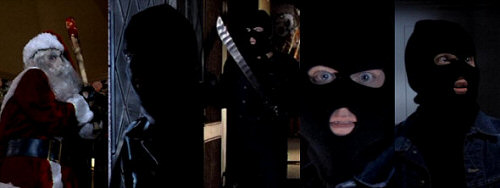
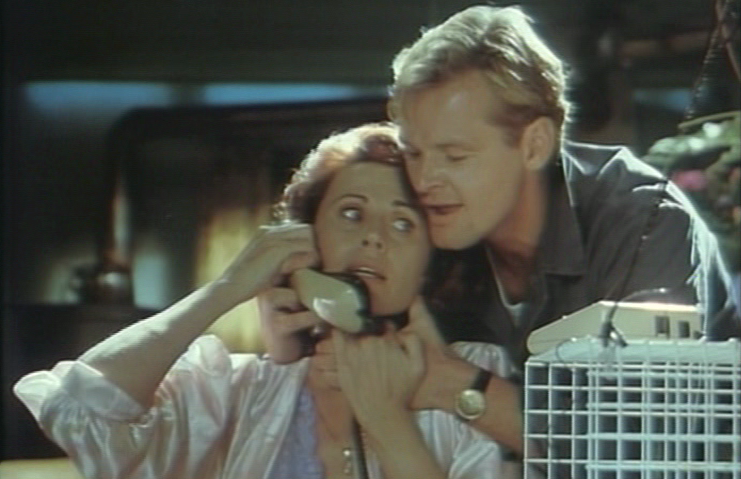
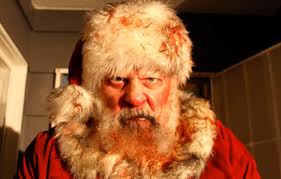
Fangoria‘s online arm gave visitors a ‘Christmas gift’ this year, an exclusive short movie produced by Robert Galluzzo (The Psycho Legacy) and written/directed by Drew Daywalt (didn’t know his work until this).
What drew me to My Name Is Kris Kringle was a killer santa role played by R.A. Mihailoff – Leatherface in Texas Chainsaw Massacre 3! As a fan of Silent Night, Deadly Night, To All A Good Night and the like I’ve been patiently waiting for the return of the santa slasher film (sorry, I couldn’t get through five minutes of Santa’s Slay).
My Name Is Kris Kringle didn’t deliver on the setup.
This is a good thing.
Let me explain…
When the slasher (carrying a decapitated head) is apprehended by police in the very first minute, every killer santa template goes out the window. The remainder of this roughly 10-minute short takes place in the copshop, and builds to an utterly chilling twist carried completely by dialogue.
In summary, this was a complete 180 from what I expected – an anti-slasher slasher.
At time of writing, My Name Is Kris Kringle can be viewed on the Fango homepage.
A theater troupe working on a musical suddenly find themselves the target of escaped lunatic Irving Wallace (Clain Parker). When the seamstress is murdered by the killer during rehearsals, the director (David Brandon) sees an opportunity to cash in on the free publicity and orders the actors to work all night so the musical can open early. After the doors of the theater are locked and the keys hidden away, the troupe discover Irving Wallace still walks among them. The actors begin a desperate search for the keys while trying to survive the night.
Stage Fright is one of the last great slashers to come out of the Big Boot before the film industry crumbled. This film marks Michele Soavi’s debut as a director but he’d apprenticed with the biggest names in Italian horror cinema (Fulci, Argento, Bava, D’Amato) for years before getting the opportunity. Joe D’Amato (Aristide Massacesi) worked behind the scenes as producer and Anthropophagus star Luigi Montefiori wrote the script. Also along for the ride are actress Barbara (Cemetery Man and The Church) Cupisti and frequent victim John Morghen (Giovanni Lombardo Radice). Morghen is best known to gore fans as the guy who gets a drill through the skull in Fulci’s The Gates of Hell and suffers an even worse fate in Make Them Die Slowly.
Irving Wallace wears a giant owl mask while stalking his prey. In lesser hands this could have been a major disaster, but Soavi’s direction and Montefiori’s script never lets the character come across as a buffoon. Wallace is a cruel, mean sumbitch who enjoys finding new ways to use power tools. The gory murders include pick-ax to the mouth, chainsaw dismemberment, decapitation, a brutal stabbing, power drill through the gut, and a nasty game of tug-of-war involving a pregnant woman. The final sequence involves Wallace arranging the bodies (or sometimes the bits that are left) on stage and smearing his victims with blood and feathers. It’s a chilling scene yet strangely beautiful at the same time.
A major benefit to the story is the viewer gets to know the characters before Wallace escapes from the asylum. Knowing about their struggles, hopes, and dreams makes the characters more human. Also helping Stage Fright is the dubbing is much better than the average Italian gorefest. Only Morghen’s performance is hindered by an over the top voice actor. At times it sounds like fitness guru Richard Simmons is reading Morghen’s lines. There are a few jerks in the troupe but most of the characters are likable and don’t deserve their grizzly fates.
Stage Fright is one of the last great Italian slashers and one of the best released after the genre’s golden age. The film’s mix of atmosphere, tension, frights, and shocks makes Stage Fright a cut above the average slasher. This film was actually the third slasher made by the team of Massaccesi and Montefiori. Anthropophagus and Rosso Sangue were the first two entries in their slasher trifecta, but Stage Fright is the best of the three. Soavi makes a cameo as a young cop convinced he looks like James Dean.
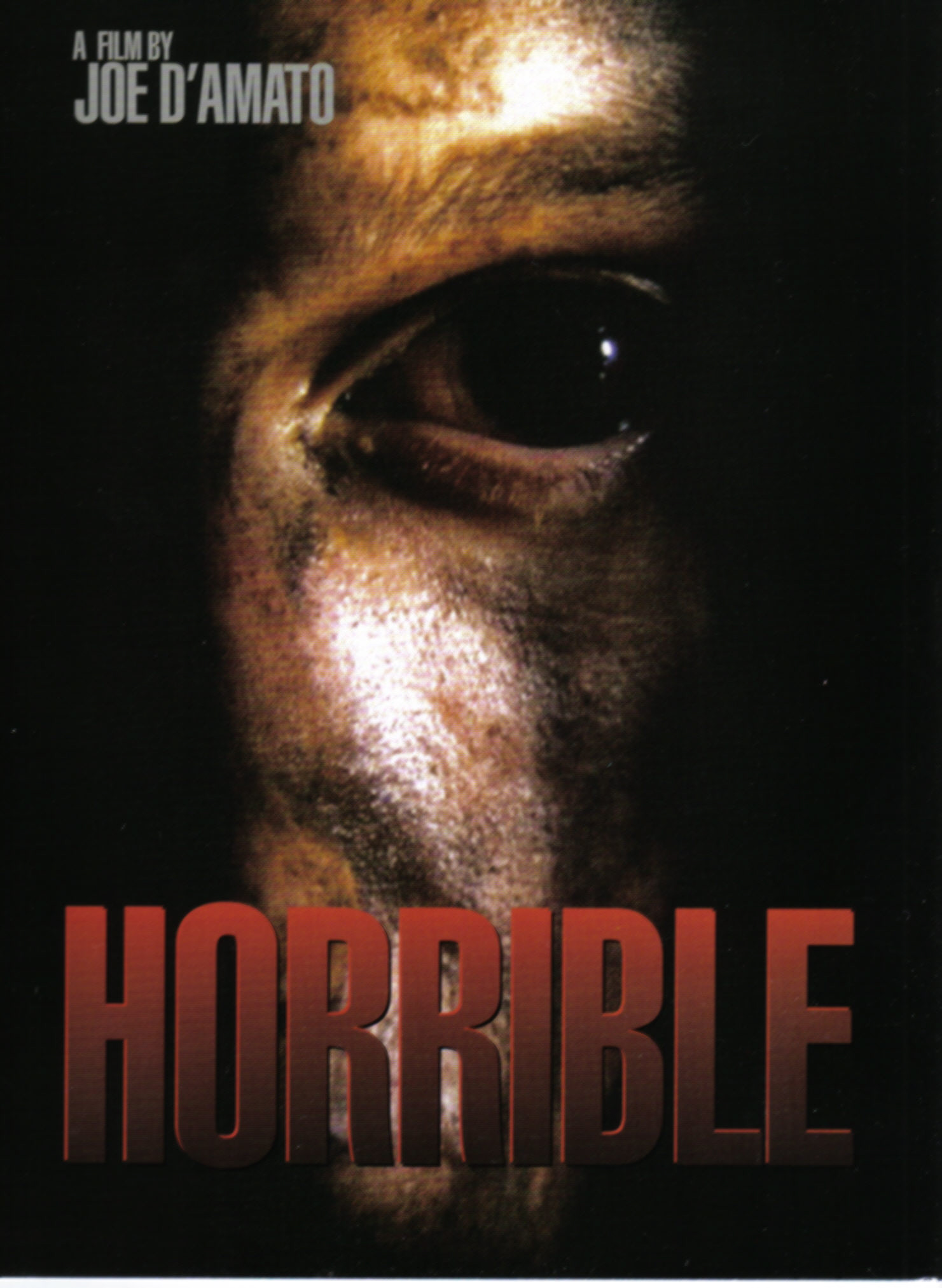
A year after Anthropophagus became an international hit, director Joe D’Amato (Aristide Massaccesi) re-teamed with star George Eastman (Luigi Montefiore) for this underrated sequel. Rosso Sangue was banned by the British government during the Video Nasty Era and suffered from multiple name changes when it was released. In America, Wizard Video released the film as Monster Hunter with a completely bogus synopsis on the back. Video renters were promised a tale involving a priest battling witches, mad doctors, and a killer fog. At various times Rosso Sangue was also released as Absurd, Grim Reaper II, Spawn of Hell, Terror without Limits, and (best of all) Zombie 6. In 2009, Rosso Sangue finally received a dvd release through Mya Communication under the title Horrible. It’s little wonder the follow-up to Anthropophagus is an overlooked slasher considering the numerous name changes and false advertising surrounding its release.
The film opens with Eastman running from a priest (Pieces star Edmund Purdom). During the chase, Eastman is impaled and gutted on a row of spikes atop a fence. After recovering at a local hospital, Eastman kills a nurse with a drill through the temple before escaping into the night. During his rampage across the country side, Eastman butchers a butcher and slaughters future director Michele Soavi. The tension and suspense really gets cranked up in the second half of the film when Eastman invades a house occupied by a disabled girl, her little brother, a babysitter, and a home health nurse.
Slashers fans with a taste for gore will love Rosso Sangue. Extreme gore mixed with slow, delibrate brutality makes the kill scenes pretty unnerving. Besides the drill through the temple, viewers are treated to a head shoved into a meat saw, death by pick-axe, eyes gouged out with a metal compass, decapitation, and scissors to the throat. In what has to be one of the cruelest scenes ever seen in a slasher, Eastman slowly roasts a victim’s head in an oven. The victim struggles to escape Eastman’s grasp while the flesh boils, bubbles, then turns crispy. It’s a tough scene, folks, made so much worse because it happens to a likable character.
Unfortunately, Rosso Sangue suffers from bad dubbing, ridiculous dialogue, and unanswered questions concerning major plot points. When asked by a cop to describe a patient, a nurse replies “he’s not my type at all.” How Eastman became an immortal killer and made it to “America” from Greece is never explained. The sight of hulking Eastman running from middle-age, out-of-shape Purdom is laughable, especially when Purdom has to stop every few feet to take very deep breaths. Other unintended laughs include the operation scene (actors poke pig guts with medical instruments but do little else) and the worst American football party in history (slurping noodles during “The Big Game” isn’t an American tradition).
With its extreme gore and suspenseful final act, Rosso Sangue is an Italian slasher that should receive more attention from genre fans. Joe D’Amato and George Eastman made some really terrible horror films together ( The Erotic Nights of the Living Dead and Porno Holocaust) but Rosso Sangue is one of their best efforts. The Eye-talian dynamic duo later teamed up with Michele Soavi to make slasher classic Stage Fright (a.k.a. Aquarius). D’Amato produced Eastman’s script while Soavi handled the directing duties.
Looking at the flicks that paved the way for Halloween and the heyday of slasher movies.
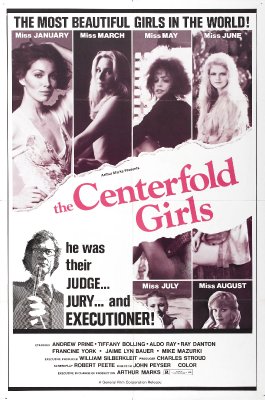
Andrew (Grizzly; Simon, King of the Witches; Terror Circus) Prine stars as Clement Dunne, a repressed psychopath who stalks and kills women who have posed for a nudie magazine called Bachelor. The film is split into three stories. The first follows a nurse (Jaime Lyn Bauer) who travels to the countryside for a job interview. Having graced the pages of Bachelor Magazine in her spare time, she’s also become one of
Clement’s targets, and he’s followed her to the country. This episode is very Russ Meyer-like with our poor nurse being harassed by almost everyone she comes across including a Manson Family-style group of hippie weirdoes and an unsavory motel owner played by Aldo Ray. Bauer goes through so much trauma here that it’s easy to empathize with her, adding to the suspense of the segment, as does Prine’s performance. As
usual, he gives his all, creating a believable creep with homicidal tendencies… and a straight razor.
Next, Clement trails a model (Jennifer Ashley) to an island where she and a group of other models, photographers and industry types are shooting a layout for the magazine. It’s a very giallo-like segment, with bed hopping and backstabbing taking place in equal doses, and Clement slashing his way through the group with luck and aplomb.
In the final segment, Clement stalks a Flight Attendant/Bachelor model played by the great Tiffany (The Candy Snatchers, Bonnie’s Kids, Kingdom of the Spiders) Bolling. His eye always on his victim, Clement intervenes when Bolling is about to be raped by a couple of sailors. Of course, she then finds herself in an even worse predicament. The last scene in this segment, and of the movie itself, is unforgettable. Set among a recently razed forest (in reality, the trees at this location HAD actually just burned down) the charred stumps and bleak landscape look absolutely surreal, and Bolling’s heartfelt primal shrieks are penetrating.
Directed by John Peyser, The Centerfold Girls is a grimy and grim precursor to 80’s slashers like Maniac and Don’t Answer the Phone; it’s also a prime example of 70’s Grindhouse filmmaking. With its dark take on that 70’s standard, the Battle of the Sexes, an argument can easily be made for this as a feminist horror film; the audience empathizes strongly with the women, while almost all the men here are operating on some predatory level, viewing women as things to be used or destroyed. For my money, The Centerfold Girls is essential Proto-Slasher viewing.
In 1983, Hikmet Avedis & wife Marlene Schmidt wrote & produced Mortuary, which Hikmet directed. A year later they were back in the same capacity with They’re Playing With Fire. Taking the plot of their 1974 movie The Teacher, and Eric Brown – the star of the popular Private Lessons (1981), it starts off simple – a teenage boy reciprocates the sexual advances of his sexy mature teacher. But from there on it gets much more complex as the film progresses – the tryst is part of a plan involving the teacher and her husband (who may or may not be “in” on everything) to get their hands on a family inheritance, which is soon helped along when a masked killer murders the old bats keeping the fortune at bay. Coincidentally after the teen had just been lurking in the cellar on a scare-em-shitless mission for his lover. Then his girlfriend gets her hands on photos of the taudry tryst and threatens to use them. Got that?
That’s just the first half hour of the spider-web like plot. I almost needed to make a chart to keep track of all the characters and relationships. But it’s all happening for a reason. Each character is a player or pawn in the game this film lays out. The boy. The girlfriend. The teacher. The husband. The gardener. The slasher. Each has a part to play and ulterior motives that are slowly unveiled.
The slasher appears sparsely in the first half of the film, but drives the film forward when he does appear. Even in the scenes he’s not in, listen closely, as snippets of his backstory and identity are slowly unspooled in increments building towards a final twist that makes a second viewing a treat. In the second half of the film, he seeps into more and more of the plot until the final half hour is firmly entrenched in slasher-land. This slasher has some personality – a shattered state of mind subtlety visualized by his high contrast costume – black balaclava, blue denim jacket, white running shoes. He mutters twisted childhood speak hinting at long-ago transgressions and watches with stark wide open eyes reminiscent of Andrew Robinson’s Scorpio character in Dirty Harry. And, allow me to digress, but I’ve always hated in late 90s slashers how the culprits would be strictly blade-men but then switch to a gun in the climax (usually as a tool to keep the final girl still while the killer explains his hate-my-daddy motives), but on the other hand there were a few 80s slashers whom could have really pulled themselves out of a fatal bind by using a gun. They’re Playing With Fire‘s killer effortlessly switches between implements of slaughter according to whatever fits the situation. From a high powered rifle to a blunt baseball bat to a sharp machete!
They’re Playing With Fire has alot in common with Mortuary besides the same creative team and close proximity to its year of production. Both share cast, too: Greg Kaye, Violet Manes, Bill Conklin, Curt Ayers, Marlene Schmidt herself, and Alvy Moore in a cameo role as an employer of the young male lead. Both have a suitably evocative score by John Cacavas. Both are set in Californian shoreside locations and their affluent expansive mansions. Both milk dark shadowy rooms for maximum suspense. Dead bodies displayed echo the similar of the party table scene in Mortuary. Both have ancillary teen characters that pop up sporadically but aren’t really part of plot. They’re Playing With Fire also uses some of its similarities to tweak what didn’t work in the earlier film – i.e., Bill Paxton in Mortuary was immediately guessable as the killer (and strangely, even had a scene early in the film in costume but without mask that made one wonder if they were even trying to hide his identity), while the killer here remains an enigma throughout and keeps the ultimate secret behind his mask locked up safely until the final scenes.
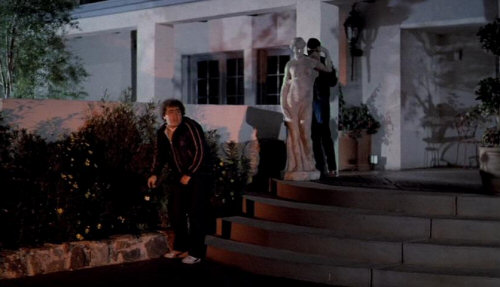
Some random notes – Eric Brown plays the teenager in-over-his-head a bit too innocently at times. The first time Sybil Danning beds down with him, she’s grinding him like a juicer and oohing and ahhing along the way and he’s making idle conversation like he’s numb from the waist down. He’s supposed to be someone on the verge of manhood but frequently comes off as much younger. In fairness to Brown, this “innocent little boy” element is a prevalent in the writing of this type of genre (see the aforementioned Private Lessons – also Brown) And Sybil, oh Sybil. Truly the hottest 80’s woman on film with her ample, bronzed body and… ah, whoops. Back on point. Andrew Prine turns in a reliable performance as the husband, Michael, in a similar suspicious role as Christopher George played in Mortuary. Dominick Brascia from Friday The 13th Part V: A New Beginning contributes another sterling performance as a hungry fatso, and in one frustrating scene manages to unknowingly escape death after pissing in a garden while the killer hides behind a nearby statue. So close, yet so far!
It’s a film those few who have reviewed it have enjoyed because they insist the film doesn’t “make up its mind” if it wants to be a sex film or a slasher. Which to me is the silliest statement ever – as if a film should be whipped for not fitting a specific category – and you know if it did fit firmly in a mold, it’d be slammed for being just like all the others. It is indeed an odd duck to classify, but that’s what makes the flick so watchable. It’s always hard to guess what’ll happen next because it could switch to either genre – it’s part sex film, part thriller, part slasher. The distributors had to make a choice of what angle to play up and chose “sex romp”. But it would be a doomed scenario either way – had they marketed it as a slasher, fans of the time would be disappointed it doesn’t follow the prescribed format of teen leads and a kill every ten minutes. As a result of the title and marketing, this film has flown under the radar of even some of the most seasoned retro slasher fans – until now?
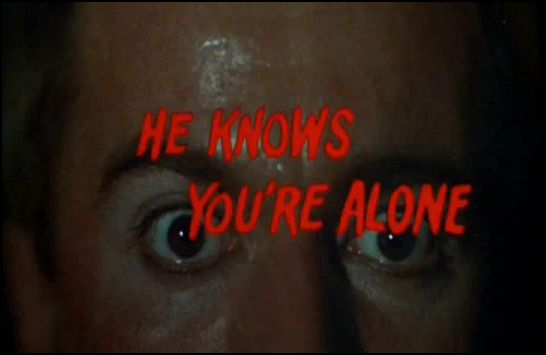
After a jilted lover (Tom Rolfing) kills his ex-bride-to-be, he decides justice has not been served and decides that all women preparing for their upcoming nuptials need to meet the sharp end of his knife. The killer has arrived in a new town looking for Amy (Caitlin O’Heaney) and her wedding party to make perfect, voluptuous targets in his sick revenge. Amy’s spotted our killer, but everyone just laughs it off as getting cold feet. Can her ex-boyfriend, Marvin (Don Scardino), get her to dump the groom and save her from the clutches of a madman? Oh, Marvin! My hero!
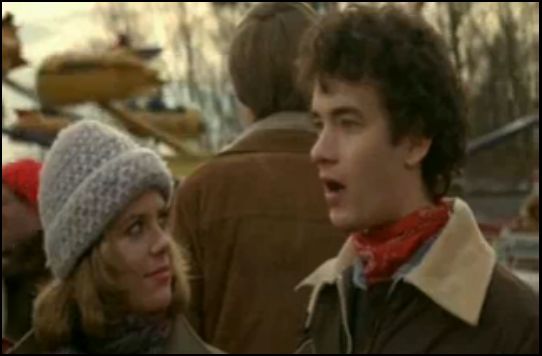
Defying convention was never the slasher genre’s strong suit, so why start with He Knows You’re Alone? It’s a simple story taken from the pages of the master, John Carpenter, but with a small twist – the killer’s face is never concealed (although he remains quite frightening). Perhaps it’s because of those similarities to Halloween that He Knows has never been a darling of the critics, or many die hard fans for that matter, but I still have a soft spot for this nice little thriller. Most detractors of it hate the fact that it’s a basic road map of Halloween but some of us dig the minimalist plot and the chemistry between the two leads. Don Scardino makes Marvin a decent and likable fellow and Caitlin O’Heaney is good as Amy. Lest we forget, this was also Tom Hanks’ first film. He only shows up in two scenes, but you can see his star quality shining.
He Knows has some great set pieces too. The opening scene spins a clever movie within a movie yarn and eagle eyed horror geeks will notice that’s Russell Todd from Chopping Mall and Friday the 13th Part 2 hanging over the car! Blink and you might miss James Carroll from Girls Nite Out in another scene. Yes, there’s a virtual cornucopia of horror references to be had during just one viewing! Now who could say no to that?
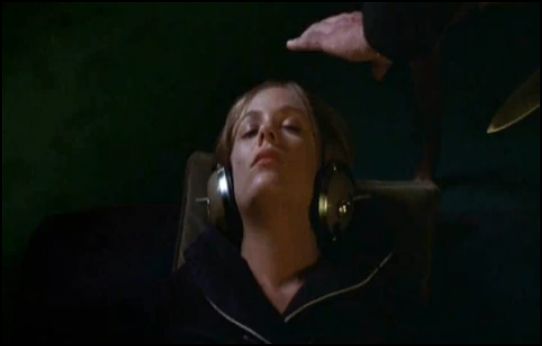
Director Armand Mastroianni knew how to keep the bodycount rolling. The best scene in the film features the curvy Elizabeth Kemp sitting with her back to the camera, listening to a pop ballad on headphones and toking it up as our killer watches. Remember when girls were curvaceous? Those were good days! There’s also a terrific close-to-death reaction from the put-upon final girl who plays it like a real person in her situation would – she freaks out! And big time! The horror at what may happen to her is palpable and creates a great sense of fear during the final chase scene.
So while He Knows is by no means a groundbreaking film it is entertaining and harkens back to the day when films of this ilk had yet to be considered contrived. So take your shoes off, kick back and let the killing begin!
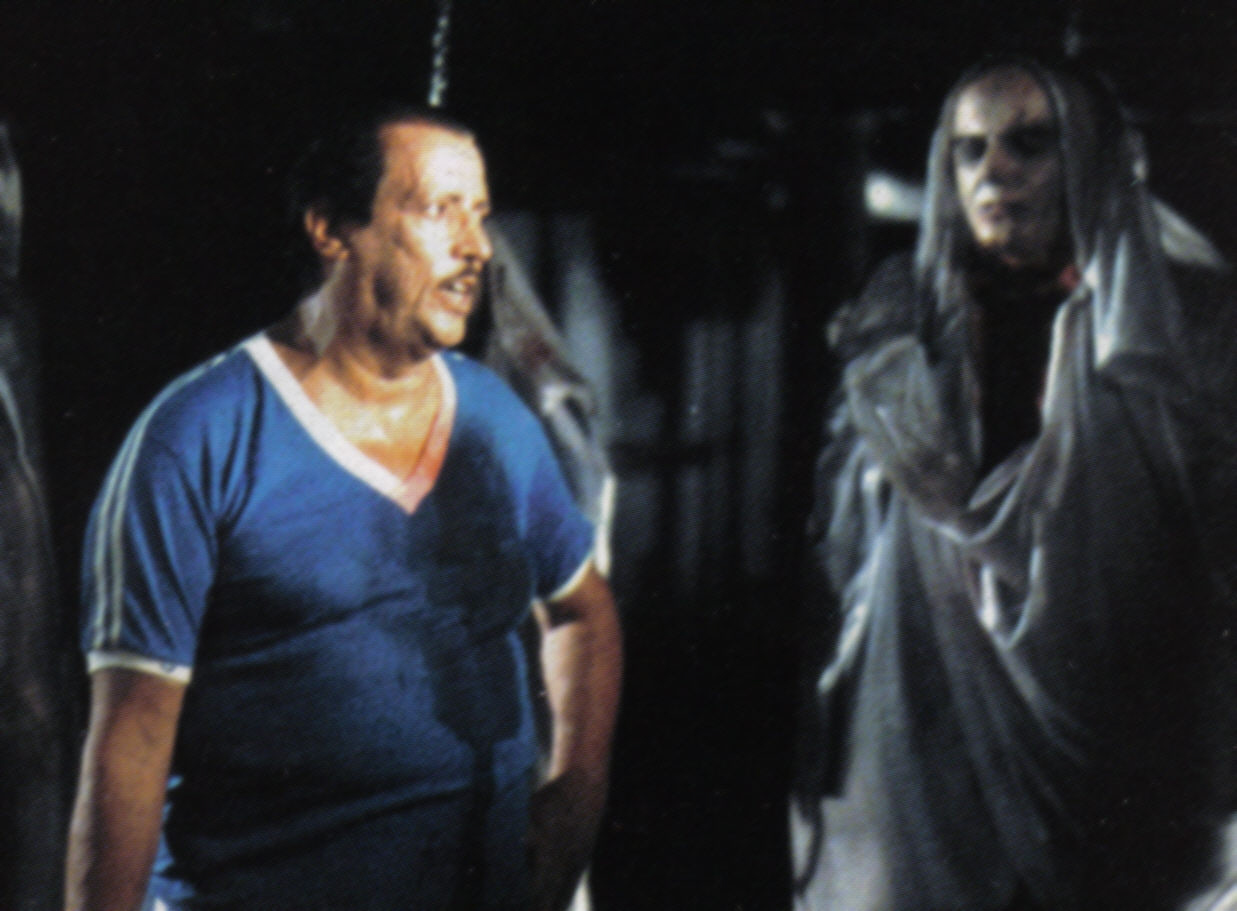
Uncle Roscoe (Joe Spinell) is a small town undertaker who loves his work and his customers, literally. Roscoe is a necrophiliac who turns his female victims into brides while male victims become members of the wedding party. When Nick (Patrick Askin) discovers his uncle’s dark secret he alerts teacher Pam Hayes (Rebecca Varon, or Yaron depending on the source), which puts them on Roscoe’s hit list. A cop (writer/director Will Kennedy) and a bumbling security guard are also on Roscoe’s trail. But Uncle Roscoe has a few tricks up his sleeve and plenty of room in his secret cellar for anyone trying to stop his unholy lust for cold flesh.
Joe Spinell’s final performance in The Undertaker is sad, shocking, terrifying, and amazing. It’s tough watching the great Joe Spinell stagger through scenes, read his lines from the script on his desk, and glare into the camera whenever he thinks a scene should end. At times his speech is so slurred that it makes his dialogue damn near unintelligible. Joe’s performance really comes alive during the second half of the movie. Just when you think there’s no way Uncle Roscoe can get any crazier, Spinell descends to a whole new level of madness. With his wild eyes and psychotic laugh, Joe Spinell becomes a chilling portrait of pure insanity during the final showdown with Rebecca Varon.
There are several gory kills to wet the appetites of blood-thirsty slasher fans; decapitation, disembowelment, an eye gouged out, throats slit and ripped, and a face shoved into a frying pan. Some of the kill scenes are blunted by bizarre editing but it doesn’t distract from the overall impression the movie is a real bloodbath. The sleaze factor really gets cranked up to eleven when Joe or stand-in Will Kennedy fondles the corpses. Flesh fiends who prefer their women above room temperature will be satisfied with the copious amounts of nudity provided by living characters.
The Undertaker’s biggest flaw is the crazy editing which is so shoddy that it makes one think the film was never finished. Some scenes are blink-and-you-missed-them short while others drag out long after the actors have finished. There are several instances were a scene is suddenly interrupted by unrelated footage for no apparent reason. A couple of kills are played on fast forward accompanied by Joe Spinell’s dubbed in laugh. In its existing form, The Undertaker is a mess but the film could be saved if the surviving footage was re-edited. There is an interesting story lurking among the jumbled scenes and garbled dialogue.
Currently, The Undertaker is considered a lost slasher but it has the right ingredients to become a cult classic if it ever gets an official release. Joe Spinell’s amazing performance in his final slasher film is the best reason to search for the footage. Also, The Undertaker has a strange sort of low budget, grind-house charm. There is a rumor The Undertaker will receive an official release in the next year or two. Hopefully, those rumors are true because Joe Spinell’s last slasher shouldn’t stay lost forever.
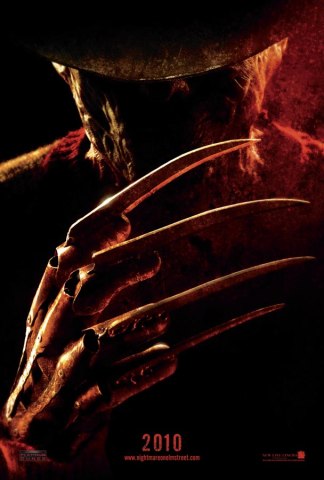
The new Nightmare is much better than I expected despite a few flaws. First with the bad. The new Freddy make-up is awful and seems to change during the course of the film. Sometimes Freddy resembles the killer in Popcorn, other times he looks a lot like the rich villain in Hannibal. Jackie Earle Haley is not Robert Englund and it’s hard watching someone other than Englund play the character. Nancy and her boyfriend are a couple of emo’s instead of fresh faced kids-next-door types. The film is full of jump scares instead of building up to a scare.
Okay, now for the positive bits. Jackie Earle Haley as human Freddy is amazingly creepy and sleazy. Freddy is scary again, not a two-bit Henny Youngman impersonator with a bad complextion. The glove is pretty bad-ass, the theater went ape-shit when it made its first appearance. The story never slows to a bloody crawl like the TCM and F13th remakes.
I had an amazing experience watching this in a theater full of teens who weren’t even alive when the original Nightmare hit the big screen. Listening to their screams and howls reminded me what it was like to see a slasher movie back in the 1980s. The theater erupted in cheers and applause at the end. I haven’t seen this kind of response to a horror film since Scream 2. Maybe my views would be different if I’d rented the dvd instead of seeing it in a theater, but I found the Nightmare remake to be entertaining and by far the best slasher remake Platinum Dunes has made.
Um, sorry if this mini review is rambling but I’m trying to leave out plot details on purpose. Plus, I’m still buzzing off the heavy dose of nostalgia.
The dvd companion to Stephen Romano’s excellent Shock Festival book is out now and it is a must have for slasher lovers, exploitation junkies, and movie nostalgia fiends. If you grew up watching movies in 42nd Street grindhouses or southern drive-ins, then get ready for major flashbacks because Shock Festival brings back our childhood friends. Vic Morrow, Christopher George, Klaus Kinski, Joe Spinell, and many other stars who are no longer with us can be seen in these beautifully remastered trailers. I’m a big fan of trailer compilations (I have all of the 42nd Street Forevers and a few of the horror comps from Something Weird and other companies) and Shock Festival is easily the best one in my collection.
Disc 1 starts with mock trailers based on some of the features in Romano’s book. Some of these are sleazier than the real trailers that follow. Next up is the exploitation trailer marathon which covers all the sploitation genres. You get Italian Mad Max rip offs (1990: The Bronx Warriors), blaxploitation (Cornbread, Earl, andMe among others), jiggle fests (Titillation is a real stand out, just don’t let the wife and kids see that one), action, kung-fu, and everything else that was big during the 70s and early 80s. There are two commentary tracks, one by Romano and one by Uncle Creepy, but these are hit and miss. Romano’s track is rambling and rarely has anything to do with the trailer appearing on screen at the time. Uncle Creepy acknowledges the action on screen but seems clueless as to the name of the films or actors involved. There is one hilarious highlight when Creepy watches Duke Mitchell’s Gone with the Pope trailer. His screams of terror are pure comedy gold.
If you’re a horror addict (like me) you’ll jump straight to disc two to check out the Ultimate Horror Marathon trailer collection. You get slashers (Pieces, Maniac, Pranks, Hell Night, Toolbox Murders), animals attacking (Great White, Grizzly, Tentacles), Dario Argento (Deep Red, Cat O Nine Tails), sleazy gore classics (Mark of the Devil, Bloodsucking Freaks), and plenty of others. Disc 2 also contains a compilation of vintage tv commercials and trailers for films produced by Sam Sherman. Commercial highlights include spots for Four Flies on Grey Velvet, Suspiria, The Changeling (my favorite haunted house flick), and Evil in the Deep, a Jaws rip off narrated by William (Blacula) Marshall. The best Sam Sherman trailers are for the Blood Island series and the Blood-O-Rama Shock Festival. Romano’s commentary is more on track for this disc and I’m especially grateful for the info on Great White, a film I saw in theaters before it was banned from the US.
Disc 3 is a special mp3 disc featuring an unbelievable number of rare radio commercials for exploitation films. Slasher fans will love disc 3 as it features ads for Visiting Hours, Twitch of the Death Nerve, Don’t Answer the Phone, Night School, two for Graduation Day, Maniac, The Town that Dreaded Sundown, and Motel Hell. Other ads are for the super rare Screams of a Winter Night, Watch Me When I Kill, A Knife for the Ladies, a preview for Phantasm before the film went nation wide, and an Eyeball/Suspiria double feature. This is barely scratching the surface folks since there is over three hours of radio commercials on this disc. These radio ads are a bloody marvelous supplement to the trailer compilations on disc 1 and 2.
Shock Festival is an amazing compilation of trailers and deserves a place in the collections of exploitation fans. Those of you who spent weekends at drive-ins and sleazy movie houses will get a massive nostalgia fix from these trailers. If you grew up after the exploitation films died away, then Shock Festival will show you some of the cool things you missed out on. Modern cinema is unbelievable boring when compared to this era of film making. Hopefully, there will be more volumes of Shock Festival dvds in the future. I know I’m craving more editions.
Get a load of that title… Did you ever hear anything that sounded more like a slasher movie? Unfortunately, Terror Stalks the Class Reunion isn’t a lost slasher – for a start, there’s no slashing – but, while part of me is writing this review to stop others repeating my mistake, it’s also worth pointing out that there’s a little something here to entertain slasher-fans looking for a fix slightly off the beaten track.
First off, Terror Stalks the Class Reunion is based on a Mary Higgins Clark short story and, as such, joins roughly fifteen other TV movies inspired by the works of “America’s Queen of Suspense”. Bar some atmospheric 70s offerings, the small screen isn’t exactly famed for its classic slasher output – and, fittingly, its thirty-year flirtation with Higgins Clark adaptations has resulted in nothing more than a barrage of glossy but middling potboilers that form the very definition of safe Sunday-evening viewing.
It’s interesting to note, however, that when a certain Sean S. Cunningham was looking to follow up his breakthrough Friday the 13th with something more mainstream yet still in tune with his slasher sensibilities, he turned to Higgins Clark. Her novel A Stranger Is Watching was the basis for the 1982 thriller of the same name, which allowed Cunningham to indulge his nasty streak with a succession of showpiece deaths built around a hostage scenario played out in the deserted depths of Grand Central Station.
Terror Stalks the Class Reunion is a similar tale of a kidnapped woman held prisoner by a lunatic. But where Stranger had an incomparably brutish Rip Torn as said psycho, here we get Geraint Wyn Davies as the once “Fat Tony”, who’s lost 110 pounds – along with most of his marbles – over the course of an eight-year obsession with his old teacher Kay (Kate Nelligan).
That’s where the class reunion connection comes in: Kay and her friend Virginia (Jennifer Beals) are in town for a get-together of staff and pupils from a US Army base school in Germany. Amidst the frivolities, Kay gets a message purporting to be from her husband and, heading back to her hotel, bumps into her former student in the parking lot… except the meeting was no accident, and Tony’s plans for his favourite teacher involve handcuffs, humiliation and a harrowing stint in an escape-proof cabin deep in the woods.
But don’t get too excited – Terror Stalks the Class Reunion is no horror film. There’s no Misery-style hobbling, no Captivity-like poodle-killing mindgames. Instead, there’s the threat of an enforced “marriage” performed by a videotaped priest on a TV screen, and a lot of time spent on a largely unrelated subplot about an escaped killer thought to be stalking the area. Tension mounts in the sequences where Kay (predictably) tries to escape from her shackles while Tony’s truck (inevitably) pulls up outside, and excitement peaks as the climactic wedding ceremony turns into a violent fracas involving concealed nail scissors and a gun hidden inside a Bible. But then everything goes up in smoke in an “explosive” ending that stops somewhere slightly south of satisfying.
Nelligan whimpers convincingly throughout but doesn’t really do anything to make you care about her character – which is probably more of a fault with the writing, considering the feeble nature of her escape attempts. Beals on the other hand has even less to do but manages to come across as smoking hot in a slightly gutsier role. On a sad note, Werner Stocker, whose local detective, Franz, is the only character with any real charisma, died from a brain tumour a year after filming.
Terror Stalks the Class Reunion is available on DVD in the UK under the far less fun but generally more apt title For Better and for Worse. Picture quality is pretty poor; in fact, if the DVD hasn’t been ripped from an old VHS (most likely the 90s US release) I’ll eat my hockey mask. The film’s just about worth a look if you like woman-in-peril movies but don’t go looking for slasher-movie thrills… There’s more to be found in National Lampoon’s Class Reunion.
 Fangoria‘s online arm gave visitors a ‘Christmas gift’ this year, an exclusive short movie produced by Robert Galluzzo (The Psycho Legacy) and written/directed by Drew Daywalt (didn’t know his work until this).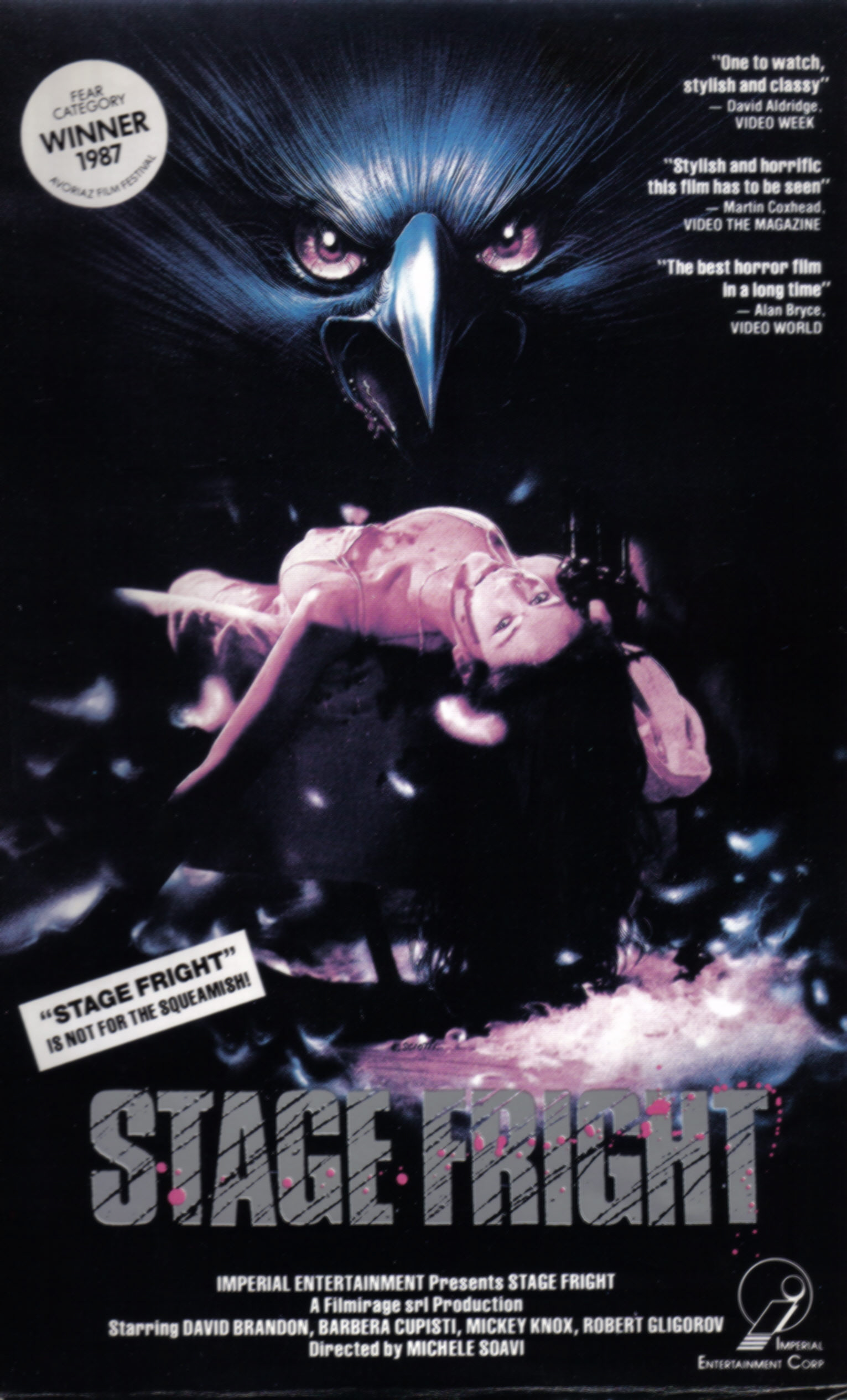
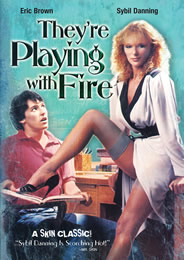 In 1983, Hikmet Avedis & wife Marlene Schmidt wrote & produced Mortuary, which Hikmet directed. A year later they were back in the same capacity with They’re Playing With Fire. Taking the plot of their 1974 movie The Teacher, and Eric Brown – the star of the popular Private Lessons (1981), it starts off simple – a teenage boy reciprocates the sexual advances of his sexy mature teacher. But from there on it gets much more complex as the film progresses – the tryst is part of a plan involving the teacher and her husband (who may or may not be “in” on everything) to get their hands on a family inheritance, which is soon helped along when a masked killer murders the old bats keeping the fortune at bay. Coincidentally after the teen had just been lurking in the cellar on a scare-em-shitless mission for his lover. Then his girlfriend gets her hands on photos of the taudry tryst and threatens to use them. Got that?