Last time we presented a retrospective celebrating 30 years of Scalps, a shocking slasher that would differentiate itself from the pack with its Native-American supernatural elements. This time around, we speak to the director himself. Read on as Fred Olen Ray peels away the layers of the 1983 production.
With the recent news of Scorpion Releasing’s slasher titles on tap for DVD – Humongous, House on Sorority Row, Final Exam, The Carpenter, The Incubus and American Nightmares as well as other genre titles – Retro Slashers conducted a brief q&a with company president Walter Olsen (yes, brother of Bill Olsen who runs Code Red – unearthing horror must run in the family).
Retro Slashers: Can you say if any release dates are already set, or what order the discs will come out in?
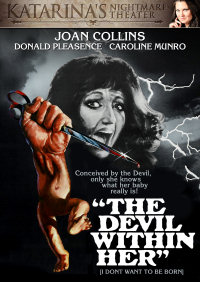
Scorpion: Final Exam and Devil Within Her are set for September, with October being Humongous, Nothing But The Night, and perhaps one more (one we haven’t announced yet), and House on Sorority Row and Carpenter will kick start November.
Retro Slashers: House on Sorority Row was most recently released in 2009 – with this being the third edition, what similarities or differences will it have?
Scorpion: Sorority is now a brand new HD master from the original InterNegative, and will be a progressive scan encode, unlike the previous Liberation DVD edition. We already have 3 new on-camera interviews (actress Harley Jane Kozak, composer Richard Band. and producer Igor Kantor), and are trying to do more, plus all previous extras from the earlier editions are being carried over. We also have about three TV spots that I believe the other DVD editions did not have.
Retro Slashers: Any chance of getting Michael Ironside for a commentary track or interview for American Nightmare? Ditto Wings Hauser for The Carpenter?
Scorpion: I tried to get Wings Hauser, but never heard back from him nor his representative, and same with Ironside. But as they say, never say never. American Nightmare will feature an audio commentary with Producer Paul Lynch moderated by Katarina.
Retro Slashers: Will Final Exam be a reissue of the BCI’s version?
Scorpion: Not really. Ours is a new master in HD from the original negatives, and we also have a new audio commentary with the producer Myron Meisel that is moderated by Katarina and it is quite informative. And, of course, all previous extras will be there as well.
Retro Slashers: Humongous‘ video release was very dark, and many have speculated if that was the photography or the video transfer. Can you settle that for us?
Scorpion: Little bit of both, as the director wanted it to be a bit dark, but not as dark as the video. That was just a bad video job. Retro Slashers: What sort of extras do you hope to assemble for The Incubus?
Scorpion: We cant say what for now, but we are arranging some on-camera interviews as we speak.
Retro Slashers: Lastly, how much will your horror hostess Katarina be a part of these releases?
Scorpion: She does a small skit in character, an intro before the film, and after the film ends, she does an epilogue. She does not interrupt these films in any way, and if you want to skip her segments altogether, you can, by clicking the play film option on the menu. And unlike some other horror hostesses, Katarina also moderates all the new audio commentaries. It was a delight to see someone who has made a name for herself in WWE and TNA want to speak with these filmmakers and ask them questions.
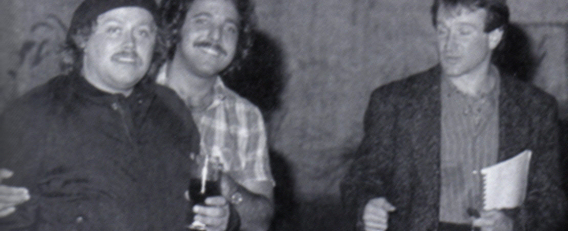
Charlie Sheen, Alison (Nellie Oleson on Little House on the Prairie) Arngrim, and radio personality Rush Limbaugh star in Sam Kinison’s The Honeymoon Killer now in post-production. The late Sam Kinison’s take on the slasher genre, which was previously covered here, deals with an unhappily married man who targets brides on their wedding day. During a recent interview conducted by email, executive producer Bill Kinison, Sam’s brother, provided Retro Slashers with details about the new production and the long lost promo video Sam shot for THK during the early 1990s. Kinison also sent a rare behind-the-scenes photo (above) taken during the filming of the promo which shows Sam dressed as the killer while holding a glass of liquid inspiration, director “Bill Blackman” offering encouragement, and Robin Williams clutching the script.
Halloween 5: The Revenge of Michael Myers has long since divided fans of the series, with some feeling that the movie failed to live up to the comeback of The Return of Michael Myers and others appreciating the European feel that Swiss filmmaker Dominique Othenin-Girard brought to the picture. Arguably the movie’s stand-out moment is the sequence in which the young heroine (played by eleven-year old Danielle Harris) is trapped inside a laundry chute, as Michael repeatedly stabs his knife through the side. The scene would be the result of hard work and extensive preparation between Othenin-Girard and his director of photography, Robert Draper, who would later shoot the cult horror flicks Tales from the Darkside: The Movie and Dr. Giggles.
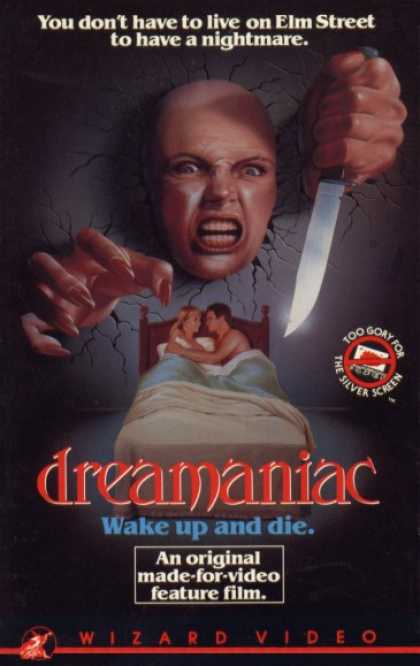
1986’s Dreamaniac was a product of the times – made during the genre’s infatuation with Freddy Krueger, it was a Faustian tale that reversed the mainstay gender roles – the main character is a male, a rock musician who makes a deal to achieve personal success, at the cost of all the women around him being offed by a female dream demon in an assortment of nasty ways (power drill, anyone?). The confused young man being hounded by the representation of a ‘nightmare female’ helps to make this the perfect companion piece to similarly gay-tinged A Nightmare On Elm St 2: Freddy’s Revenge.
The movie was released through Wizard Video, Charles Band’s video company, and came in a gorgeous cardboard ‘big box’ as was the standard for the company at the time. We caught up with director David DeCoteau a few years back for an interview that hasn’t been public till now. DeCoteau has enjoyed a long career in b-movies to this day, and it all started with Dreamaniac.
How did the project get started and when/how did you meet Charlie Band? Is it true he kicked in half the budget?
I was 24 years old. I wanted to make a movie. I developed a script called SUCCUBUS. I had 30K to invest which would get me through a 10 day – 16mm shoot. I would deal with finding the post cash later. The writer Helen Robinson (not me, but a pseudonym for a new writer who is now a major television writer) knew the development head at Empire Pictures, Debra Dion. Helen gave it to her as a writing sample and Debra loved it and wanted to buy it even though it was just a writing sample. Helen said that this kid named David DeCoteau was gonna start shooting it in a week and you should meet with him. I went in and not only met with Ms. Dion but the man himself Mr. Charles Band. What made the meeting successful is that I had a “go” picture and that is entirely different that pitching an idea that may be a treatment that could be a script in a year. This movie was gonna be shot in less than a week. Charlie wanted in. He made me an offer to cover the cost of post production, pay me back my 30K and give me a fee. If he liked the movie I could continue making as many of them as I wanted as the price was less than any of the movies they we’re making at the time. It worked. He kept his word and we’ve been the best of friends since. Next year will be our 20th anniversary of friendship. I’ve made 30+ movie for the man.
How long did it take to write the script, if you are “Helen Robinson”…
It took a few weeks if I remember right. We shot the first draft. Empire didn’t have any notes on the draft we shot.
Was the heavy metal and nightmare elements a response to the popular horror film elements of the mid-80s?
Absolutely. There was this media controversy over heavy metal lyrics at the time. That they made kids commit suicide and warped their brains. I borrowed that and the whole Freddy Krueger thing. I sold it as a female Freddy Krueger story.
Do you remember the dates or how long it took to shoot?
I think it was around the Spring or Fall of 1986. It was a 10 day shoot. Non union everything. I did the first edit in a week and then an Empire editor, Peter Trencher, was brought in to spice it up. Peter has gone on to major success as an editor of big Hollywood movies such as CHARLIE’S ANGELS. The post cost about 30k too, so the whole thing cost Charlie 60K. The house we shot in was in an area of LA near Larchmont Village. I found it driving around and saw a For Sale sign. The realtor on the sign said PAUL LEDER and I thought could this be the PAUL LEDER that directed I Dismember Mama and A*P*E? I called the number and it was the same man. We met and he rented me the house for 200 bucks a day. He wanted to help me because he loved young filmmakers and was very supportive of me. We became fast friends. He called me THE DAKOTA KID and I called him PAPA PAUL. It was a tragedy when he died of lung cancer. He was a heavy smoker. I miss him horribly.
How did you round up the cast? Also, interested in how you came to cast porn fave Kim McKamy.
Kim McKamy was lovely on the set and so talented. Her role did require nudity but she wouldn’t have any part of it. She’d do the movie if she would keep her top on. I said fine. It was the guys that we’re getting naked anyway in the movie. I was amazed she got into adult video. She did so right after CREEPOZOIDS which was my second movie for Empire. More power to her. The rest of the cast we’re hired from Dramalogue, which was an actor’s newspaper in LA like Backstage is in NYC. The cast got paid 50 bucks a day.
David DeCoteau
Was there much pay going around to the crew?
Yes. I paid the crew essentially their rate because there were so few of them. Cameraman, one assistant camera person, 2 lighting guys, One makeup artist, one prop and one set decorator. I think we had two PAs as well.
How did you meet and put to work Cinematographer Howard Wexler, who has since gone on to do further shows for you?
Lets just say that Howard and I used to make “love stories” together. We met when I was 19 and worked as his assistant. he’s a real find. Fast as lightning and works with a small crew. very creative and a dream of a guy to work with. Checkout his site at howardwexler.com
What was running through your head while making it. Was there time to consciously plan & change things or was it a shoot & run affair?
I wanted to make something as shocking as ReAnimator. I did plan it out but on any low budget show I compromised a great deal. We did shoot without a permit though. I hate LA.
Do you have any memories of raunchy or zany stuff that went on during the shoot?
Not really. It was a clean and professional show considering the twisted and lurid subject matter.
What were the major difficulties of making this movie?
Yeah. The makeup artist was slow. It would take two hours to get the first shot. That pissed me off because as a director, time is your worst enemy.
Did the footage make for a quick and easy edit?
I thought so. It was a long cut and Peter cut about 20 minutes out of it. I can’t remember what stuff was cut because that footage is in some unknown vault somewhere when Empire was sold to the bank.
Did Charlie [Band] visit the set much, and how much control or guidance did he have over the pic?
No. Not a thing. He said to me that he’d see me at the director’s cut. He did. Debra Dion came to the set for 10 minutes and that was it.
The film appears to have only been released on video. It got some lovingly lurid cover art and was the first of Band’s “Too gory for the silver screen” series of low budget Wizard Video titles. Was that always the plan or was it ever going to go out through Empire Pictures?
Too Gory for the Silver Screen was my idea. I met with the head of Wizard, Charles Weinert. He and I came up with ideas to sell the picture. We discussed the female Freddy Krueger concept which was used it the art and the whole concept of Direct to video. At the time many crap movies, which had no business playing in theaters, were going theatrical to help video sales. DREAMANIAC was shot in 16mm but finished on one-inch video tape. No print was available. I suggested saying that this is a theatrical movie but because of the whole R RATED issue theaters demanded that we were forced to go direct to video because the film was TOO GORY FOR THE SILVER SCREEN and could never get an R rating.
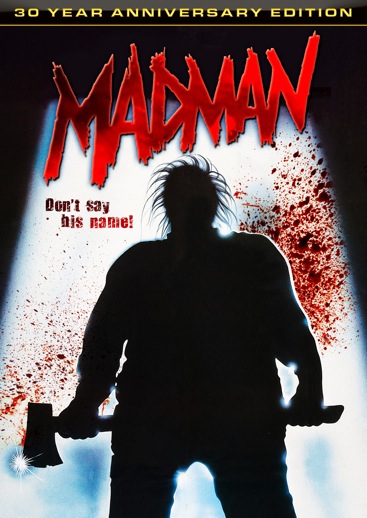
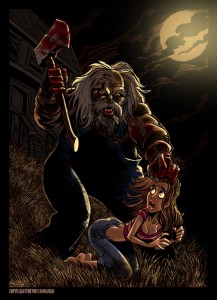
Joe Giannone’s Madman (shot in 1980, released 1982) has experienced a resurgence with slasher fans in recent years similar to the Sleepaway Camp movement. Yet this has all been contrary to the increasing rarity of the film since Anchor Bay’s DVD went out of print.
But that’s about to be remedied as Code Red DVD prepare to release their own special edition into the marketplace come September. Writer/executive producer of Madman, Gary Sales, recently spoke with Retro Slashers about what’s planned for the trusty camp slasher.
“The DVD’s almost done and it’s coming with an hour+ featurette – The Legend Lives: 30 Years of Madman, by horror filmmakers, Victor Bonacora and Dave Beinlich.” Sales tells us. “Lotsa interviews and never before seen images. Just interviewed Deron Miller of CKY, who was inspired by Madman to write Escape From Hellview, the band’s 3rd most popular song on YouTube. In addition, we caught Carl Fredericks (now 84), who played Max. Sorry, Gaylen Ross won’t go on camera. But Paul “Madman” Ehlers is there. There’s also a trip back to Fish Cove, the old location where Madman was shot.”
Sales has really taken Madman by the belt-buckle and secured its mass-availability long into the future across several formats. He informs us “We’re also now on YouTube Rental and heading for PlayStation, & Hulu. We’re also in iTunes review mode now and should be live there before Halloween.”
No talk of an old slasher movie resurfacing would be complete without bringing up the possibility of another Madman movie. Sales enthusiastically outlined to us what he refers to internally as the Madman Marz 3D Re-Imagining Project. “I’m in talks with studios and foreign buyers for a release in 2011. The script has been written by Paul “Madman Marz” Ehlers, his son Jon (born during production) and myself. It’s killah! Really killah!” We’ve also heard that it could function as a dual reboot/sequel similar to Friday The 13th (2009) but plan a follow up conversation with Sales in future to address this.
Not simply forward-minded, Sales is happy to look back to yesteryear and take stock of what Madman really meant to people: “Many of our fans are from back in the day and Madman was one of the first horror pix they ever saw (many were underage and got to see it in the early days of VHS while their parentz weren’t home or thru an older sibling.) But many young horror fans missed the first run and weren’t around in the early 80’s and are just discovering the cool slashers we made back in the day.”
To keep up with the Marz Movement, visit the movie’s Facebook and Twitter.
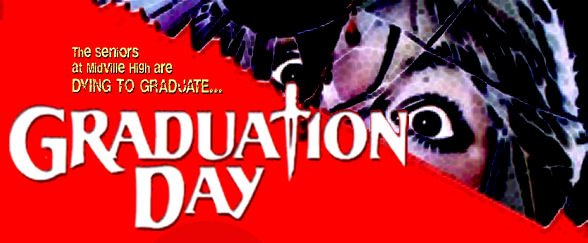
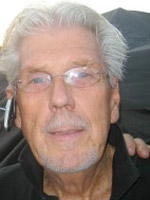
James Winburn has worked on probably half of your favorite horror or action films in a stuntman capacity – even donning the Michael Myers mechanics outfit and mask in the first HALLOWEEN – and also directing the retro horror video staple EVIL ALTER! But you can get his exhaustive list at IMDB. We’re here to talk retro slashers – and here, Jim kindly talks GRADUATION DAY (1981) with us.
Retro Slashers: What was the director Herb Freed like?
James Winburn: I did numerous films with Herb Freed. I think four films. He was a very sensitive, low speaking man that wanted respect on and off the set. He was well liked in the film community. Herb was studying to become a Rabbi in Israel, when he met a wonderful young lady that he fell in love with. But she told him she wouldn’t marry him if he was going to be Rabbi. Herb decided to be with her in America and they started their motion picture adventure together. His wife was the strength behind Herb. The crew members were hard working non-union film people. Herman Grigsby the production manager knew all the non-union people to bring on the film production at the prices IFI Scope III was paying. It wasn’t a large budget horror film. It was close to John Carpenter Halloween budget.
One critic review stated. “The crude, cheap, amateurish slasher is just about worthless.” They gave Christopher George a thumbs up for trying to save the film. But Herb Freed just smiled and cashed the checks from distribution.
Retro Slashers: What stunts in the film were you mostly involved in?
Winburn: On Graduation Day, I was the stunt coordinator. Herb Freed was going through a bad time in his life, due to his wife having just passed away.
Retro Slashers: Was the shoot fast/rushed or slow/relaxed?
Winburn: The shooting schedule of the film was four weeks. Due to IFI Scope III – a partnership of David Baughn and Herb Freed – the production scheduling was pushing hard to get all the shots that Herb wanted. The company worked six days a week, and long hours.
The first assistant director/second unit director Jan Gunderson was always trying to take over the directing for Herb. See now, Herb was not himself due to his wife’s passing and Jan Gunderson the assistant director was always trying to take over. The crew really didn’t work that good with him as a 1st assistant director. On the day that we shot the killing of the football player, Herb fell into deep depression over his wife and collapsed. He ask me to shoot that scene for him. I was setting it up and getting the actors in place with rigging of the football, when Jan Gunderson started [mouthing off over the decision]. I won out for that scene and shot it the way Herb wanted it. Needless to say, from that day on the assistant director had a dislike of the stunt coordinator. Anyway, that’s Hollywood show business…
Retro Slashers: Do you remember how the Pole-Voulter impaled on bed of spikes hidden under landing mat scene was achieved?
Winburn: The pole vaulter scene was easy, because I was a high school pole vaulter and took third place in the California C.I.F. Relays in my Junior year. Everything you saw was various camera angles from the cameraman Daniel Yarussi. Film editor Martin Jay Sadoff cut the scene great, because of the camera angles that were given to him. Good camera work helped the editor out to be a good cutter.
Retro Slashers: Who was playing the killer under the costume & fencing mask, was it the same actor (E. Danny Murphy) that turns out to be the killer?
Winburn: The actor that played the student and the killer, played student and the killer throughout the film. Herb and the actor both agreed to develop the character so he could feel the dual personality throughout the film. It really didn’t work…
Retro Slashers: What was it like working with Christopher George?
Winburn: Christopher George. What a nice guy, that was having bad luck in getting good rolls in the movies and in television. I worked with George on many films and television shows over the years. But, George’s drinking problems were knocking him out of getting better films. This film was easy and not a lot of work for a good actor. It was a walkthrough and a cheque, for a few days work. George and I would sit talk about all the various films and television shows we worked on together and on John Wayne films. We would laugh about some of the situations that occurred and how we completed those scenes laughing, which would piss off the director.
Retro Slashers: Seeing as how there were alot of athletics in film were there many accidents on set?
Winburn: I don’t remember anyone getting hurt on any of the scenes of the killing. That’s why I was there. Good prep and working with each actor through their scenes – showing them how to fall, take the impact of the rigging without getting hurt, etc. I was involved with all the action/stunt scenes in the film. Herb Freed wanted me there every day of principle photography. The second reason was that Herman Grigsby – the production manager – wanted me there to protect the company.
Retro Slashers: Where there any general problems, then?
Winburn: Yes, like many low budget films, problems are always popping up. So there are always people coming and going. Sometime it’s not the crew’s or actor’s fault when they leave. So that’s part of making these type of films and having these kind of production problems with this type of budget. Anyway, that what I remember. I had a good time with Herb, no matter what kind of problems occurred on the production. But did the check clear at the bank? Hmmmmmm…
By Paul Talbot: Among the more disturbing images created by Rob Zombie for his controversial Halloween remake is the brutal scene where a young female inmate is raped by two sleazy orderlies in Michael Myers’s dark cell at Smith’s Grove Sanitarium. Chenell Cowan played the disturbed girl in this unsettling set piece which was cut from the theatrical version (after negative test audience reactions) and can only be seen on the “Unrated Directors Cut” DVD.
The petite, dark-blonde, blue-eyed actress first got involved with Zombie’s camp in early 2007, when she was cast in the director’s Werewolf Women of the SS, a fake exploitation trailer featured in Grindhouse. Cowan explains, “I was a huge fan of Rob Zombie’s first two films prior to working on Werewolf Women of the SS and was totally thrilled to have the opportunity to work with him. I worked on Werewolf Women for one day in the second week of January. I did not receive a script. Each time I shot a scene, I didn’t know what I would be doing until they brought me on set and told me what was going to happen.”
In the finished “trailer,” Cowan can be seen screaming on an operating table as a crazed Nazi (Bill Moseley) conducts a fiendish experiment. She says, “I filmed two additional scenes that didn’t make it to the version that was seen in theaters. The makeup was minimal. They made me look haggard and beaten down, like someone who has been kept prisoner and experimented on. I also had special makeup applied to my body to add wounds and slash marks. All of those details were amazing. I thought those sets were incredible.”
“Bill Moseley was a really nice man and really talented. I did another scene with Sheri [Moon Zombie] and Sybil [Danning], and both of them were great. Sheri is a real sweetheart and it was really exciting for me to get to meet her after being such a fan of [her] ‘Baby Firefly’ [character] in Rob’s first two films.”
Most of the actors from Zombie’s Grindhouse trailer ended up in his Halloween remake including Cowan, who was cast as Karen Mercy, a mentally-unbalanced resident of the Smith’s Grove asylum. “I didn’t audition for Halloween,” she explains. “Shortly after the shoot for Werewolf Women of the SS, the casting director for Halloween called me and said that [Zombie] had asked her to offer me the role of Karen Mercy. Grindhouse and Halloween are the first two studio films that I worked on, and they both happened really quickly. I got both jobs within around two weeks. Prior to shooting those films, I had worked on two short films that were both comedies, so it was a lot of fun to dive into something completely different.”
“I watched the original Halloween before shooting. I knew that the part I was playing was not in the original film. I did research to prepare for the role. This character is a mental patient, who is also overly-medicated, and she has this incredibly violent and traumatic experience in the film. She is very helpless in many ways but she is still going to put up a fight. I really worked on my strength and endurance so that I’d be able to handle it.”
“I shot Halloween in mid-March. I worked for two days. The hallway scene was shot in a real hospital. The scene in Michael Myers’ room was shot at the same hospital, but his room was built by the crew. The first time I walked into his room, I was blown away. It felt so real and just perfect [with] all the masks covering the walls. The room had such a dirty and dark feel to it. You really felt like someone had been in there in isolation for years. I only met [Tyler Mane] briefly. I think he gives an awesome performance in the film.” (Mane played Michael Myers.)
The effectiveness of Cowan’s Halloween scene was helped immensely by the creepy performances by cult actors/convention regulars Lew Temple (The Devil’s Rejects) and Courtney Gaines (Children of the Corn) as the rapists. “It was a closed set when we shot my scene,” Cowan says. “Both Lew and Courtney are really nice guys and great actors, and I think they were both so pitch-perfect in the scene. They really turned your stomach. When I arrived on set the first day and met them, we knew that because of what went on in the scene that it was going to be tough to shoot. We spent some time talking about it and getting to know each other a bit before we shot so we had a comfort level with each other. I honestly couldn’t have asked for two better guys to have done that scene with. They made me feel so completely comfortable every step of the way. I thought they had a tougher job than me, given what they had to do to me in that scene. I mean, that is really disturbing stuff. We had a really open dialogue about everything, and I wanted to make sure that they knew they didn’t have to hold back or anything. I wanted it to feel really gritty and I think and hope that we managed to achieve that.”
“No stunt woman or double was used for me in Halloween. There was a stunt coordinator who helped me learn how to brace myself against the walls and the bed frame and make sure I didn’t really get hurt. It was tricky because the scene needed to feel gritty and sloppy in a way because you have these two really drunk guys taking advantage of this helpless girl in tight quarters in front of this dangerous killer. But at the same time, for technical reasons, it needed to have structure to it. We couldn’t just be flying all over the place without a plan. We needed to make sure we stayed in frame. It certainly felt like we shot a ton of takes for the scene, but it is hard to remember how many we did. I lost count! I think the best word to define how that scene felt is ‘draining,’ both emotionally and physically. I definitely went home feeling drained but also really excited and invigorated because I was just so thrilled to be a part of Halloween.”
“The makeup I wore was pretty minimal; mostly it was used to make me look pale, tired and worn-down. I was not brought in during post to add screams. Any screams I did were recorded as we filmed the scene.”
Cowan speaks highly of her Grindhouse and Halloween director: “What was really wonderful was that he was such a great guy in person, and such a talented director, that he actually exceeded my expectations. The scenes I did in both films had difficult material and, right off the bat, I completely trusted him and he made me feel totally at home and comfortable. As a director, he has a really clear vision of what he wants. Yet at the same time, he is really open to input from the actors and different ideas that are discovered in the filming process. The crew on both films worked so well together. You could certainly tell that there was a comfort level and camaraderie.”
Although her role took up only a few pages of the screenplay, Cowan explains: “I was given the entire script for Halloween. The script was labeled as ‘Confidential’ and I knew that the plot details were a secret, so I made sure to honor that before the film’s release.”
After a June 2007 test screening of Halloween in New York City, comment cards and website reports revealed that the vicious rape scene had alienated most of the audience. Rumor had it that the explicit sexual attack could get the film an unwanted NC-17 rating. Later that month, Zombie and company shot several additional scenes including one set in Smith’s Grove that replaced the rape with a different vignette that leads to Michael Myers’ escape. All footage of Cowan and Courtney Gaines was completely deleted from the final cut. (Lew Temple still appeared, briefly.)
Cowan says: “I definitely think [the scene] is unsettling and disturbing. I really like how they put it together and added the music it really has a sense of dread to it. I can definitely understand how people would find it hard to watch. A couple of friends of mine were really disturbed by it, especially because they know me. It’s kind of weird for me to watch it, because my perspective is so different after having shot so many different takes. When we were filming it, I purposefully didn’t watch any of the playback. Plus, a lot of what goes on was not in my line of sight, or was going on behind me, so I had no idea how the final product would look when I was shooting it. I do think it has the gritty, visceral, unsettling feeling that we were going for when we shot it so I am happy about that.”
Cowan saw the final theatrical version of Halloween at the August 23, 2007 private screening in Hollywood. “Before I saw the film at the premiere, they told me that my scene had been cut. While it would have been great to have seen my scene on the big screen, I also think that the new escape sequence works incredibly well. There are so many factors that go into these types of decisions. It would be selfish of me to be upset about my scene not making it to the final version. This kind of stuff happens all the time, so you just roll with it. I love the final version. I thought it was such a cool take on the original. Rob Zombie really made it his own. Honestly, working on the film was such an amazing experience for me and I feel so privileged to have been a part of the film and I didn’t worry that the scene ended up being cut.”
But Cowan’s performance didn’t disappear into Halloween oblivion. A few days before the final version opened nationwide on August 31 (to huge grosses and mixed fan reactions), a high-quality copy of the early test screening version became available as an illegal download on numerous torrenting sites. Labeled by fans as the “Work Print Version,” this early cut is considered by some to be superior to the theatrical version and, like the Halloween 6 “Producer’s Cut,” became a popular bootleg.
When Zombie put together his “Unrated Director’s Cut” for the late 2007 DVD release, he decided to restore the scene with Cowan. On the commentary track, Zombie explained why he cast the actress in Halloween after working with her on Grindhouse: “I knew that she was game for anything. Sometimes people complain a lot and I knew that she wouldn’t complain, so she’d be perfect.”
The “Unrated Director’s Cut” far outsold DVDs of the “Theatrical Cut” and the former is now the only version that is readily-available. Chenell Cowan’s minor Halloween role has insured her a place in Michael Myers history. (One rabid fan of the series even purchased, off eBay, the soiled nightgown that she wore for her role.) She says, “I know some people who are fans of the series and they were really excited that I was a part of this film. I would really love to do another horror film.”
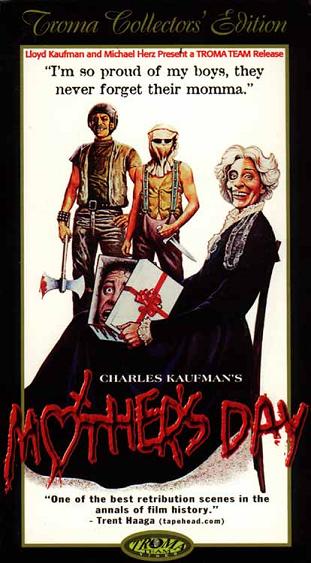
By “SkaryMoviez”: Every once in a while, a retro slasher arrives to little or no fanfare, only to be recognized years later, thus attaining what we like to call cult status. Charles Kaufman’s 1980 classic Mother’s Day arrived into theaters only to be looked down upon by fans of the then more popular Friday The 13th, which was coincidentally shot across the same lake used in Mother’s Day.
With the advent of VCR‘s and the VHS boom in the mid 80‘s, Mother’s Day soon crept into the homes of unfamiliar watchers who were exposed, among other things, to violent rape, torture, and ultimately a much well deserving revenge twist that was sure to satisfy the hungriest of gore hounds. More than 30 years later, the movie is just as well known as it was in 1980. It’s known enough to warrant a remake by famed Saw alumni Darren Lynn Bousman who promises that his version will be just as gritty as the original.
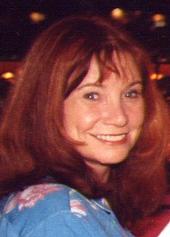
I was lucky enough to be in contact with Nancy Hendrickson, who played Abbey, and was able to get all the details of what went on during production. Read on to find out everything you’ve wanted to know about Mother’s Day!
How did you get started in the business?
“I always wanted to be an actress. I started taking “drama” class as an elective in junior high, continued on through high school and then auditioned for Carnegie-Mellon University’s Drama Dept. – the top undergrad acting program at that time. I didn’t get selected after my first audition so I went to a local college, took acting classes, did a few more plays and got into CMU two years later. After I got my BFA I went to New York and started auditioning for plays. Almost as soon as I arrived there I met my first husband, Dan Loewenthal (editor of Mother’s Day). I got a day job as a script supervisor/PA on a low-budget film and he was the 1st assistant cameraman.”
How did you find out about Mother’s Day?
“Dan and I were married at that time with a four-year-old son. I was working in plays and he had settled on editing as a profession. He did an early film for Charles Kaufman (director of Mother’s Day and brother of its producer, Lloyd Kaufman). Charles asked him to edit Mother’s Day so that’s how I found out about it.”
Did you audition for anyone else, or did you specifically read for the part of Abbey?
“I don’t think I auditioned when they were originally casting. Charles had cast all three parts with other actresses but one dropped out after the first week of rehearsal. They had one week of rehearsal left before the start of filming and Charles needed a replacement fast so he offered me the part outright.”
What were the other cast members like on set when the cameras weren’t rolling? Did anyone stay in character the entire time?
“No. No one stayed in character. However, Deborah, Barbara and I did almost everything together so that helped to build convincing relationships. The atmosphere behind the scenes was really very different from what you see on film, though. The five of us younger actors (the three girls and Mother’s two boys) all became good friends and hung out together. We lived in cabins in an old Boy Scout camp and ate our meals in a dining hall. Barbara, the real name of the actresses who played Trina) and Deborah (who played Jackie) and I shared
a cabin and I believe the two guys shared one with each other.”
On the commentary for the dvd, it was mentioned that there was a relationship budding on the set between 2 of the actors and that Charles Kaufman had asked that it be put on hold to keep everyone in character. Do you have any insight on this?
“That would have been Barbara (Trina) and Holden (Ike). I don’t remember it getting put on hold. Maybe it just went underground. I know it lasted awhile after filming ended because I kept in touch with Barbara for quite awhile. In fact we went to Los Angeles together when the film opened there to try to take advantage of the film’s release to advance our film careers. The two main actors from “Don’t Go in the House,” another horror film of the same period, were out here doing the same thing so we hung out with them and traded career tips. One of them, Dan Grimaldi, resurfaced recently as Patsy Parisi on The Sopranos.”
Also, Charles mentioned that before shooting a scene, Billy Ray Mcquade was so hungover from partying the night before that he vomited on Rose Ross. Were you there for that as well?
“I’d forgotten that but, now that you mention it, I do remember his throwing up one day. Michael (aka Billy) was a real method actor who would get so into his role he’d get carried away. When he tied me to the exercise equipment, he was pretty rough and he actually dropped me on the kitchen floor in one scene and I hit my head pretty hard but he was really a sweetheart. He was always terribly concerned that he’d hurt me and apologetic after the camera stopped rolling and he broke character. Michael went on to do quite a bit of work as an actor. Can’t remember everything I’ve seen him in but I know one film he did was “L.A. Confidential.”
Btw, Rose Ross was actually Beatrice Pons who played the cook’s wife on the 50’s TV series, “Sgt. Bilko”, starring Phil Silvers. She was also a regular Officer Toody’s wife) on the 1960’s show “Car 54, Where Are You?” Since she’s passed away now and the statute of limitations is up, I think her true identity can be revealed without getting her in any trouble with the Screen Actors Guild.”
It was also mentioned that prior to filming, someone had died in the house. Were you aware of this?
“I remember hearing that. I didn’t know if it was a rumor concocted to help us get into character or actually true but I really didn’t want to know. It was a pretty creepy place, with or without a death, thanks to production designer Susan Kaufman (Charles and Lloyd’s sister). She went on to have a big career as did Ellen Lutter who was the costume designer/wardrobe mistress/sometimes boom operator on Mother’s Day.”
Speaking of the sets, What was it like spending most of the movie in the woods and in a dirty old house? Any stories?
“Well, as I mentioned already, the house really was creepy so we got out of it the minute Charles called “Cut!” No one stayed on the set for meals or breaks. There was a make-up trailer outside the house where we could hang out between takes. The woods wasn’t scary at all. There were big lights all over during the night scenes and lots of crew members. And the Boy Scout camp was primitive but pleasant enough.
I think the scariest thing might have been the food they served us. There was a cook who worked full time in the dining hall making our meals and she did the best she could I guess but a lot of the food was procured for free in trade for screen credit.”
Some fans would really like to know what was used as the bear poop that Trina (Tiana Pierce) stepped in. Any clue?
“No. I can’t remember. It looks pretty gross and realistic, doesn’t it? We had a special effects person though who made the Drano I killed Ike with out of pop rocks and rigged the TV set that I hit him over the head with. I’m sure he made it and made several back-ups too because you never get anything on film in just one take.”
There were a lot of physical stunts in the movie. Did you do your own or did you have a stunt double?
“I did my own stunts and had the bruises to prove it. The only exception being that the bodies inside the sleeping bags were not us, except during the campfire scenes when you first see us being stuffed into them.”
What was the most difficult scene for you to shoot?
“The night time campfire scene because we shot it in New Jersey at the end of September which means it was 40 degrees and I wasn’t wearing much so I was freezing the whole time. Carrying Jackie around in the sleeping bag was a close second. She lost fifteen pounds right after the shoot. Wish she’d done it BEFORE. 😉 ”
The most memorable scene was the one where I lowered Trina out the window inside a sleeping bag – or it appears as though I did. I actually just had my hands on a rope that was being held taut at the other end. The scenes of the bag were done separately with two guys holding a sleeping bag with Meta, the script supervisor, inside. I can remember the crew applauding after my takes were done and that was really surprising and gratifying.
The make-up/special effects people did such a good job on my hands, that people who’d seen the film kept wanting to look at them afterwards to see if they had scars or whether they’d healed. Then a still photo of me with my bleeding hands holding the rope was blown up to life-size and displayed on the sidewalk outside some of the theaters where the film was playing. A shot from that scene also made it into Fangoria magazine so it would be very hard to forget.”
Was there anything in the script that didn’t get shot? Was there anything that was shot that didn’t make it to the final cut?
“Not that I can recall.”
Queenie’s back story was briefly touched upon in the movie. Was there supposed to be more to this story that perhaps set itself up for a sequel?
“No one ever really said so but of course, as actors, we hoped that ending would be the jumping off point for a sequel.”
Were you aware that a then unknown movie called “Friday The 13th” was being shot across the lake? If so, did you or anyone else go over to the set and visit?
“Yes, we were aware of it and no, we didn’t go to visit. When you’re shooting there’s no time for anything else. You work 12 hour days, then you try unwind a bit and sleep. On Sundays, our one day off, we would drive back to NYC to spend some time with our families.
There was a small local bar in the area where we used to go sometimes after the shooting day ended. Patrons autographed the ceiling tiles there so of course cast members from Mother’s Day did too. Apparently the Friday the 13th cast also visited the bar because they also signed the ceiling tiles but we never happened to be there on the same nights and never met them. I was aware that Betsy Palmer was in the film and that was a big deal as her name had been a household word when I was growing up. Because of those two productions that little stretch of northern New Jersey became known, for awhile, as the “Hollywood of Horror.”
Friday the 13th was picked up by Paramount and released months before Mother’s Day and it gave us all high hopes for our own film. That was the first time it really occurred to me that Mother’s Day might actually play in real theaters – not just drive-ins. Interestingly, my ex, who cut Mother’s Day ended up cutting Friday the 13th Part V and the character of the young boy in that film was modeled after our son.”
Mother’s Day is known for its excessive violence and rape which caused it to be banned or severely trimmed in other countries. Did you think that it would have a negative impact upon its initial release? More importantly, did you ever think that it would have such a cult following, even 30 years later?
“Thirty years?! Yikes! That makes me thirty years older. I have to say that I never worried too much about the release because very few horror films had crossed over into mainstream theaters at the time we started filming – probably only Halloween and The Hills have Eyes. I did the film thinking it would be good practice in film acting and that no one would ever see it. When I was approached to attend Eli Roth’s screening last year, I was absolutely flabbergasted to learn that the film still had so many fans.
It’s true the tone was pretty dark compared to other horror films. I really think that darkness (along with the dark comedy aspect) is why it was never a franchise like Friday the 13th but also probably accounts for the fact that it has developed a cult following. I tried to dissuade Charles from some of the more tasteless scenes – in particular, stuffing Addley’s mouth with sanitary pads – but he really wanted that edginess. I’m not sure how many people know that Mother’s Day was an early effort of writer Warren Leight who went on to win a Tony Award for his Broadway play “Side Man” and who became president of The Writers Guild of America East.”
The ending pretty much left it opened to the viewers to determine the fate of Abbey and Trina. What would you have happen if the scene didn’t end with a shot of Queenie jumping out from the bushes? Would you reprise your role as Abbey had there been a sequel?
“I liked the open-ended ending because of the fact that it seemed to be setting up a sequel but I wondered if it was dissatisfying to the audience not having the plot resolved. Yes, I definitely would have reprised Abbey.”
Were you asked to participate at all for Troma’s DVD release? If not, would you have?
“No, I wasn’t asked. I doubt they knew where to find me by that time. Certainly, I would have. The night the film opened in 1980, my husband Dan and I and Charles Kaufman and his girlfriend at that time took cabs from movie house to movie house in NYC (it opened in 70 theaters at once in the NY area) and we spent a little time at each watching it on the big screens and watching the audience’s reactions. I was asked to do an interview for the TV show 20-20 that was doing a segment on horror films shortly thereafter but I had booked a commercial for the day of the interviews so Deborah Luce took my place.
A little over a year ago, after Quentin Tarantino bought the New Beverly Theater in LA, Eli Roth hosted a horror festival there and borrowed the last 35mm print of Mother’s Day from Lloyd Kaufman. Charles Kaufman, who now owns and operates a bakery in San Diego, Rex Piano (a PA on Mother’s Day who now directs Lifetime movies) and I were on hand to introduce the film and do a Q&A afterward.”
Sadly, Frederick Coffin/Holden McGuire passed away in 2003 due to complications with lung cancer. Were you aware of this? And do you still keep in contact with anyone from the movie?
“No, I wasn’t aware of that and I’m very sad to hear of it. Unfortunately, I lost touch with most people associated with the movie in 1985 when I moved to California. I was in touch with Warren, the screenwriter, briefly, a couple of years ago when he had a play opening out here and I just saw Charles and Rex for the first time in decades at the New Beverly.”
A lot of fans were surprised when it was announced that Darren Lynn Bousman was going to be remaking Mother’s Day. How do you feel about remakes in general? More importantly, what are your thoughts regarding them remaking Mother’s Day?
“First of all, I heard it was Brett Ratner. Maybe they’re both involved? In general, I’m not a fan of remakes because usually people choose to remake movies that were really successful and would be hard to do any better than they were originally. Consequently, the remakes are almost always a disappointment.
My only reaction to the news of a Mother’s Day remake, however, is to be intrigued and curious. I wish the filmmakers and actors well. I’ve heard it’s not going to be just a straight remake but will have a whole new slant which I think is good. I also think it might revive some interest in the original. I’d love to do a cameo in it.”
Not only are you an actress, but you also write, produce and direct. What projects do you have lined up?
“I am just finishing up a rewrite on a comedy which I have high hopes for and producers waiting to read. I also have several features I’ve written being shopped by producers so there are various irons in the fire. Although I still like to act when asked, I no longer pursue acting work. My main profession is writing now. I started in 1991, writing star-driven promo spots for The Disney Channel. Since then I’ve won some screenwriting awards, had scripts optioned and was a regular writer for Creative Screenwriting magazine for many years as well as a sometime contributor to MovieMaker magazine. I’ve written, produced and directed three short films and currently teach screenwriting, directing and general filmmaking at The Los Angeles Film School.”
Any last words for fans of Mother’s Day?
“Yes. I’d like to let you all know how very appreciative I am that you remember that performance all these years later and for your interest and support. Andy Warhol said everyone gets fifteen minutes of fame but, thanks to your generosity and to new generations of Mother’s Day fans, I’ve had way more than my fair share.”
Thank you so much for doing this. I speak for the fans when I say that we truly appreciate hearing from you. Good luck!
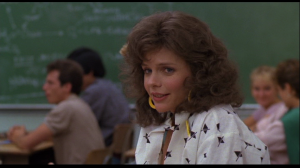
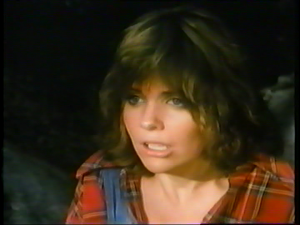
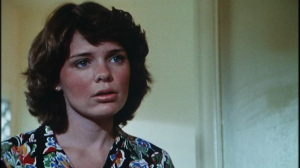
Lori Lethin was a mainstay of episodic television in the 80s, appearing in everything from The Dukes of Hazzard to Hill Street Blues. But it was her genre work that earned her cult status (although her role on Charlie’s Angels was pretty dang cool too!). Lori Lethin’s pretty and petite girl-next-door beauty may have ensured her a place in television and film, but it was the vivacious persona she exuded that made her such an irresistible force in the pantheon of 80s horror. Lori somehow always managed to grace her characters with a sense of wit and confidence, and most importantly, she looked like she was having a blast. She made three excellent forays into the world of slashers: Return to Horror High, Blood Birthday and of course the ominous killer gypsy flick The Prey. She’s a fan of horror, which may explain why she was just so damn compelling in her movies – even The Prey where the actors weren’t allotted a ton of depth.
After 1989, Lori disappeared from the screen until ten years later when she appeared in Brokedown Palace. Since then, another ten years have passed and Lori has not added any film or television work to her filmography, leaving a lot of fans wondering what became of one of their favorite horror actresses. I caught up with Lori recently and she was gracious enough to take some time to answer a few of the burning questions I had about her career, especially The Prey, and afterwards.
Retro Slashers: In the 80s your feature film work was predominately in horror. Are you a fan of the genre?
Lori Lethin: I am. 80’s horror films are so fun to watch… especially the obscure low budget films.
RS: In Bloody Birthday you worked with both Michael Dudikoff and Joe Penny before they became famous. Do you have any stories about them?
LL: I was in Vince Chase’s acting class with both of them. I did not know Joe too well but Michael and I did some scene work together. He was a hoot! I remember I had a very hard time even getting through the scene because I was laughing so hard!
RS: Birthday was also your first role as a lead in a theatrical. How’d you get the part?
LL: I auditioned for it.
RS: I asked Jackson Bostwick this same question. What year did you film The Prey? There are varying dates floating around.
LL: I can’t be sure. It was so long ago.
RS: What do you remember most about making The Prey?
LL: Being outdoors and my own stunt when I get killed… now that was fun!
RS: Your character has great camaraderie with Debbie Thureson’s character. She only has one IMDb credit. Do you know what became of her?
LL: I don’t know what became of her but I hope she is doing well.
RS: Also, I interviewed Jackson Bostwick in 2005 and he was hilarious. Was he as fun to work with?
LL: He was fun to work with and a really nice guy!
RS: Did you ever see The Prey after its release and do you have any opinions on it?
LL: I thought it was a great little low budget horror film.
RS: Return to Horror High is a fun movie. You got to work with some great talent (Brendan Hughes, Alex Rocco and George Clooney). Was it as fun to make as it is to watch?
LL: This was a blast to make. Alex Rocco is one funny dude. He kept me laughing!
RS: You worked in a lot in episodic television. Is there a difference between shooting a weekly series and a low budget feature?
LL: Money…money …money!
RS: Here’s another question I asked Jackson… Either loved or hated, The Prey has endured. Does its popularity surprise you?
LL: It does. I thought this film would come and go but it has endured!
RS: Edwin and Summer Brown only made one non-adult movie. What do you remember about working for them?
LL: They were a great team and were sincere about doing something different other then porn.
RS: You haven’t done any film or television since 1999. What have you been up to?
LL: Just finished school, getting my Doctorate in Clinical Psychology.
RS: Do you have a favorite performance or project?
LL: My favorite project and performance was in a movie for television I made called The Day After. Now that was intense!
RS: For nerd’s sake, I’m a huge Magnum P.I. fan and you were in a wonderful episode called The Big Blow with Sondra Currie and James Doohan, among others. Did you enjoy filming that?
LL: You bet! What could be better then Hawaii?
RS: Finally, what would you like your fans to remember most about your work?
LL: That I had fun and enjoyed every minute of it.
 Scorpion: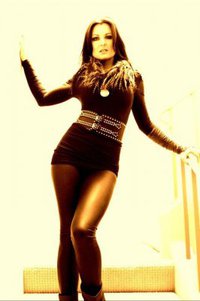
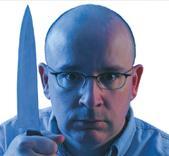
 James Winburn has worked on probably half of your favorite horror or action films in a stuntman capacity – even donning the Michael Myers mechanics outfit and mask in the first HALLOWEEN – and also directing the retro horror video staple EVIL ALTER! But you can get his exhaustive list at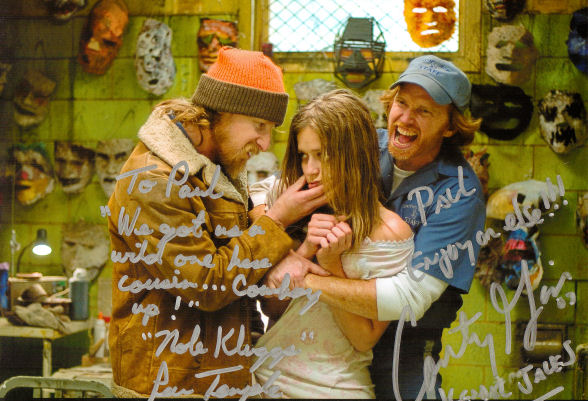
 Mother’s Day is known for its excessive violence and rape which caused it to be banned or severely trimmed in other countries. Did you think that it would have a negative impact upon its initial release? More importantly, did you ever think that it would have such a cult following, even 30 years later?