EXCLUSIVE: Stephen Romano Talks Black Devil Doll Novel

WARNING: ADULTS ONLY
Since interviewing Jonathan and Shawn Lewis back in late 2007, I’ve been waiting in anticipation for their outrageously sleazy exploitation flick Black Devil Doll.
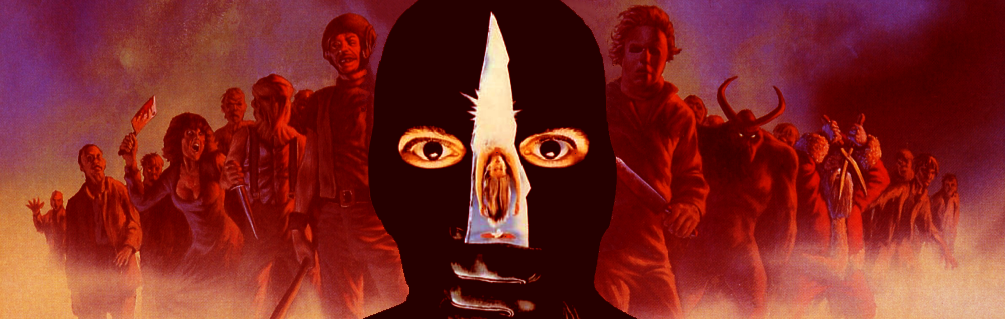
WARNING: ADULTS ONLY
Since interviewing Jonathan and Shawn Lewis back in late 2007, I’ve been waiting in anticipation for their outrageously sleazy exploitation flick Black Devil Doll.
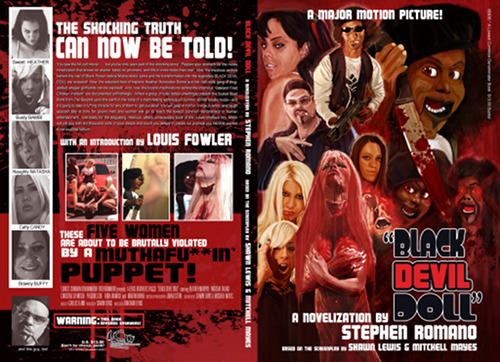
 I’m a bit slow picking up on this one but Black Devil Doll writer Shawn Lewis just informed me that a novelization of the movie is due for release.
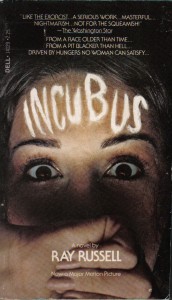 Fans of the movie The Incubus, a demon flick filmed like a slasher movie, will be surprised if they read Ray Russell’s original novel. The book is obviously influenced by H.P. Lovecraft’s Cthulhu mythos with a bit of Blatty’s The Exorcist and a dash of Penthouse Letters thrown in to spice things up. My love for the 1982 film version (which you can read my review for right . . . wait a minute. What the hell happened to all of the reviews?) drove me to seek out Russell’s novel. I wanted to know what happened to John Cassavetes’ character after the stunning ending and a little more explanation as to the Incubus’ origin. What I discovered is the novel is a completely different creature when compared to the film.
The major plot is the same. Women in the sleepy little town of Galen are being attacked and raped by an Incubus trying to extend the bloodline a few more generations. Julian Trask, a character never mentioned in the film, comes to town armed with Artes Perditae, an ancient book concerning the “Dawn Gods” and their unholy offspring. The book is made from the flesh skinned from witches and plays a pretty significant part in the story. Doc Jenkins, when he isn’t performing autopsies on victims, spends most of his time getting drunk with Trask and writing witty pieces for the Galen newspaper. The Incubus has superhuman strength, skin thick enough to stop bullets, and the ability to control the four major elements.
Russell’s writing is a bit disjointed. The second chapter starts off with a nameless narrator explaining life in Galen. This writing style is dropped half way through the chapter and is never used again. The attack scenes are brutal, disturbing pieces yet Russell turns them humorous during the closing chapters. The Incubus goes on a rampage but is held at bay when the entire female population is armed with guns. Those ladies blast lamps and bushes all to hell but they never quite seem to hit the monster. The action and suspense stops dead whenever Trask and the Doc start drinking or the Doc feels philosophical. The reader has to wade through page upon page of drunk logic from the Doc and psudo-science mumbo-jumbo from Trask.
There are two things in Incubus that will interest slasher fans. First, the Incubus is referred to as The Shape whenever it’s lurking in the bushes or hiding in a tree. Second, the description of the Incubus when it is finally revealed reminded me of the ending of Sleepaway Camp. Now, I’m not suggesting John Carpenter and Robert Hiltzik drew inspiration from this novel. But it’s hard not to think about Michael Myers and Angela Baker when reading these sections.
Incubus has plenty of suspense, shocks, and sleaze but the story is dragged down by two very dull main characters. The town folk of Galen are much more interesting and have more fun in their daily lives. Knowing the Incubus’ true identity does weaken the twist ending but it adds to the suspense in other areas. Trask might think placing the women of Galen in dorms for their protection is a good idea, but fans of the movie know it’s a bad idea doomed to end in misery and blood.
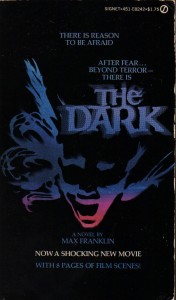
Back in the late 1970’s Tobe Hooper was set to direct a film titled The Mutilator, a simple tale concerning either the adventures of a zombie slasher or an escaped mongoloid, depending on which Hollywood Urban Legend you read. Hooper only lasted a day behind the camera and was replaced by Bud Cardos. The script by Stanford Whitmore remained the same until producers saw the box office returns for Star Wars and decided a Sci-Fi film would make more money than a slasher. So The Mutilator became The Dark and the zombie slasher/escaped mongoloid killer became an alien with the ability to shoot laser beams from his eyes.
Fortunately for slasher fans, the 1978 novelization of The Dark was written before the drastic changes to the film occurred. The main cast of characters are the same as the film but the killer is Harmon Quade, an ex-sailor who developed a taste for human flesh and was lynched for his crimes in 1878. One hundred years later, Quade comes back to town with his trusty scimitar. He strikes every night, decapitating his victims before munching on their still warm bodies.
Journeyman writer Richard Deming, using his Max Franklin pseudonym for The Dark, excels in developing the approaching darkness into a malignant threat. The actions and paranoia of minor characters faced with the looming nightfall creates a level of tension and atmosphere not found in the film. The main characters in the novel, however, are rather cartoonish and come across as bad 70’s cliches. You’ve got Roy Warner, the tough loner ready to go Death Wish all over the monster who killed his daughter. You’ve got the tough feminist reporter ready to prove she doesn’t need no stinking man to make it in the world. You’ve got the tough Dirty Harry style cop who likes to shoot suspects first and ask questions later. You’ve got the tough old psychic who develops a link with the killer. The only cliches missing are the tough biker and tough kung-fu master.
Another problem plaguing the novel is Deming doesn’t answer all of the questions the reader has by the end of the novel. We never really learn who Quade was in life, how he came back from the dead, how he found a scimitar, or where he was hiding between 1878 and 1978. A blind man appears at every killing but his true identity is never revealed. It’s obvious he’s involved in the killings somehow but his origin is left up to the imagination of the reader.
The novelization of The Dark, only 187 pages, offers slasher fans a glimpse at what might have been a decent slasher film if Hooper hadn’t self destructed and the producers hadn’t radically changed the story. It isn’t difficult to imagine Harmon Quade as an early version of zombie Jason Vorhees especially when you read Quade’s physical description. 8 pages of photos are included in the novel. Some of the photos are nothing more than publicity shots but a few show scenes that aren’t included in the book.