Michael Myers 2009 Gallery

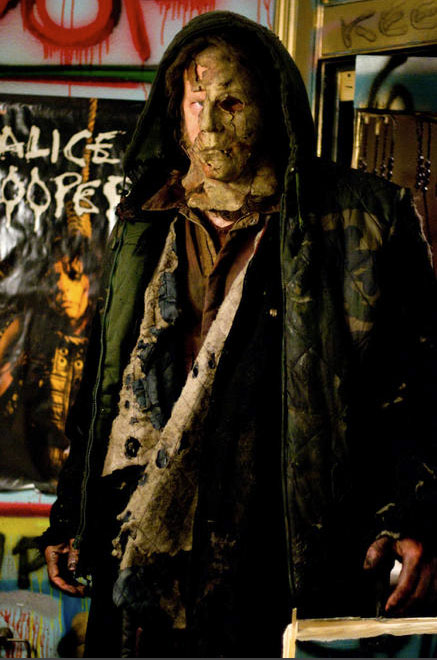
Our screenshots of both Standard and Hobo Deluxe versions of Mad Mike from the H2 Trailer for your perusal and dissection. Click for full size.

Posted in Features | Tagged , | 2 Comments

Code Red & Shriek Show Bring Scream (1981) To DVD

feature_scream

screamouting

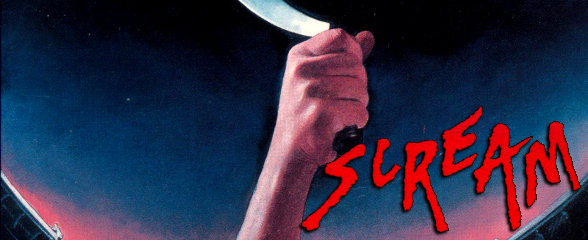
Coming to DVD June 30 from Shriek Show, Byron Quisenberry’s SCREAM (1981 – AKA THE OUTING).

No one ever returns from this phantom town of TERROR! A group of friends on a rafting trip down a river stop in at an old ghost town to spend the night. Soon their rafts disappear, and then they begin to be eliminated one by one by a mysterious killer.

The film has a bad rep with slasher fans, but if you can deal with the slow-burning pace and gratuitous stunt-bikers you’ll find a subtly creepy slasher film with an seemingly omnipotent murder whose identity, origin and motivations aren’t spelled out explicitly, but rewards eagle-eyed viewers.

Code Red produced the disc’s contents, which included an Audio Commentary by director Quisenberry, said to explain the mystery of the killer, creepy dolls and ship painting. Plus: Theatrical Trailer and TV Spot.

Posted in Features | Tagged | 8 Comments

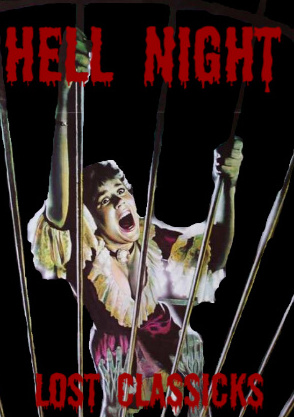
The Making Of Hell Night (1981)

hellnight-1

Director: Tom DeSimone
Writer: Randolph Feldman
Starring: Linda Blair, Vincent Van Patten, Kevin Brophy, Jenny Neumann
Rating: R (USA), 18 (UK), R (Australia) Continue reading

Posted in Reviews | 4 Comments

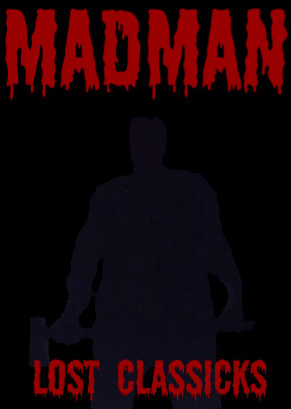
The Making of Madman (1982)

madman21

Director: Joe Giannone
Writers: Joe Giannone, Gary Sales
Starring: Alexis Dubin, Tony Fish, Harriet Bass, Seth Jones
Continue reading

Posted in Features | Tagged | 6 Comments

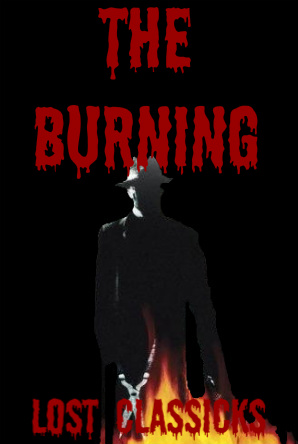
The Making Of The Burning (1981)

theburning

Director: Tony Maylam
Writers: Harvey Weinstein, Tony Maylam, Brad Grey
Starring: Brian Matthews, Leah Ayres, Brian Backer, Larry Joshua
Continue reading

Posted in Features | Tagged | 3 Comments

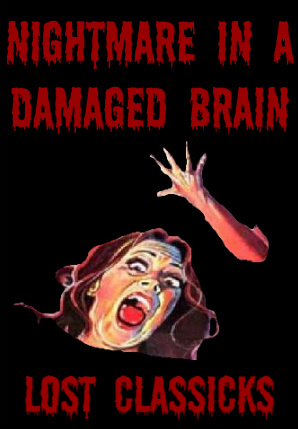
The Making Of Nightmare in a Damaged Brain (1981)

nightmare-4

Director: Romano Scavolini
Writer: Romano Scavolini
Starring: Baird Stafford, Sharon Smith, C.J. Cooke, Mik Cribben Continue reading

Posted in Features | Tagged | 4 Comments

Hobo Myers Ready For Meals On Wheels

hobomyers Continue reading

Posted in Features | Tagged , | 3 Comments

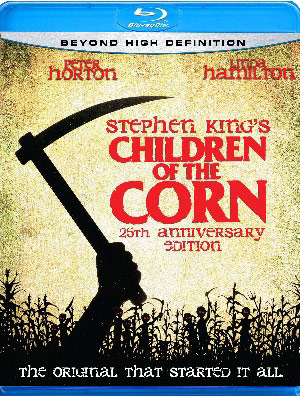
Blu-Ray Announcement: Children Of The Corn

cotcblu

I love CHILDREN OF THE CORN (1984) to death, but if only the technological marvels of Blu-Ray would allow an audio option to remove the grating childrens narration…

In 1984, a film adaptation of a chilling short story by horror master Stephen King terrified audiences and launched a film franchise that continues to this very day. Now, to celebrate the 25th Anniversary of a classic and just in time to welcome the upcoming remake, Anchor Bay Entertainment announces the August 25th release of the original Children of the Corn on Blu-ray! Not only will fans see and hear this ‘80s shocker classic like never before, this Blu-ray edition contains all the supplements from the previous DiviMax™ DVD , as well as nearly an hour of newly-produced high-definition bonus features, with all-new, never-before-seen interviews with the cast and crew – created exclusively for this release! SRP is $29.97.

Produced by Donald P. Borchers (who is helming the 2009 remake) and directed by Fritz Kiersch, Children of the Corn stars ‘80s sensations Linda Hamilton (Terminator) and Peter Horton (“thirtysomething”) as a young couple who find themselves stranded in the isolated community of Gatlin, Nebraska. They soon discover that all of the town’s adults have been slaughtered by a twisted religious cult of children led by the enigmatic Isaac (John Franklin) who worship a mysterious cornfield deity. A deadly race for survival begins –can these adults escape a town where the innocent become zealots and offer blood sacrifices to He Who Walks Behind The Rows?

The Children of the Corn Blu-ray offers a bushel of bonus features including:

  • Audio commentary with director Fritz Kiersch, producer Terrence Kirby and actors John Franklin & Courtney Gains
  • NEW “It Was The Eighties!” (HD) — Linda Hamilton talks about working on the film, offering great behind-the-scenes stories about the cast and crew
  • NEW “Stephen King on a Shoestring” (HD) – All-New interview with Producer Donald Borchers.
  • NEW “Welcome to Gatlin: The Sights and Sounds of Children of the Corn” (HD) – Interview with Production Designer Craig Stearns and Composer Jonathan Elias
  • “Harvesting Horror: The Making of Children of the Corn” (SD)
  • Fast Film Facts
  • Original theatrical trailer
  • Poster & still gallery
  • Original storyboard and original title sequence art

Whether you like your corn yellow, blood-red or HD blu, prepare to enjoy Children of the Corn in high-definition!

Source: Icons Of Fright

Posted in Features | Tagged , | 1 Comment

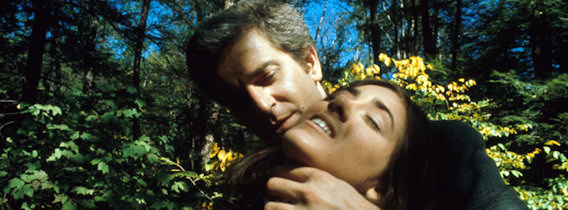
It’s Only a Movie: The Last House on the Left (1972)

rs_lasthouse

Long before he wowed fans with Freddy Krueger, thriller them with Scream and bored them senseless with Music of the Heart, filmmaker Wes Craven was producing low budget exploitation features in an attempt to shock and disgust audiences. Whilst the more successful of these was his second attempt, The Hills Have Eyes, perhaps his most notorious was The Last House on the Left, his directorial debut developed alongside fledging producer Sean S. Cunningham and loosely based on a Swedish Academy Award winner. Over the years, both Craven and Cunningham have attempted to justify its existence by stating that it was an allegory for all of the uncensored footage that had been broadcast by news networks during the Vietnam conflict, as well as a reaction against the bloodless violence of The Good, the Bad and the Ugly and other sixties classics. But the truth was far less noble. The Last House on the Left was a cheap horror movie that would follow the typical rape/revenge formula whilst employing a documentary-style approach. In fact, the original draft of Craven’s script was a far cry from any kind of social commentary, featuring unnecessary elements of disembowelment and necrophilia. Plain and simple, The Last House on the Left was not art, it was trash.

Wesley Earl Craven was born on August 2 1939 in Cleveland, Ohio, to a strict working class Baptist family. After studying philosophy and literature at Wheaton College in Illinois, he earned a writing and philosophy Masters from John Hopkins University in Baltimore, Maryland. He eventually became a lecturer in Humanities and English at Clarkson College in Potsdam, New York, where he would first develop an interest in cinema when, in 1968, he collaborated with a group of his students on a 6 millimetre short called The Searchers. As his passion for filmmaking grew, his desire to teach slowly diminished and by the end of the semester he decided to pursue his newfound ambition. After moving to New York City, Craven found that he was without work and trying to support a family and was forced to take a teaching job in a high school. But an old college student, Steve Chapin, had taken notice of his passion and suggested that he meet his brother, Harry. The following summer he took him up on his offer and went out to meet Harry Chapin, who at the time was making industrial films for the likes of BMI. During this period, Craven was taught the basics of filmmaking from an editorial point-of-view, where he would learn the importance of post-production, whilst also working part-time as a taxi driver. Harry Chapin would later become a successful singer-songwriter, penning such classics as Cat’s in the Cradle, before dying tragically in an automobile accident on July 16 1981. Craven’s odd-job lifestyle would eventually cost him his marriage, leaving him broke and alone. It was whilst struggling on occasional work synching up dialies that he would make the acquaintance of another wannabe filmmaker.

Sean Sexton Cunningham was a native of New York, having been born there on December 31 1941. After attending Franklin and Marshall College in Lancaster, Pennsylvania, he began to entertain a career as a doctor, but soon discovered that he was taking more pleasure from his part-time theatre work and so studied film and drama at Stanford University. A friend from the Lincoln Center for the Performing Arts offered him work as a dresser but soon began to take notes from the stage manager, eventually taking the role himself with The Merry Widow at the Mineola Playhouse on Long Island. His two successful productions, The Front Page and Our Town, had earned him a modest amount of money and so he decided that his next step should be into the film industry. Knowing nothing about the process of making movies, he decided that he would learn as he went along and so raised $3,500 to produce a sex-education feature, The Art of Marriage, for which he would credit himself as the Nevada Institute for Family Studies. With his profits, he rented out office space in Manhattan where the city’s independent film scene was thriving. Creating the label Sean S. Cunningham Films/Lobster Enterprises, he and a few friends would create a series of commercials in an effort to develop their own filmmaking style. With a further $50,000 raised from friends and family, Cunningham’s next project was a pseudo-documentary that was once again marketed as adult education.

Karma Sutra, which would mark the first appearance of soon-to-be porn star Marilyn Chambers (who sadly passed away on April 12, ten days shy of her fifty-seventh birthday), began shooting in May 1970, although a a four month hiatus would push the wrapping of the production back until the end of the year. Filmed in Cunningham’s home town of Westport, Connecticut, Cunningham found that constant creative differences with his business partner, Roger Murphy (who had previously worked as a cinematographer on Monterey Pop, a 1968 film that covered the Monterey International Pop Festival in California), were becoming an issue, particularly during post-production and soon he was forced to find additional help during the editing process, finally settling on Craven. With Murphy constantly walking from the project, Cunningham found he had to rely more and more on his new assistant, which would result in a close friendship and a re-shoot in Puerto Rico during the winter would mark Craven’s official debut as a director, albeit uncredited. Once completed, Cunningham began to shop his new project, now retitled Together, around potential distributors, eventually travelling to Boston to meet the owners of a company called Esquire Theaters of America, who had recently made the decision to branch out into film development and distribution under the banner Hallmark Releasing Corporation. The businessmen, Philip Scuderi, Steve Minasian and Robert Barsamian (along with assistance from their theatre booker, George Mansour) negotiated a deal and paid the producer $10,000.

The early seventies saw a rise in erotic cinema, with the likes of Deep Throat and Emmanuelle scoring big at the box office. Between Hallmark and AIP, who would distribute the film nationally, both companies would earn millions in profit from the film and soon the owners approached Cunningham about developing a low budget horror film, as they seemed a quick and easy way to make money, offering him $50,000. Sensing the enthusiasm and obvious talent in his protégé, he offered Craven the chance to write and direct, with Cunningham’s office having the necessary equipment to shoot it cheaply. Having recently seen Jungfrukällan (The Virgin Spring), a Swedish drama from acclaimed auteur Ingmar Berman that told of a group of goat-herds rape and murder the daughter of a farmer, only to later take shelter in the family home where they are discovered and revenge is brutally served, Craven took the basic outline and brought it into modern times, where two hippie girls on their way to a rock concert and kidnapped, tortured, humiliated and murdered by a gang of escaped criminals. His script, initially titled Night of Vengeance, featured an onslaught of tasteless set pieces in which the girls are abused in every possible way, due to Cunningham’s insistence that Craven pull out all the skeletons from his closet. One scene featured two of the convicts performing necrophilia on one of the girls, whilst the female of the gang removed the other girl’s eyeballs and crushed them underfoot, before slicing off her nipples and cutting her stomach open, dragging out her intestines and then watching as her friend sodomises the corpse. Any kind of social commentary that Craven had intended was lost amongst the pure exploitation.

With the first draft completed in just two weeks, Cunningham would assist in the rewrites, removing much of the extreme gore and improving the dialogue. Another aspect of the script changed during this process was the finale. Originally, the father (who was a doctor) was to have a scalpel fight with the lead convict, but after Cunningham noticed a poster in Times Square of two men battling with chainsaws he decided to incorporate that into their story. Having hardly made any money from Together, Cunningham was determined to make a profit with their feature film. When the two submitted the script to Hallmark, the investors were so enthusiastic at its potential they offered a further $40,000. Pre-production on what had become Sex Crime of the Century (although throughout the shoot the name would constantly revert back to its original name) began in August 1971. As the feature was a non-union film, the producers were forced to publicise their casting call in any way possible, usually through word of mouth. The most experienced of the cast was Fred Lincoln, born Fred Perna in Manhattan, later growing up in the Hell’s Kitchen neighbourhood of New York. Lincoln was a veteran of countless X-rated movies (such as The Altar of Lust, Millie’s Homecoming and Pay the Baby Sitter), as well as a stunt gig on The French Connection. For his callback, he was accompanied by a young friend, twenty-three year old Jeramie Rain, who read for the role of Sadie, one of the sadistic criminals. Despite the filmmakers originally writing the character as a forty year old, Cunningham was finally convinced and offered her the role. Incidentally, Rain would marry fellow actor Richard Dreyfuss in 1983, eventually divorcing in 1995.

For the role of Krug, the lead villain, a quiet and polite man by the name of Martin Kove arrived at the auditions, before stating that he was not right for the part and requested for the comic relief role of the deputy. Instead, he suggested his girlfriend’s brother, a musician and occasional actor called David Hess, who arrived for his audition unprepared and in an aggressive mood. Suitably impressed, Craven and Cunningham hired him on the spot. The other main roles went to an assortment of newcomers, including Lucy Grantham, Eleanor Shaw (who was credited as Cynthia Carr), Marc Sheffler and Sandra Cassel. Principal photography commenced on October 2 1971, once again in Westport, with Cunningham using his house and surrounding area as the various locations. The days were long and unpleasant, particularly for Cassel who seemed disgusted by the experience. Due to the lack of funds, the movie was shot without permits, with the crew filming a scene and then quickly moving onto the next set-up before police could be alerted. Among the many local youths who had been drafted in to help out with the production was twenty year old Stephen Miner, who would later launch his own career directing the likes of Friday the 13th Part 2, Halloween H20 and the recent Day of the Dead remake.

The shoot eventually wrapped on November 6, with Craven and Cunningham rushing straight into post-production, with the editing process taking approximately six months to complete. Many scenes were cut in different ways, resulting in the long lost edit that became known as Krug and Company (which was finally released by Anchor Bay in 2003), whilst the theatrical cut was released on August 30 1972 under the alternative title The Last House on the Left, at the suggestion of Hallmark. Their ingenious marketing campaign played a large part in the film’s success, with its infamous slogan, ‘To avoid fainting keep repeating, it’s only a movie,’ gracing the movie poster. Hallmark were hitting their stride by 1972, also releasing the likes of Mario Bava’s bloody thriller Reazione a catena, which they retitled Twitch of the Death Nerve for its US release. The Last House on the Left would make around $3m in the United States, before earning an impressive $10m worldwide. But, despite the attention the film received, those involved were quick to distance themselves from such smut. Cunningham attempted several family movies before returning to the genre with Friday the 13th in 1980, Craven constantly tried to escape the horror typecast that his early work had placed upon him, whilst most of the cast would retire from the industry soon afterwards. Almost forty years later, The Last House on the Left is still one of the most controversial and deeply unpleasant movies ever directed by a mainstream filmmaker.
Posted in Reviews | Tagged | 3 Comments

A BOY’S BEST FRIEND pt.2 – Psycho 2 (1983)

Psycho 2

Director: Richard Franklin
Writer: Tom Holland
Starring: Anthony Perkins, Vera Miles, Meg Tilly, Robert Loggia
Rating: R (USA), 15 (UK), M (Australia)

Every sequel has a certain amount of expectation to live up to. The fanbase and familiarity that has built up around the original movie always causes both high expectations and brutal criticism when it comes to viewing the follow-up to a much loved classic. But very few filmmakers have felt the pressure that Richard Franklin faced when he decided to undertake the unthinkable and make a sequel to Psycho, perhaps the most respected and analysed movie of the last fifty years. The timing was just right, with Psycho having influenced the slasher genre perhaps it was apt that a sequel would be produced during the height of the craze. But following in the footsteps of such an auteur as Alfred Hitchcock is no mean feet, especially when the movie in question happens to have revolutionised horror cinema and introduce audiences to the archetype movie maniac, a sweet and seemingly gentle young man harbouring a deadly secret. Leatherface, Hannibal Lecter, none of them would have existed without the psycho known as Norman Bates.

As the success of the movie had laid in the blueprint of a novel by author Robert Bloch, it would make sense that the sequel would begin in the same place. Bowing to the suggestion of his agent, Bloch began work on the much-anticipated follow-up to his most renowned of works, which would continue the adventures of his twisted protagonist from the mental asylum from which he has escaped on his a Hollywood set where production has begun on a movie based on his crimes. Intended as a satire on the current trend of splatter flicks, Psycho 2 was a departure from the first book’s subtle-yet-complex structure and more into biting social satire. As a mark of respect for their treatment of his earlier work, Bloch sent Universal a copy of the manuscript, as the studio still owned the rights and would have the option of adapting the new story into another motion picture. The executives were unimpressed and asked Bloch to cease work on the novel to allow them to create a sequel which the fans could consider canon. The writer ignored their wishes and the book was eventually published in 1982 to modest success. Undeterred by the competition, Universal immediately greenlit their own follow-up which they decided would have no relation to Bloch’s work and set out to develop the film as soon as possible. In conjunction with first-time production company Oak Media Development Corporation, whom the studio had recently entered into a four-picture contract with, Universal set out to find suitable talent with which to bring back the now-iconic Norman for what they intended to be a made-for-cable venture.

Psycho 2-1

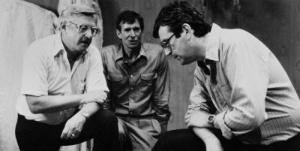
Having spent the earlier part of his career helping out around sets such as Hitchcock’s Tapaz and Family Plot, Australian filmmaker Franklin had seemed like the ideal choice to follow in his footsteps. Having received a phone call from producer Bernard Schwartz, Franklin was invited in to meet with the studio to discuss potential ideas for Psycho 2, as well as the possibility of also directing. After hiring screenwriter Tom Holland, who had previously penned the popular low budget exploitation flicks The Beast Within and Class of 1984, Holland worked closely with Franklin on developing both plot and character, before Holland completed the script alone. Instead of starting the story with Norman escaping from the institution which he had been incarcerated in since the events of the first film, Franklin and Holland instead decided to have Norman paroled and released back into society, having believed to have been rehabilitated. As the script was being developed, the studio approached Anthony Perkins, whose career since Psycho had included highlights like Murder on the Orient Express and The Black Hole, to once again portray Norman. Despite initially being reluctant after being typecast in the previous movie, Perkins eventually agreed and began on various minor alternations in the script, particularly between his character and Mary Loomis, a young down-on-her-luck drifter whom he has taken under his wing.

With Holland submitting his final draft on June 25th 1982, casting was swiftly underway for the assortment of characters that would enter Norman’s life, for better or worse. The task of finding the appropriate actors fell to Jackie Burch, who would later be responsible for similar duties on an array of eighties classics (The Breakfast Club, Fright Night, Predator). Whilst the filmmakers had managed to convince Perkins to return, two of the principal stars from Psycho would be absent for different reasons. Whilst Janet Leigh had been immortalised in the infamous ‘shower scene,’ the sequence had also marked the death of her character, bringing her story to an end. Her on-screen lover, Sam Loomis, had been portrayed by John Gavin, who had retired from acting to become President Reagan’s first Ambassador to Mexico on May 7 1981. But Psycho 2 would mark the return of Vera Miles, who had played Norman’s nemesis (and Leigh’s sister), Lila Crane, who was now determined to see him locked up once again, even if it means driving him insane. Although her name would once again be missing from the credits, Virginnia Gregg would provide the creepy voice of Norman’s mother. In the role of Mary Loomis (whose name was a reference to Bloch’s first novel, in which Marion Crane’s name had originally been Mary and her lover was called Loomis), the filmmakers eventually settled on Meg Tilly, a beautiful half American-half Chinese actress whose previous work included Fame and the obscure horror One Dark Night (directed by Tom McLoughlin, who would later helm Friday the 13th Part 6: Jason Lives).

Psycho 2-2

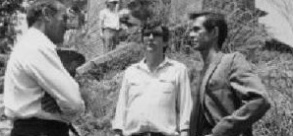
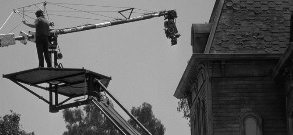
One of the more important aspects of the movie, aside from the presence of Perkins, was the famous Bates Motel and the old house that looked over it. The mansion was thankfully still standing on the Universal lot, although the studio were forced to recreate the motel from scratch. Basing his designs on the various photographs of the original movie, production designer John Corso began to build the motel piece by piece, carefully making sure all the measurements were identical in order to create a perfect replica. But the background and the unused portions of the building were matte paintings designed by Albert Whitlock (also responsible for the exterior of the diner where Norman worked), who had worked for Hitchcock himself on The 39 Steps, The Lady Vanishes, The Man Who Knew Too Much and many more. Jennifer Pollito, whose role as set dresser involved recreating the various props from the Mates home (including the stuffed birds), was so successful that a surprise visit from his predecessor, George Milo, was greeted with immense approval.

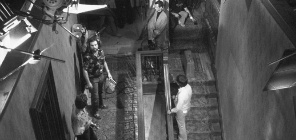
Filming commenced on Stage 24 of Universal Studios, California, on June 30 1982, with the very first shot being of Norman walking up the stairs of his old home, perfectly recreated by the production team. The cinematography, which had been intended to reference the original’s black and white whilst also moving more towards the neon-noir look that the Coen Brothers had used in their debut Blood Simple the same year, was handled by Dean Cundey, who had perfected the likes of the stedicam during his collaboration with John Carpenter on Halloween in 1978. The positive atmosphere on set quickly turned sour when Tilly, oblivious to the legacy that Psycho had left, casually asked a member of the crew why Perkins was receiving so much attention. The overly sensitive actor became furious and demanded that the actress be replaced, despite the fact that much of her footage had already been filmed. The shoot itself, which had been budgeted at approximately $5m, would last thirty-two days, with the other principal location being Courthouse Square, also located at Universal, which would later be used in the likes of Gremlins and Back to the Future.

Psycho 2-3

The filmmakers remained conscious throughout the shoot that they were making a sequel to a Hitchcock classic and so they tried to avoid using excessive blood or pointless nudity like many of the other slashers of the year (such as Sleepaway Camp). Instead opting for the subtle atmosphere of the original, Franklin’s main focus was on the relationship between Norman and Mary, which Perkins had tried to expand on with the inclusion of a scene in which his guest enjoys a sandwich whilst they get to know each other (similar to the sequence with Marion Crane in Psycho). This was as Perkins did not want the character to simply be reduced to a slasher-style boogeyman. Despite their differences, Perkins and Tilly (sister of Bride of Chucky star Jennifer Tilly) displayed an on-screen chemistry which managed to bring out the best in Holland’s screenplay, which had tried to humanise Norman and show some kind of repentance for his sins. The mother was also wisely left out of sight, once again only show as shadows or silhouettes or, during the climax, where he once again dons her dress and wig as he slips back into insanity.

The production finally came to a finish in August 1982, where it was then relocated to the editing room, under the watchful eye of Andrew London. Having been a friend of the director’s during their time at the University of Southern California in the late sixties, Franklin would give London his first big break with Psycho 2 after gaining the approval of Universal‘s Vice President Verna Fields, who had worked himself as an editor on American Graffiti, The Sugarland Express and Jaws. London would later work on such blockbusters as Rambo 3. With Gerry Goldsmith completing his score (as the first film’s composer, Bernard Herrmann, had sadly passed away almost a decade earlier, Psycho 2 was finally released on 3 June 1983 and was greeted with mostly positive reviews, earning a surprising $8,310,244 on its opening weekend. Some of the more devoted fans of Hitchcock’s movie were more critical when comparing the two, with renowned journalist Roger Ebert stating that, ‘If you’ve seen Psycho a dozen times and can recite the shots in the shower scene by heart, Psycho 2 is just not going to do it for you.’ Regardless, the movie would eventually make approximately $32m during its American theatrical run, guaranteeing that Norman Bates would return again.

Psycho 2-4

Posted in Features | Tagged | 2 Comments