Friday the 13th: The Final Chapter (1984) Review
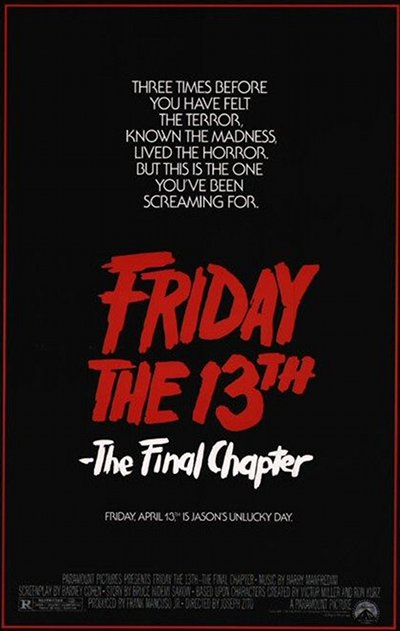
After three successful, if somewhat critically mauled, feature films, Paramount finally decided to lay their lucrative Friday the 13th franchise to rest with what promised to be The Final Chapter.
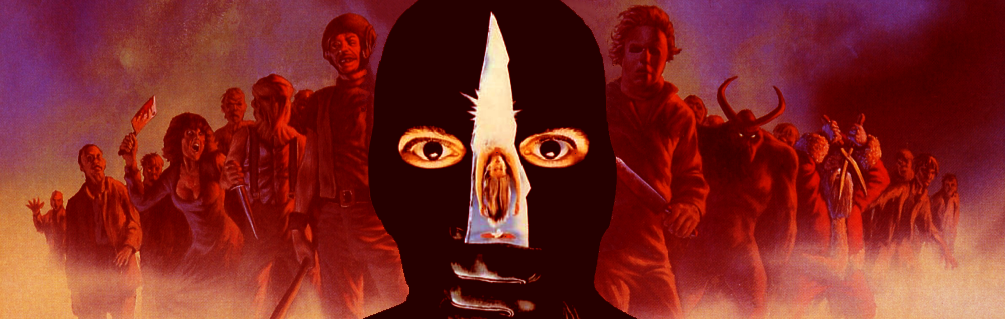
After three successful, if somewhat critically mauled, feature films, Paramount finally decided to lay their lucrative Friday the 13th franchise to rest with what promised to be The Final Chapter.
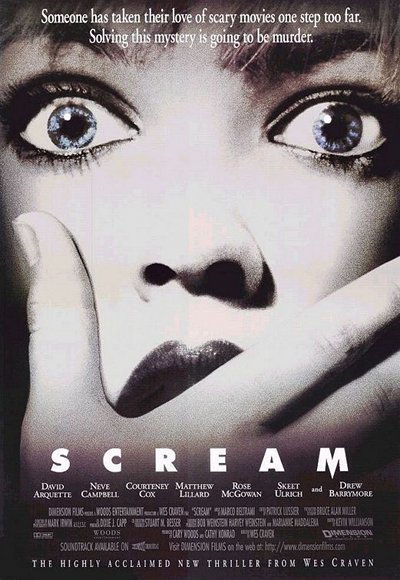
By the mid-nineties, the slasher film seemed like a bad dream. ‘Horror’ had become a dirty word and filmmakers were instead producing what had become known as ‘psychological thrillers.’
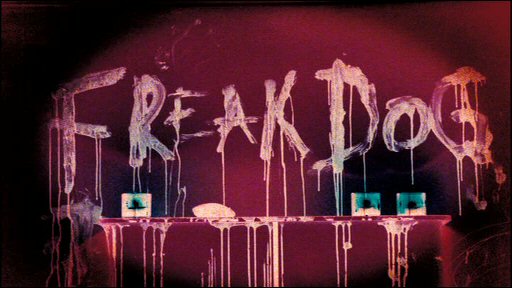
I never thought I’d live long enough to see a remake of Aenigma – Lucio Fulci’s blending of Carrie and Patrick, which featured killer snails and death by Tom Cruise poster. But that’s essentially what the recent British horror Red Mist (known as Freakdog in the US) is… albeit one that’s short on molluscs and big on Jason Goes to Hell-style body-hopping.
The premise is simple: What would happen if you inadvertently sent a mentally retarded hospital janitor into a coma when a hastily organized prank designed as retaliation for a blackmail plot went wrong, only to discover that secretly injecting him with an untested wonder-drug gave him the ability not only to astral-project into the bodies of your friends, but also to stalk and kill your friends in a variety of gruesome ways while seeking misguided revenge for a crime you weren’t entirely responsible for in the first place?
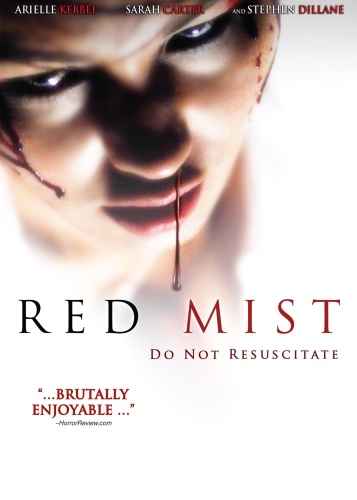 Yes, we’ve all been there, and in Red Mist it’s the turn of junior doctor, Catherine, played by highly likeable Katherine Heigl-a-like, Arielle Kebbel, who’s since gone on to star in the uninvited remake of A Tale of Two Sisters (itself called The Uninvited, aptly enough). Since it’s not until the halfway point that Catherine actually gets handy with the hypodermic, it’s a bit of a wait before the horror kicks into high gear but, with car-door head-slamming, forced acid-drinking and naked stomach-slicing in the middle of a busy nightclub, it’s certainly worth it.
What’s less attractive is the last-act lull, which puts Catherine in a very reactive (as opposed to proactive) position and, in these post-Sidney Prescott days, means she doesn’t quite cut it as a top final girl. That’s not to say the movie peters out, though; in fact, it all ends quite satisfyingly – especially in comparison to director Paddy Breathnach’s previous horror effort, the hallucination-themed Shrooms, which didn’t so much peter out as flatline during an epileptic fit of meaningless, are-they-tripping-or-not jump scenes.
Breathnach is Irish, and you’ll remember I described Red Mist above as a British film, which it is despite being set in America. With a couple of exceptions, it appears the cast is a mixture of English, Irish and Scottish actors, all valiantly attempting American accents with differing degrees of success. The movie, too, is a tag-team of styles and subgenres, mixing the morbid medical school hijinks of Pathology and Unrest with torture scenes, guilty drama, and supernatural slashing. It’s as the latter it delivers most wholeheartedly, however… That, and as a gory Aenigma variation.
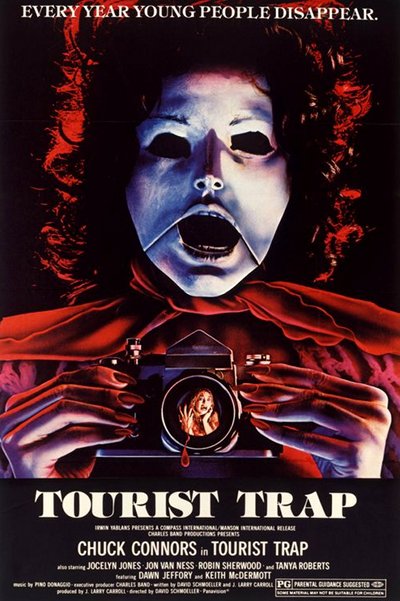
Ten years before collaborating on the successful cult classic Puppet Master, director David Schmoeller and producer Charles Band created Tourist Trap, a bizarre lost-in-the-wilderness thriller that sees a group of young friends falling foul of a devilish museum of mannequins.
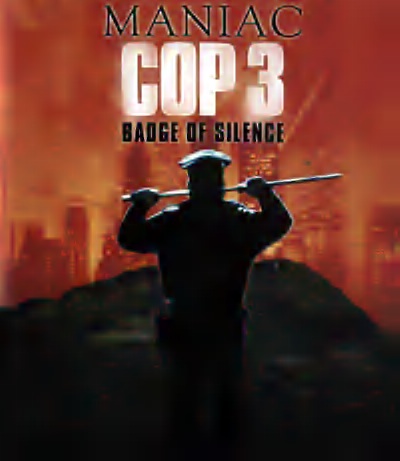
There are very few trilogies that end with their strongest story, so it often comes as a disappointment when the third and final film of any series is released.
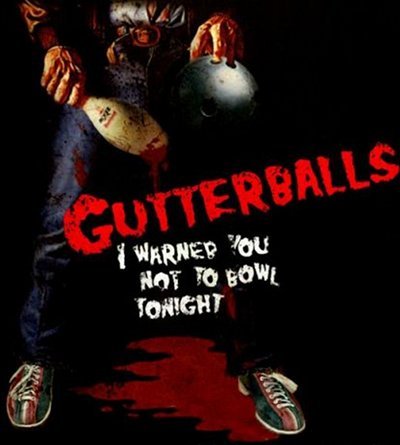
CAUTION: CONTAINS EXPLICIT MATERIAL
After the glossy makeover that Scream had given to the genre, the slasher film came dangerously close to becoming acceptable, safe and almost cool.
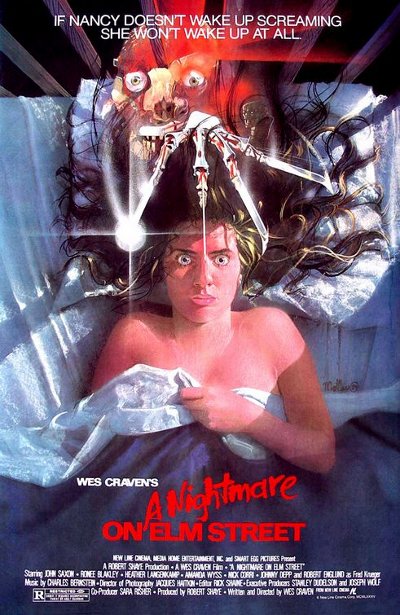
As the slasher boom came to an end, with most major studios bowing out of the genre and leaving just the independent filmmakers to milk the concept dry, a struggling director by the name of Wes Craven had penned a script full of original ideas and inventive deaths,
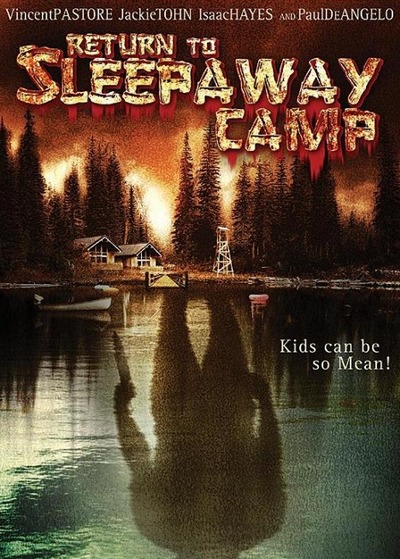
It had been twenty years since Robert Hiltzik had directed a feature film, with 1983’s Sleepaway Camp being his one and only effort to date. His follow up, Return to Sleepaway Camp, would ignore the first two sequels (both directed with tongue-in-cheek by Michael A. Simpson) and dispense with Angela simply slicing her way through a selection of irritating counselors. Once again employing the ‘whodunnit’ formula that had been present in the original film, RTSC would become a complicated and troubled project which, whilst filmed in late 2003, would not be released for a further five years. Critically mauled and hated by fans, Hiltzik’s own sequel would fail to live up to its promise and would once again threaten to bring the franchise to a standstill. Re-uniting several stars from the first film (DeAngelo, Jonathan Tiersten and Rose), RTSC was the director’s attempt at removing removing all trace of Simpson’s films from memory.
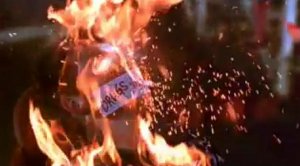 A group of children are amusing themselves in their cabin by lighting their farts, whilst their nerdy friend Pee Pee (Paul Iacono) watches on nervously. Camp bully Alan (Michael Gibney) crashes the party and demands to know what they are doing but when he attempts to outdo them he produces only a pitiful fart. Embarrassed by their teasing, he picks up the lighter and, using an aerosol can, creates a huge flame before taunting them with it. Suddenly, they are interrupted when their counselor, Randy (Brye Cooper), rushes in and lectures them about being idiots. Alan storms out of the room and one of the friends comments about how he gets away with everything, but Randy promises that one day ‘he’ll get his.’ He then rips Pee Pee’s comfort blanket out of his hand and tosses it onto the bed before marching back outside. Later that day whilst in the mess hall, Alan continues to be a nuisance by flicking his food into Pee Pee’s face so Randy gets revenge by baiting him about his stepbrother, Michael (Michael Werner), moving in on his crush, Karen (Erin Broderick).
The camp’s owner, Frank (Vincent Pastore), has invited Sheriff Jerry (Rose) in to discuss the dangers of smoking. Jerry has lost his larynx from thirty-five years of cigarettes and now talks with the help of a voice box. Some of the kids decide to ridicule the policeman by asking if he can play Intergalactic (a Beastie Boys hit that employed a similar vocal effect). Defeated by the unruly children, an angry Frank and Jerry sit back down and continue eating. Finally sick of his behaviour, Randy grabs a hold of Alan and throws him to the floor, demanding that he pick up the mess he has caused, but another counselor, Ronnie (DeAngelo), breaks up the fight and leads Alan away. Turning on the ‘nice boy’ charms, Alan is given permission to go to the kitchen to get another meal, where he angers the equally obnoxious assistant cook Mickey (Lenny Venito), who begins to pelt him with eggs when he mouths off one too many times. Eventually snapping, Alan throws a huge carving knife which digs into the wall next to Mickey’s head, just as Frank walks into the room.
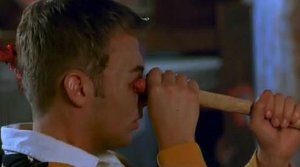 Running away into the woods, Alan tries to escape Michael who has been sent to calm him down. Showing a softer side by his compassion for the frogs who he believes are his only friends, Alan becomes annoyed by Michael when he hurts one of them. But when he tries to drag him back to the camp, Alan becomes aggressive and picks up Michael’s knife, holding it out at him whilst seemingly in a trance. Eventually, Michael storms off back to camp, leaving him in the woods. Soon afterwards, Mickey is preparing fries for the kids when a figure enters the room behind him and, grabbing his legs, lifts him upwards and plunges his face down into the boiling fat. The killer wraps his body up and takes it out to a large skip where it is crushed. Later that evening, stoners Weed (Adam Wylie) and Stan (Chaz Brewer) fool Alan into smoking dried cow manure, causing him to drop to his knees and violently cough as Karen’s cocky friend T.C. (Christopher Shand) walks in, resulting in him earning the nickname ‘Blowjob.’ As their smoking session comes to an end, Weed is tied to his chair by the mysterious assailant and a tube is fed from a gas tank down his throat. After removing the tube, a joint is placed into his mouth and then lit, causing him to spontaneously combust from the gas which he had swallowed. From then on, everyone who crosses Alan soon ends up dead, as he becomes the victim of one cruel humiliation after another.
The casting for Return to Sleepaway Camp is both one of its greatest assets and weaknesses. Returning to the roles they first occupied two decades earlier, DeAngelo and Tiersten prove to be worse at acting than they were when they were younger and Rose’s brief cameo as Angela lacks any kind of punch. The younger cast are made up of genetic American Pie-style teens but they serve their roles adequately. But by far the most impressive performance comes from Gibney, who somehow manages to add dimension to the role of Alan, who bullies those who are weaker than him as an way of dealing with the constant harassment he suffers from the other kids. A truly disturbed young boy, he is Hiltzik’s most inspired creation this time around. The casting of The Sopranos‘ Vincent Pastore and singing legend Isaac Hayes (once again playing a chef) seems a little pointless, particularly as Hayes is on screen for only a couple of scenes and plays no significant part in the story.
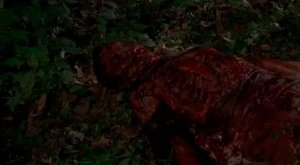 One thing must be said, kudos to Hiltzik for creating some inventive kills. Instead of the standard butcher knife slayings, RTSC is full of original and gruesome set pieces. Among the highlights we are treated to a bed full of spikes being forced down onto a victim, a penis being attached to a wire before being ripped off by a speeding car and a head trapped inside a birdcage, only to be attacked by hungry rats. The mix of prosthetics and CGI may fail on occasion but each kill has a sense of fun about it, meaning that whilst the horror aspect never quite gels the deaths are at least entertaining. Despite the script being full of more holes than the victims, the way in which they are dispatched at least makes up for its shortcomings. Everything about this movie is ludicrous and perhaps its greatest flaw is that it is unable to decide what kind of tone it is aiming for – the darkness of the original or the camp humour of the sequels. And the ‘twist’ ending fails to pack the same punch as the one Hiltzik achieved the first time around. Return to Sleepaway Camp is by no means as bad as many have made out, in fact it is rather enjoyable if you don’t take it too seriously, but anyone hoping for a worthy sequel to the original will be very disappointed.
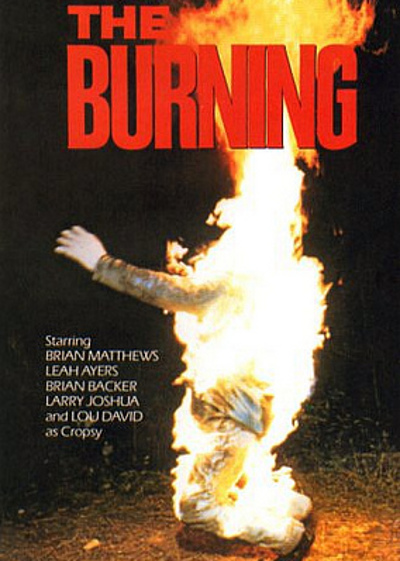
Whilst throughout the seventies special makeup effects artists such as Stan Winston and Rick Baker had become renowned for their work, their achievements were still often eclipsed by the recognition that the directors and actors would receive.