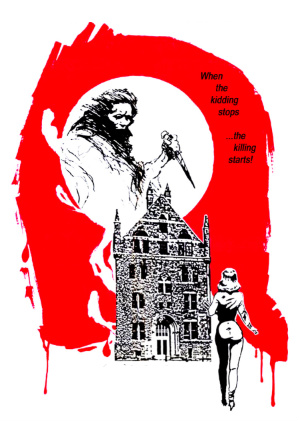
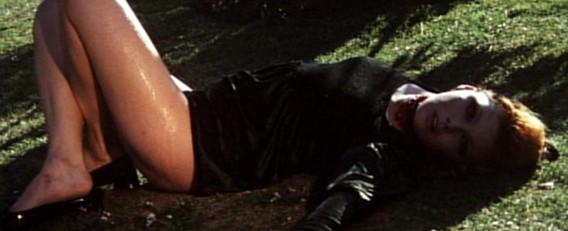
For every studio-produced slasher to emerge during the early eighties (especially throughout the genre’s heyday of ’80-’83) there was a batch of independently made features. The Dorm That Dripped Blood was such a film.
The success of Friday the 13th in 1980 and the subsequent slasher boom was responsible for every producer and studio in town attempting to create their own variation, some were successful (such as Prom Night, Happy Birthday to Me and Hell Night), others were mediocre at best.
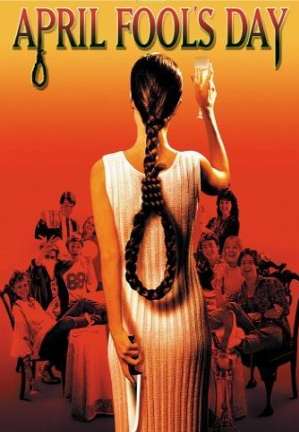
April Fool’s Day was released in 1986 as the slasher genre was gasping its final breaths. From then on the few remaining offerings would consist of ever-decreasing sequels and straight-to-video atrocities.
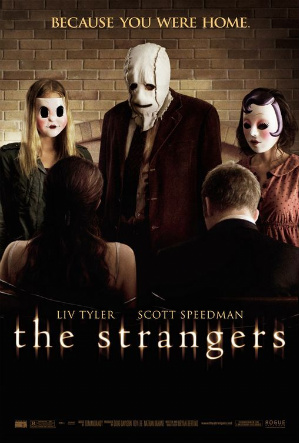
“Why are you doing this to us?” pleads Liv Tyler to the three masked killers that have been terrorising her throughout the night. “Because you were home,” comes the rather heartless response. And this pretty much sums up The Strangers, the debut of writer/director Bryan Bertino.
With such a glut of slasher movies released in the early eighties in the wake of Friday the 13th‘s unexpected success it seems that money-hungry studios and producers have an endless supply of material to work from.
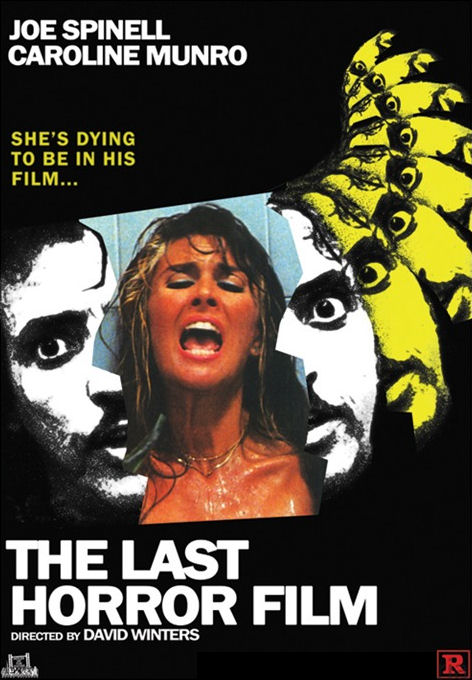
Vinny Durand (Joe Spinell) is a taxi driver with an unhealthy obsession (is there any other kind?) for actress Jana Bates (Caroline Munro). He wants her for a movie he’s making. Of course, like a pre-cursor to 70% of horror fans you meet on the internet, he has no actual plan in place to make his film a reality – he is just more interested in receiving validation from people in the industry, even if he doesn’t realize that himself. Where is his funding? His crew? His call sheet for Bates? In Durand’s fantasy world, all he needs to make his film a reality is a vaseline-smeared camera to aim at his actress. It’d be easy to blame (like in real life) his family for propping him up with that B.S. “all you need is passion to make things happen” mentality, but then you see his mother is the realist of the two, constantly worrying/berating him for his crystal clear nuttiness.
Spinell is either the greatest method actor ever, or the most emotive person ever. Like in MANIAC, his constant whimperings relay a sort of audience see-saw of pity/disgust for the fellow. The character, I mean. I hope. The late Spinell was an interesting guy, an actor with as much textures to his personality as in his pockmarked cheeks.
The other larger-than-life character in the film is… The Cannes Film Festival. Shooting footage of the festival boosts its production value greatly. It’s a blast to slo-mo the DVD during these scenes to catch glimpses of early pre-release artwork for various films.
Intended to cash-in on the success of the Spinell/Munro teaming on MANIAC, THE LAST HORROR FILM is more hardlinked to that earlier film then most realize. Spinell plays a similar mama’s-boy character. The New Yawkness of both flicks. And the fact this was retitled MANIAC 2: LOVE TO KILL in foreign markets. But whereas MANIAC is the slicker, more impacting of the two, THE LAST HORROR FILM has the more interesting conclusion, offering up a slasher-centric twist I didn’t see coming because I had the framework of MANIAC stuck in my mind.
This DVD is billed as THE UNCUT SPECIAL EDITION. “Uncut” is a general term that could take into account, or not, several factors. These include how different countries get different censorings, how the ratings board makes cuts, how sometimes the distributor makes their own cuts at home video format level on purpose or by accident, and then there are times when the term is applied purely for marketing purposes. So, subjective term that “Uncut” is, I was happy to see it ring true in my case. I had no idea how butchered the Australian VHS of THE LAST HORROR FILM was until I saw Troma’s DVD. There’s some pretty heavy gore present, primarily in an aftermath shot, but for this fellah it was a revelation.
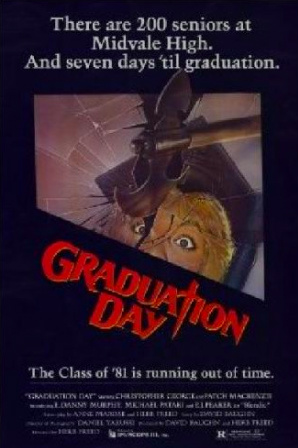
Onto the Special Features: There’s the usual assortment of not-directly-relevant Tromatic offerings, which retro slasher fans tend to skip ever since being burned on that GRADUATION DAY DVD. But Troma have come a long way since then in the way they put their DVDs together, and THE LAST HORROR FILM is truly befitting of the Tromapiece Collection banner this and other titles are being released under.
The centerpiece of the fun is My Best Maniac: An afternoon with Spinell’s best friend, Luke Walter. It’s a sobering account of Spinell’s association with THE LAST HORROR FILM and life in general. It breaks the fourth wall at one point, an instance I wasn’t a fan of but realize it was needed to accurately portray the man and the myth. There’s also an Audio Commentary by Walter, moderated by Evan Husney which I must admit, I’ve only combed 1/3rd of so far – my preference is to rip feature length ACs to CD and listen to them on my long and frequent road rides. An Interview with Maniac director William Lustig – now we’re cooking with gas (or whatever you cook with, I’m a microwave guy). Additional information from the MANIAC director further solidifies the linkage between the two films and illuminates more Spinell and BTS background detail. The Introduction by Lloyd Kaufman perhaps is strangely apt, unintentionally drawing parallels between the manic veneers of Lloyd and Spinell. Rounding out the package are the Original theatrical trailer and TV spots which are boilerplate extras, but essential archival materials.
It’s hard to call this a Special Feature as I’d gladly have paid for it on its own disc – Buddy Giovinazzo’s short rarely-seen short, MR. ROBBIE, a.k.a. MANIAC 2, starring Spinell is a holy grail to slasher fans which was once easily accessed until the MANIAC Laserdisc and later DVD it was on went out of print for the longest time. Now it’s back in mass production and also on Troma’s COMBAT SHOCK disc for good measure (due to that film being directed by Buddy G), so this footage isn’t going to vanish anytime soon. I only have the Elite Laserdisc for reference, but the copy included here seems longer and more raw, head/tail scratch reels included. This promotional effort reimagines Spinell as a TV Clown who wreaks vengeance upon the parents of abused children. The only seeming link with the original MANIAC is that, well, Spinell is his usual huffing, sweaty, intense self in the footage. And that is all the sequel would have needed to work – Spinell himself. A pivotal point the inevitable remake of MANIAC will lose on before it even begins.
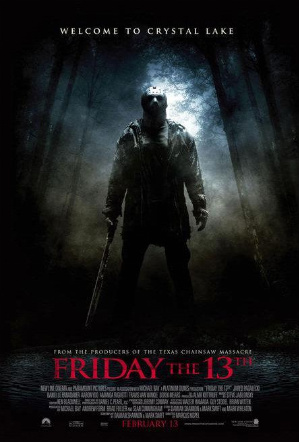
The Friday the 13th remake was probably the most hyped horror movie of the year, with websites and magazines whetting fans’ appetites for the twelve months that led up to its recent release.
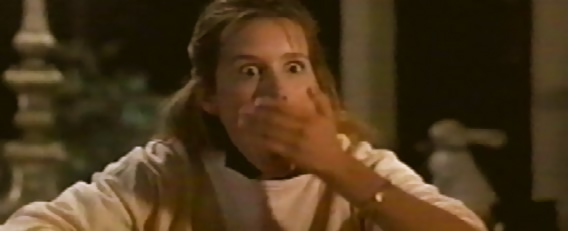
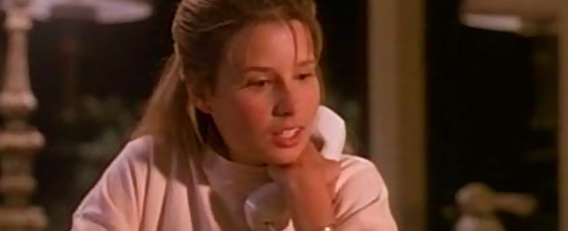
The practical joke gone wrong, such a staple of the slasher film. Hell Night, The Burning, Slaughter High – a common device within the genre is justifying the killer’s motives by using the prank as a catalyst, in an attempt to create sympathy and humanise the antagonist. It gives the audience some light humour, creates an interesting set piece with which to open the movie and provides the villain with a suitable backstory, thus giving meaning to their rampage of terror. Which film in particular created this cliché if up for debate, but the gimmick can be traced back as far as 1965, when cult filmmaker William Castle directed the Joan Crawford thriller I Saw What You Did, in which two teenage girls pull a prank whilst babysitting that attracts the attention of a man who believes they were witness to him murdering his wife. In 1988, as the slice ‘n’ dice cycle had slowly ran its course, director Fred Walton, fresh from his minor success with the postmodern slasher April Fool’s Day, decided to resurrect the story for Universal TV with a cast that included future scream queen Shawnee Smith (Saw) and Tammy Lauren, one decade removed from her starring role in Wishmaster.
The genesis for the story originated back in 1964 when mystery writer Ursula Curtiss penned a novel entitled Out of the Dark. Her thriller was based around a group of young girls who are left under the care of a babysitter in their isolated country home whilst their parents are out for the evening. But the babysitter cancels and fourteen year old Libby is forced to be the parental figure for her younger siblings. Kit, her new friend, suggests a game in which a number is called at random and the line “I know who you really are and I saw what you did” is uttered. But, unknown to them, the number that Kit has called belongs to a sociopath who becomes paranoid that his murderous deeds had been witness and so sets out to hunt the girls down. The following year, Castle teamed up with screenwriter William P. McGivern to bring the story to the screen as I Saw What You Did, which saw teenagers Sara Lane and Andi Garrett attempting a similar prank, only to attract the attention of John Ireland, a man who has recently murdered his wife and will keep hos crimes from being discovered at any cost.
By 1988, Walton had enjoyed almost a decade of success within the industry. Having made his first short film, The Sitter, in the late seventies, he had expanded the premise into his feature debut When a Stranger Calls in 1979, a movie which became a cult favourite and terrified a generation of babysitters. After several episodes of the acclaimed television series Alfred Hitchcock Presents in the mid-eighties, Walton returned to the big screen with April Fool’s Day, a tongue-in-cheek panache of the slasher genre which attempted to breathe new life into the formula that had been created by the likes of Friday the 13th several years earlier. But audiences didn’t get the joke and the film was not the success Walton or Paramount had hoped and so the director retreated back to television territory with a new adaptation of I Saw What You Did.
Funded and produced by Universal, who had originally acquired the rights to Curtiss’ novel for Castle back in the sixties, the story would be reworked by first-time screenwriter Cynthia Cidre. Born in Cuba, Cidre moved to America in 1967 and spent most of her childhood in a Cuban region of Miami. Having flirted with the idea of becoming an English professor whilst studying at university, her interest in writing was fuelled when she won a screenwriting competition that her lecturer had unknowingly submitted for. The prize saw her relocate to Los Angeles under the wing of Columbia Pictures to write her first script, a story inspired by her upbringing called Little Havana. The story would eventually be shot in 1991 under the name Fires Within with L.A. Law star Jimmy Smits, but not before Cidre had penned a script for Universal TV.
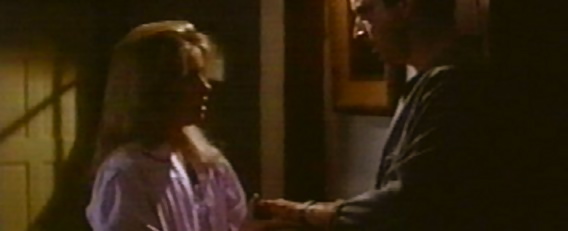
There were a few notable differences between Cidre’s adaptation and the one penned by McGivern in 1965. In place of Libby Mannering and Kit Austin (Garrett and Lane, respectively), the two protagonists had become Kim Fielding and her new friend, Lisa Harris, who have been left in charge of Libby’s younger sister, Julia, whilst their parents are out. As the evening becomes tiresome, Kim suggests calling someone which inspires Lisa to play a game. They begin phoning random numbers and eventually play the prank on Adrian Lancer, a failing motion picture musician who has recently been fired and dumped by his girlfriend, before lashing out and murdering her. After being witnessed burying her corpse in the woods, Adrian is paranoid that his crime will be discovered and becomes convinced that Kim knows the truth when she calls his house claiming “I know what you did and I know who you are.”
The cast which Walton would assemble for the picture would consist of a selection of actors who were more than familiar with television work. For the part of Kim, the producers settled on seventeen year old Shawnee Smith, a native of South Carolina where she had made her acting debut at the age of nine in an advert for McDonald’s. Her feature debut was in 1982 adaptation of Annie, which led to roles in the likes of Iron Eagle and All is Forgiven, before later finding success with her excellent turn as the cheerleader heroine of Chuck Russell’s fun 1988 remake of The Blob. Tammy Lauren, who was two years older than her co-star, had previously appeared alongside Smith three years earlier in the TV movie Crime of Innocence, in which the pair had played two teenagers who spend the night in jail after committing a minor offence, only to be abused which results in Smith’s parents attempted to take the legal system to court. Lauren would follow up I Saw What You Did with another made-for-television feature, Desperate for Love, starring a then unknown Christian Slater.
In the role of Adrian, the mysterious stranger which Kim is at first attracted to until he begins to display peculiar behaviour, the studio settled on Robert Carradine, then most famous for his recurring role as Lewis Skolnick in the Revenge of the Nerds franchise. His older half-brother, David Carradine, star of cult show Kung Fu and later of Quentin Tarantino’s double feature Kill Bill, would also appear. For Julia, Walton eventually settled on eleven year old Candace Cameron (now known as Candace Cameron Bure), whose prior credits included roles in St. Elsewhere, T.J. Hooker and John Hughes’ bratpack comedy Some Kind of Wonderful. His crew was as equally talented, with Woody Omens, who would frequently work as a cinematographer on Eddie Murphy movies (such as Coming to America and Harlem Nights), lensing the film and Wes Craven’s editor, Richard Bracken (Swamp Thing, The Hills Have Eyes Part II), cutting it.
Filming commenced in late 1987 and was wrapped by the ending of the year for its CBS/Universal première on May 20 1988. The film received favourable reviews and would go on to win an Emmy Award for ‘Outstanding Cinematography for a Miniseries or a Special.’ After I Saw What You Did, Lauren’s career soon dried up and she slipped into obscurity, reappearing brief
ly for a starring role in the Craven-produced Wishmaster in 1997. After The Blob, Smith would enjoy a succession of low key roles before her turn as Amanda in the 2004 sleeper hit Saw, and its neverending flood of sequels, rebranded her as a horror icon. Walton would direct a sequel to his first feature, appropriately entitled When a Stranger Calls Back, which saw him reteam with the original stars Carol Kane and Charles Dunning before returning to television The Stepford Husbands, his last movie to date. Over twenty years later, it has been announced that I Saw What You Did will once again be remade, with recent rumours suggesting that My Bloody Valentine 3D‘s director/writer team Patrick Lussier and Todd Farmer will take the helm.
As the sixties came to a close, it seemed that Mario Bava’s winning streak was coming to an end. Whilst the decade had begun with the hugely successful gothic chiller La maschera del demonio (aka Black Sunday), as the seventies drew closer he had produced one commercial failure after another.