As we’ve said before, strictly opinion here, but THE STEPFATHER (whether speaking original or remake) has a rather predictable storyline, so seeing as how the old one was held together by Terry O’Quinn’s amazing portrayal of a suburban psycho, our only real interest in the redux is how Dylan Walsh handles the character.
Our friends at Horror Yearbook have been posting some smokin’ images in their “Women Of Sorority Row” series. Some are Not Safe For Work, and clearly labeled as such, but most are fine – regardless, they’re all hotties – so if you’re psyched for SORORITY ROW (2009), do your duty!
Ronald D. Moore’s FUTURE-KILL (1985) faced illustrating a large story with a limited budget. A big part of its success in demonstrating a bleak, near-future vision was not what you see, but what you hear. Film composer Robert Renfrow’s electronic score perfectly complimented the on-screen action. Unlike many composers who start working on films after they’ve shot, Robert was on-set serving as sound sound assistant and 2nd boom operator during the production. Retro Slashers had the opportunity to speak with him back in November of 2006.
Retro Slashers: What was your background leading up to Future-Kill?
Robert Renfrow: I played keyboards in rock bands throughout junior high and high school and got a Roland Juno 6 synth when I was attending film school at the University of Texas at Austin. I did the music for my own projects and for a group project at school, and other students began to approach me for their projects. At the time, electronic music was popular in feature films. Georgio Moroder’s “Cat People” score is one of my favorites from that era. I was also a fan of the “this-character-has-this-theme” approach that John Williams took, as well as Bernard Herrmann’s technique of limiting the instrumentation to get a certain sound, although I was never able to sell that one to any producers. I did consider myself a student of the craft at the time, as well as a fan.
Retro Slashers: How did you get involved with the production?
Renfrow: Having grown up in Dallas, college in Austin was quite a change of pace. My way of expressing it was to say “My heart beat’s slower in Austin.” Upon graduation, my impulse was to linger, and the production (then known as “Splatter”) was the perfect excuse to remain in Austin. My good friend Jim O’Kane was producer John Best’s roommate at the time, and director Ron Moore was a movie memorabilia dealer, buying and selling collectible one-sheet posters. I had no professional crew credits, but I was known by many of the crew who had also recently attended UT film school, and was tapped as Sound Assistant, who is sort of third banana on the set recording crew, behind the recordist and the guy pointing the boom mic. My job was to keep the cable between the mic and the Nagra deck from tripping anyone, and clearing a path when the boom person had to walk/run backwards.
Retro Slashers: What was it like on-set during the shoot?
Renfrow: I was surprised at the intensity of a film set. It seemed like everyone was determined to get the absolute best result for their particular task, but there was also a lot of effort toward cooperation between different departments, and between crew and cast. As you can see in the film, 80% were night exteriors, so typically we were showing up at dusk and breaking at dawn. Changing lighting setups and camera positions often caused a bit of “hurry up and wait,” and one of the many catchphrases popular among the crew was “If you’re waiting on me, you’re lying down.” To this day, I’m not exactly sure what that means, although my best guess is that it means “you are mistaken in the belief that you are waiting on me.”
Retro Slashers: Do you remember anything about the punk band Max & the Makeups that were featured prominently in the dance club scene?
Renfrow: Sadly, I remember little. I know they were playing a lot locally at that time. Austin, even way back then, was literally crawling with bands. I don’t know how it was that they were selected, although it may have been the hot female singer. I think the venue we shot in was Club Foot, a converted warehouse on 4th Street downtown. We were able to get a lot of coverage, and editor Leon Seith did a really nice job of cutting the scene to the songs. I see from Google that the band broke up later that year, but their performance lives on and on through the wonder of cinema.
Retro Slashers: How did you approach scoring the film and what resources did you have?
Renfrow: I recorded a demo of the main theme (which ended up as the 2nd selection you hear under the film’s tail credits) during the initial production by bouncing layers between 2 cassette recorders. All I had at that time were the Juno 6 and a TR-303 drum machine. When I got the contract at the beginning of post-production, I was able to buy a Sequential Circuits Prophet 600 synth. My former band mate and buddy David Castell was engineering and producing bands in Dallas, and we recorded the score on a 1″ 16-track Tascam machine in a private studio David had installed. In addition to the mono mixes of the cues we pulled for the film mix, we also made a ¼” stereo master. I will have to look under my bed to see if I still have it. Although the new Subversive DVD release of Future-Kill is really sweet packaging and extras-wise, I am really disappointed with the audio quality. It sounds like they used some kind of gate/limiter effect on the audio channel to reduce noise, and there are many places where the background music comes and goes with the reading of the actors’ lines, because the music is below the gate threshold, but the voice is loud enough to open it, and the music comes in only when they are speaking. Of course reassembling all the audio elements, if that were even possible, and doing another mix for the DVD would have cost a fortune, and I doubt Subversive is pressing that many copies of this release.
Retro Slashers: Your next credit – 1987’s Murder Rap – seems to be your last. Why did you switch gears?
Renfrow: Throughout the mid-to-late 80’s, all the time I was hanging out in studios with bands and recording my own stuff, I always had a day job. The thing that made scoring jobs available to me in the first place was based on the economy in Texas at the time. Post production (editing, rerecording, and finishing) was taking place here locally in Texas. The main reason for this was because Texas money was financing the films. There were a lot of instant millionaires due to real estate and oil deals that would later turn into the Savings and Loan collapse and buyout. Too many Bozos with too much money on their hands. When that environment went away, there wasn’t any more post production happening in Texas. I spent a year in Los Angeles in 1989 with my demo reel and my banjo on my knee, but the only opportunities I encountered there were for spec work (you work for free and pay for your own studio time, and maybe we’ll pay you if there’s anything left). I came back to Dallas in ’90 got married and started a family, and have been too tired since to do anything but go to Little League games.
Retro Slashers: Looking back, are you happy with your work on Future-Kill?
Renfrow: Watching the DVD was quite a trip down memory lane, having been there during the shoot and having spent so much time in the editing room and in the studio. Aside from the audio problems I mentioned, I think for the most part that my work was a good fit for the movie, and I’d like to think a part of the audience’s experience.
Back on June 30th we sadly informed you of the passing of Fred Travalena, star of lost slasher NIGHT OF THE DRIBBLER (1995). Code Red DVD have posted a comment on the man and film, and have also set a Release Date of September 8th – bittersweet news.
Noted comedy entertainer Fred Travalena (IMDB Profile) has passed away at age 66. The amiable funnyman played three different roles in the unreleased slasher spoof NIGHT OF THE DRIBBLER (1995) and has a veritable laundry list of stand-up, impersonator and acts gigs. He has a star on the Hollywood Walk Of Fame.
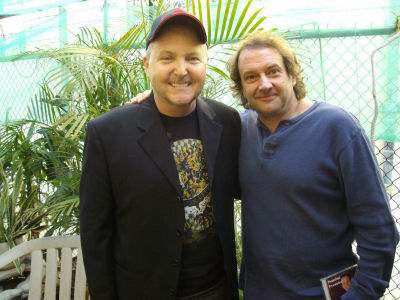
As recently as March, Travalena recorded audio commentary for Code Red’s forthcoming DRIBBLER disc (pictured below with Scott Spiegel) and appeared in good spirits. Code Red were set to release the story of a basketball team besieged by a Spalding-headed killer in July, however it was recently removed from schedule. Sadly, Travalena never saw a release for the movie.
It’s unknown if his passing will result in a rush to release, or further delay as appropriate tribute material is added. As soon as we know, you’ll know.
Movies are a collaborative medium, but if you had to place just one face to THE NAIL GUN MASSACRE (1985) – everyone’s favorite 80’s nail gun slasher film (by default!) – it’d be writer/producer/director Terry Lofton. Terry took some time during the 20th Anniversary to answer all our nitpicky questions, for which we’re grateful.
While this set visit isn’t too revealing or juicy, it is refreshing in that it isn’t an exercise in ass-kissery as most web reports of set visits are (aw gush, they invited me “on set”, I must be important and this must be the best movie ever!) – in fact, the reporter seems veritably ho-hum about it all.
Mark talked about the film being more relevant than ever, with the current divorce rate and how women can be “easy prey” when it comes to the dating world, especially women who are newly single. Although he added that the film doesn’t stray too much from the original, and described the film as a thriller more than a horror film. He seemed like a genuine guy, and he talked more about the casting and what we were about to see and who we were about to meet. And I will say, that as much as another PG-13 horror remake doesn’t necessarily scream “Must See” to me, I do like the cast.
Even a straight shot-for-shot remake of the original would be considered bland and non-eventful today. Remember, what made it work wasn’t necessarily the story, but rather the powerhouse performance of Terry O’Quinn and the supreme hotness of Jill Schoelen. We’ll see how this one shores up come October. In the meantime, hit below for the full set report.
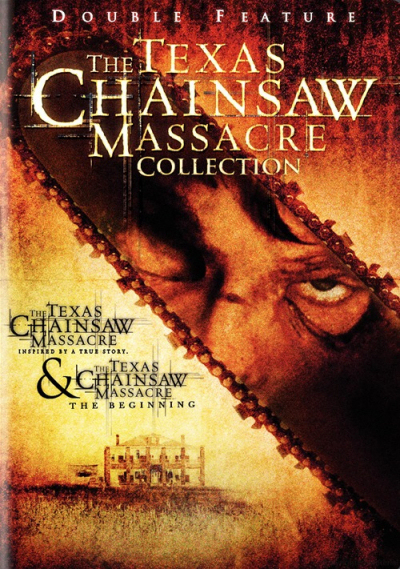
September 15 sees release of THE TEXAS CHAINSAW MASSACRE COLLECTION from New Line, a single disc containing both the company’s modern interpretations of Leatherface – THE TEXAS CHAINSAW MASSACE (2003) and THE TEXAS CHAINSAW MASSACRE: THE BEGINNING (2006). It’s double the terror and double the massacre! Unfortunately it’s not double the chainsaw. I remember playing DOOM 64 back in the 90’s where you got a chainsaw with two sawblades – now that was badass. Best. Weapon. Ever. Now, what was I talking about again?
Jim Harper has written a book about the slasher genre entitled LEGACY OF BLOOD: A COMPREHENSIVE GUIDE TO SLASHER MOVIES, released in the UK in 2004. The blurb reads: The “slasher” movie is the bloodiest incarnation of the modern horror film, tainted by criticisms of misogyny, yet remaining-on and off-a box-office draw for 30 years. Combining in-depth analysis with over 200 film reviews, Legacy of Blood is the most comprehensive examination of the slasher movie and its conventions to date, from Halloween and the notorious I Spit on Your Grave, to Scream-the redefining genre hit of the ’90s-and beyond. With knowledgable guides on the subject as rare as much of the films they cover, Retro Slashers shot a few questions at the author at time of release for an insight on the genre he so obviously loves – and how the book came to being.
Retro Slashers: The obvious, how did you get into slasher films?
Jim Harper: Like many kids I got interested in horror films because they were the ones I wasn’t really supposed to watch. I used to spend ages in video stores looking at the boxes, because I wasn’t allowed to hire them out. I can still remember the taglines to most of those films!
Anyway, one of the images that really stuck in my head was a picture from the back of Friday the 13th, the shot of the canoe with one bloody arm hanging over the side. That seemed so interesting to me- I really wanted to know what had happened and what rest of the body looked like. It just seemed to open up a world of possibilities. Of course, as soon as I was able to, I watched film and the rest of the series. After that, I would seek out anything that might have blood and guts and psychopathic killers in.
Retro Slashers: What’s your professional background, and the genesis of the book?
Harper: I studied Ancient History at university, well aware that I was never going to be an academic. While at university I started writing and editing college magazines, which eventually made me think I might be able to make it as a writer. I did the usual crappy jobs whilst trying to get any kind of writing work I could find. I wrote audiobiographies for musicians, album reviews, articles here and there, anything to keep writing. In the meantime I started preparing a series of slasher movie reviews, just for myself, for fun. Eventually it occurred to me that I’d already written part of a book, so I tidied it all up and started sending it out to publishers. After much reworking it became Legacy of Blood.
Retro Slashers: Did living in the UK with all their cut versions make it difficult to cover all these movies?
Harper: It certainly didn’t help. I was determined to see the fullest version of each film if it was at all possible. Thankfully the British Board of Film Classification keeps an extensive online database, so I spent many, many hours going through their records to see if the UK version of each film had been cut. If it was, I had to try and find an uncut international version.
Thankfully, the advent of DVD saw many of these films being re-submitted to the BBFC. Many films that had been savagely cut or banned outright were now passed uncut, so I could pick up quite a few of them in British high street stores. That made it easier.
Retro Slashers: By what guidelines did you keep to cover what is a slasher, or what is related to the genre?
Harper: Well, in general I tried to make sure each film had a killer (or two where necessary) that was roughly human (rather than, say, a werewolf), an emphasis on the ‘stalking’ of the victims, and usually a hero to oppose the killer, although not all slasher movies have heroes. My own view of the slasher movie is a fairly narrow one, comparatively speaking. I’ve heard Silence of the Lambs described as a slasher, but the ‘stalking’ element is strongly reduced and the use of investigative and scientific methods to catch the killer hardly ever appears in slasher movies. The police don’t ever catch the bad guy in a slasher movie! Someone told me that Carrie was a slasher too. That’s got plenty of teenagers dying, but Carrie’s supernatural powers distance her from the usual slasher movie killers and there’s no stalking of the victims.
Retro Slashers: Are you happy with the final product?
Harper: Well, yes and no. I’m pleased with my work, but I’m also completely paranoid about it. I can think of hundreds of places where the work could have been improved. But that’s a never ending circle- it’s never as good as you want it to be, and you could still be rewriting it years from now. You’ve got to draw the line somewhere and say ‘No, that’s it, I’m done.’ There’s always going to be a little voice in your head telling you it’s not good enough.
Retro Slashers: Have you read Adam Rockoff’s Going to Pieces book? It’s the only other major book of its kind…
Harper: I have, and I thought it was very good. Rockoff approached the subject from a different angle, preferring to cover less films in greater detail, backed up by interviews and so forth. I wasn’t able to do that, so i chose to include more films in less detail. So I think our books complement each other well.
Retro Slashers: Why do you think slashers have a bad rep, when they’ve basically been the most successful horror movies of their decades?
Harper: Part of it comes down to the fact that most mainstream critics would rather cut their own foot off than admit a low-budget horror movie is any good. For the most part, slasher movies trade on two things: sex and violence. There’s no profound meaning behind it, no pretension towards ‘high art’, it’s just pure entertainment. They’re manufactured for the fans, for the masses. I think it annoys certain people that a film like Friday the 13th can be massively successful. It’s not art, it’s just entertainment, and it’s great!
Retro Slashers: What’s your absolute best and worst of the subgenre? And one you feel guilty for liking.
Harper: My absolute best? That’s a tough one, there’s so many. I never get bored of watching the first two Halloween films. They should be watched together. Great stuff.
As for the worst, I’ll go for The Last Slumber Party. It was really hard to get through to the end of that one.
The guilty pleasure has got to be Prom Night IV. It’s much better than the first one!
Retro Slashers: Slashers are best viewed on… VHS or DVD?
Harper: DVD, no question about it. No more white fuzzy lines! With a good transfer you can see every drop of blood. It’s like watching them for the first time again.
Retro Slashers: What do you think the internet is doing for these movies?
Harper: The internet has been one of the single greatest things to happen to low-budget horror. You can now easily import all your favourite slasher movies from any where in the world for great prices. People are writing about films you might never have heard of, let alone get to see. My book would have been absolutely impossible without the internet. The amount of information for horror fans that has become available in the past five-ten years is staggering.
Retro Slashers: What’s next on your plate? Anything slice-and-dice fans can look forward to?
Harper: Well, I’m currently putting the finishing touches to a book on Italian horror in the 1980s, so there should be some crossover potential there. Certainly fans of gialli and splatter movies should find something of interest in there. I’ll let you know when I have more concrete details!
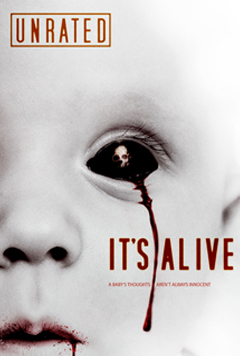
On October 6th, First Look Home Entertainment unleash IT’S ALIVE to DVD in Unrated and Standard flavors.
A remake of the Larry Cohen 70’s classic which “spawned” two sequels, this time around a young woman (Bijou Phillips) learns that she is pregnant, so leaves graduate school to set up a home with her boyfriend in the country. The fate of the happy new family takes a gruesome turn when animals and people end up brutally dead – all with a strange connection to their newborn. Could their new child be the monster responsible for the gruesome murders? Well duh!
Directed by Josef Rusnak, whose name sounds like a foreign swear, and produced by Moshe Diamant, whose name sounds like a foreign compliment. Neat, huh?
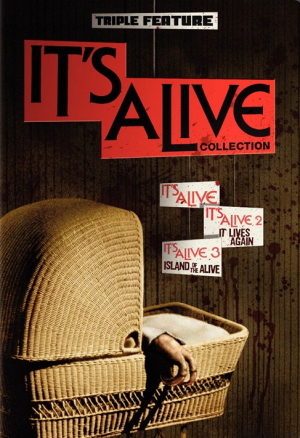
Special Features forthcoming. FYI, Warner Bros Home Video pre-empt this release with its um, IT’S ALIVE COLLECTION on September 15th.
It’s newborn. It’s Alive (Disc 1). And murder is what it knows best! A proud couple’s bundle of joy is really a newborn terror in filmmaker Larry Cohen’s cautionary cult hit that tapped into environmental fears. The horror grows when multiple child monsters rampage in It Lives Again (Disc 2/Side A) – and as two brave parents try to stop them by becoming the bait for their spree. The now global terrors are rounded up and relocated to a far-flung island (but not for long!) in It’s Alive III: Island of the Alive (Disc 2/Side B). Will a parent’s greatest nightmare become the world’s gravest fear? Find out…if you dare.
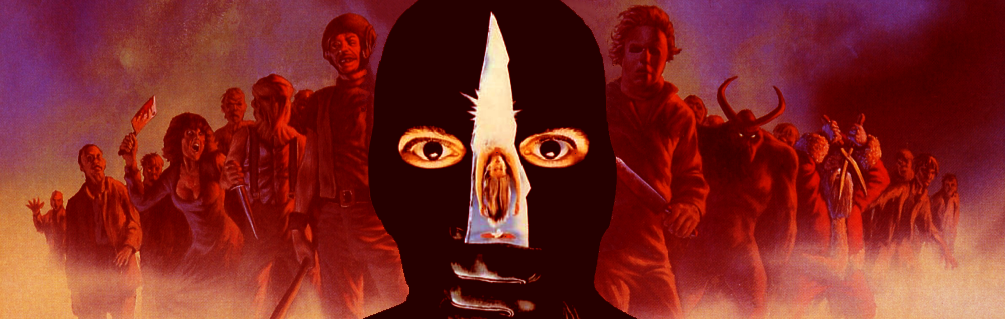

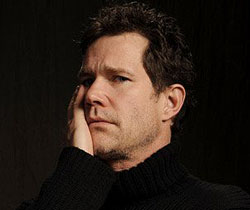 As we’ve said before, strictly opinion here, but THE STEPFATHER (whether speaking original or remake) has a rather predictable storyline, so seeing as how the old one was held together by Terry O’Quinn’s amazing portrayal of a suburban psycho, our only real interest in the redux is how Dylan Walsh handles the character.
 Our friends at Horror Yearbook have been posting some smokin’ images in their “Women Of Sorority Row” series. Some are Not Safe For Work, and clearly labeled as such, but most are fine – regardless, they’re all hotties – so if you’re psyched for SORORITY ROW (2009), do your duty!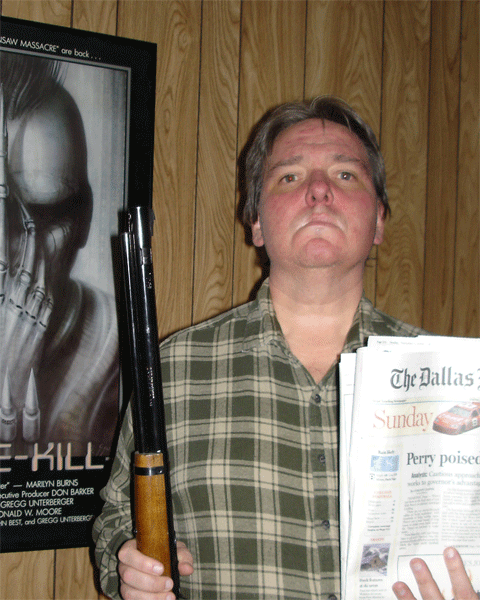
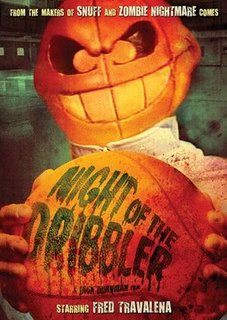 Back on June 30th we sadly informed you of the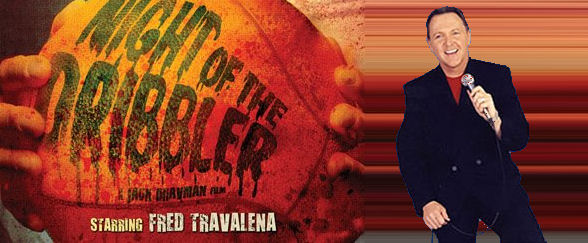
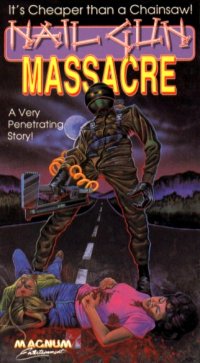 Movies are a collaborative medium, but if you had to place just one face to THE NAIL GUN MASSACRE (1985) – everyone’s favorite 80’s nail gun slasher film (by default!) – it’d be writer/producer/director Terry Lofton. Terry took some time during the 20th Anniversary to answer all our nitpicky questions, for which we’re grateful.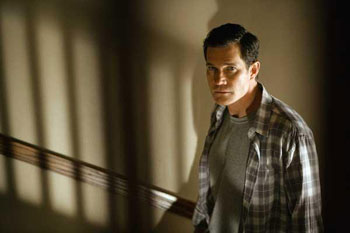
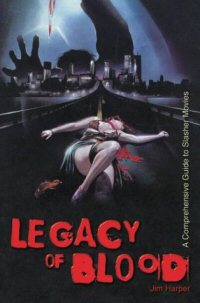 Jim Harper has written a book about the slasher genre entitled LEGACY OF BLOOD: A COMPREHENSIVE GUIDE TO SLASHER MOVIES, released in the UK in 2004. The blurb reads: The “slasher” movie is the bloodiest incarnation of the modern horror film, tainted by criticisms of misogyny, yet remaining-on and off-a box-office draw for 30 years. Combining in-depth analysis with over 200 film reviews, Legacy of Blood is the most comprehensive examination of the slasher movie and its conventions to date, from Halloween and the notorious I Spit on Your Grave, to Scream-the redefining genre hit of the ’90s-and beyond. With knowledgable guides on the subject as rare as much of the films they cover, Retro Slashers shot a few questions at the author at time of release for an insight on the genre he so obviously loves – and how the book came to being.
 On October 6th, First Look Home Entertainment unleash IT’S ALIVE to DVD in Unrated and Standard flavors.