Bob Clark’s classic slasher is set to debut on Turner Classic Movies Saturday, Dec. 18th at 2:00 A.M. during the TCM Underground block. This 1974 ode to Yuletide slaughter is one of the best and creepiest films in the slasher genre. If you’ve never seen it, then you’ve got to check it out this weekend. Black Christmas joins a growing list of good horror movies showing up on TCM Underground in recent weeks. Recently, The Boogens and Fulci’s The Beyond have aired uncut on the cable network dedicated to old films.
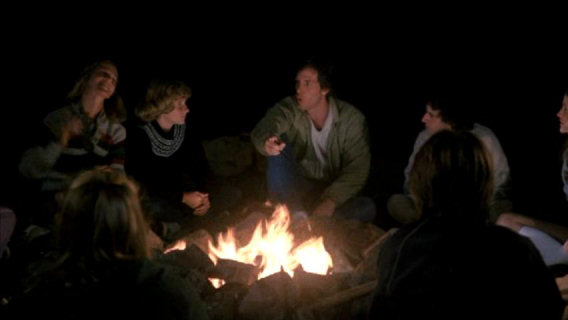
There’s a camp not far from here, just across the lake. It was called Camp Blackfoot. No one goes there anymore. Everything burnt down. This camp had a caretaker. His name was Cropsy. Now, this cropsy was a sadist, and he got real pleasure out of hurting people. Scaring them. And he had these… garden sheers. The kind with long, thin blades. And he carried them all the time, wherever he went. And he had this kind of demonic way of looking at you.
One time Cropsy really went after this kid from Brooklyn. Followed him around night and day, and made this kid’s life a living hell. But this time he chose the wrong guy, because the kid and some of his buddies had planned a little prank. The only problem was… the gag went wrong. The next thing anyone knows, Cropsy’s trapped alive and burning in his bunk. They try to get him out but the fire’s so fierce they cant reach him. All they can do is stand outside and listen to him cry out in agony. They say he smashed his way through the bunk room door, just a mass of flames. And as he burned alive he cried out.. “I will return!” “I will have my revenge!”
They never found his body. He survived. He lives on whatever he can catch. Eats them raw. Alive. No longer human. Right now, he’s out there. Watching. Waiting.
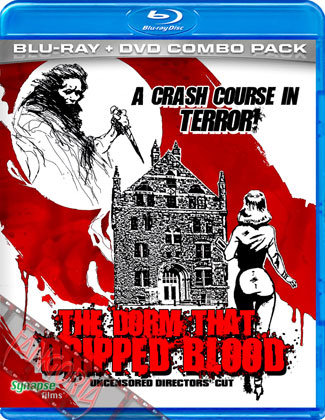
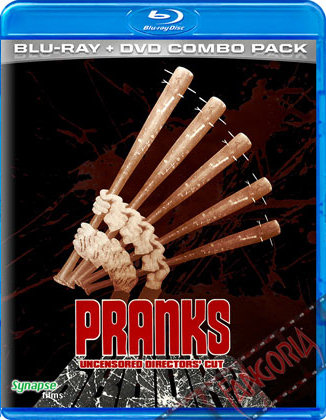
Fangoria have revealed the reversible artwork to Synapse’s The Dorm That Dripped Blood blu-ray release due on March 8. The front cover is the classic US artwork, and the inside is the spiked bat iconography of the original version, as released in the UK under the title Pranks.
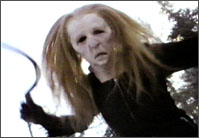
The 1983 Slasher Classic “Curtains” is out on DVD, legally released and without any fanfare. Starring John Vernon and Samantha Eggar, and co-directed by Richard Ciupka and Peter Simpson, “Curtains” is the flick with that indelible scene featuring a skater chased by a hag mask-wearing killer brandishing a scythe. It’s a title that Slasher fans have been screaming for for years. So why no PR?
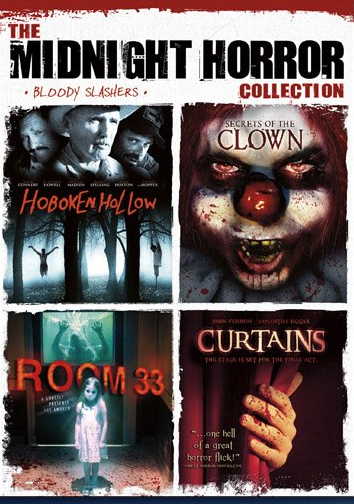
Released by Platinum Disc in October of 2010 as part of a four-movie set called the Midnight Horror Collection, according to Rue Morgue Magazine, the version of the movie presented here is less than stellar (i.e. full-frame and sourced from VHS). Still, for those who haven’t seen “Curtains”, or for those longing to re-visit it again, this is the only legit way to go at the present (“Curtains” is a mainstay in the DVD-R grey market). I suspect the other movies in the set – Hoboken Hollow, Secrets of the Clown, and Room 33 – won’t do much to lure customers. However, “Curtains” stands as a fine example of the Golden Era Slasher, and until a Special Edition comes along, this may be worth picking up for that hag mask/scythe scene alone.
On Dec. 8, 1980, a crazed fan murdered the voice of a generation. The outpouring of grief occurred on a global scale. Thirty years later, it’s almost impossible for those of us not yet born or too young to understand what was going on to grasp the magnitude of John Lennon’s death. In the weeks following Lennon’s death, a wave of anti-violence in cinema sentiment swept across the United States. Slasher films were already under attack by film critics and women’s groups but now they had Mark David Chapman as a prime example of the type of diseased minds created by these diseased movies.
The first major victim of the slasher backlash was My Bloody Valentine, a film finally released uncut last year. Director George Mihalka explained how Lennon’s death directly affected how the MPAA handled the film on the special features found on the Lionsgate dvd. The MPAA refused to give the film less than an X rating until almost all of the blood and gore was removed. A running joke among slasher fans was the film should’ve been called “My Bloodless Valentine” until the lost footage was finally restored.
Other victims of the backlash included Friday the 13th Part II and The Burning. Friday the 13th Part II was a major target because the original film made $42 million during a summer when most Hollywood films bombed. Like My Bloody Valentine, The Burning is finally available uncut almost thirty years after its theatrical release. Anything from Italy also went under the knife. The works of Argento, Fulci, Lenzi, and D’Amato were hacked up worse than most of the victims in the films.
Taxi Driver, while not a slasher, was frequently listed as one of those films that promoted anti-social behavior. Sure, Martin Scorsese and Robert De Niro are considered major talents today, but back then Taxi Driver was lumped in with Maniac and I Spit on Your Grave as proof only sick degenerates were drawn to and inspired by these films. Actually, Taxi Driver is the only film mentioned in this article that really did inspire a nutcase. John Hinckley watched Taxi Driver, fell in love with Jodie Foster, and decided to win her heart by shooting President Ronald Reagan.
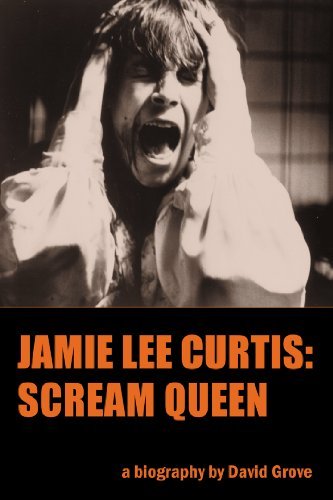
Reading Jamie Curtis: Scream Queen (published by BearManor Media) is like having a conversation with a friend who is fanatical about the actress. Thing is, it’s not like having one of those boring conversations where you wish your friend would shut up; it’s the type of conversation where you’re likely to ask (several times), “And then what happened…?”
Author David Grove has done an exhaustive amount of research, conducting countless interviews with the casts, crews and the filmmakers of Curtis’ early films, as well as ex-boyfriends, members of Curtis’ family, etc. As the book’s title suggests, Grove dedicates the majority of its 492 pages to Curtis’ Scream Queen career, specifically from Halloween through to Halloween II. Between the two Michael Myers flicks, The Fog, Prom Night, Terror Train, and Roadgames all have double chapters dedicated to their making and release. It’s probably the most thorough examination these films are likely to see.
Grove begins the book with background on Curtis and her upbringing as the daughter (along with sister Kelly, star of Michele Soavi’s The Sect) of Hollywood Golden Couple, Janet Leigh and Tony Curtis, and ends with her success in escaping Final Girl typecasting. Curtis’ struggles with her lineage, her unconventional good looks, relationships and career are all included here. As Grove states in the book, one of his goals in writing it was to document “the horror boom between 1978 and 1981.” Add to this the Curtis bio and retrospectives of six films, and you’ll realize that Grove has set some pretty large objectives for himself. Fortunately, Grove is up to the task, and provides an in depth and entertaining examination of each subject.
Some of the book’s most intriguing information, from my perspective, comes in shedding light on the reasons behind some of Curtis’ career choices, and in the details of the behind the scenes info. If you’ve ever wondered why an actress who wanted to escape her Scream Queen persona would do six horror flicks in a row, or why Curtis’ hair looked so bad in Halloween II, the answers are all here, folks!
The presence of John Carpenter and Debra Hill is felt throughout the book, and it’s clear that Curtis sees them as the people responsible for starting her career. Both Carpenter and Hill are quoted frequently here, giving insight on Curtis and the films that the three made together. Hill’s death in 2005 gives the book the air of being the final word on the subject.
Grove, who has written for Fangoria, Film Threat, and Rue Morgue among other publications, is currently in the planning stages of a second book about the Friday the 13th films for FAB Press. In the meantime, for anyone with an interest in one of our genre’s most likeable, talented, and in some senses trailblazing Patron Saints, Jamie Lee Curtis: Scream Queen is a must read.
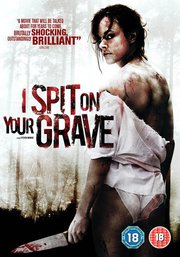
The remake of I Spit On Your Grave (1978) is coming to DVD/Blu-Ray on Feb 7th in the UK and Feb 8th in the US – practically a simultaneous release. For the Brit version (both formats), Anchor Bay UK are holding a public vote for which of six covers should feature as the sleeve ‘flipside’.
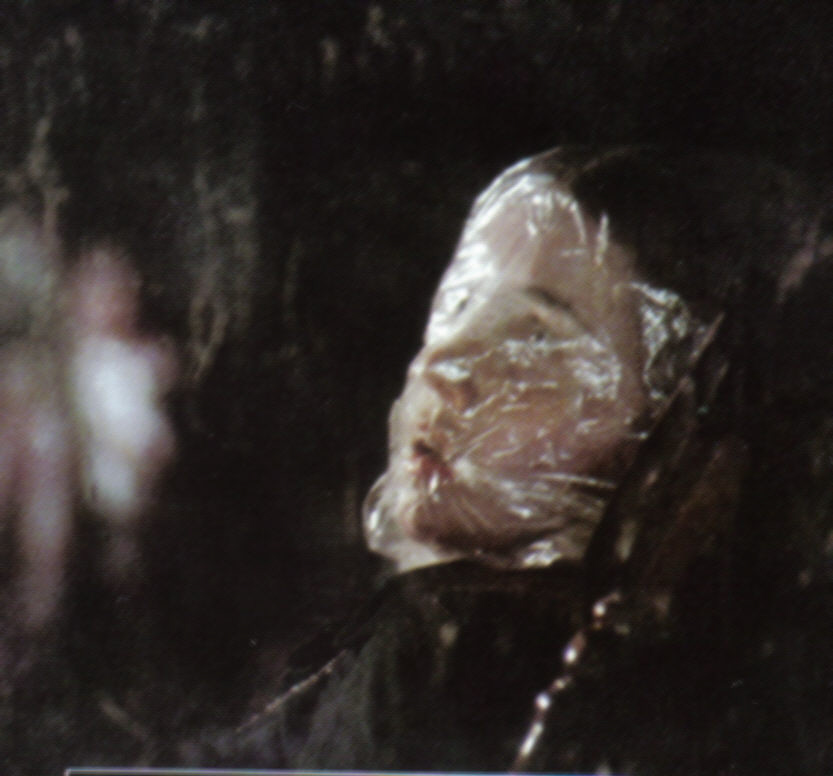 Bob Clark’s classic slasher is set to debut on Turner Classic Movies Saturday, Dec. 18th at 2:00 A.M. during the TCM Underground block. This 1974 ode to Yuletide slaughter is one of the best and creepiest films in the slasher genre. If you’ve never seen it, then you’ve got to check it out this weekend. Black Christmas joins a growing list of good horror movies showing up on TCM Underground in recent weeks. Recently, The Boogens and Fulci’s The Beyond have aired uncut on the cable network dedicated to old films.