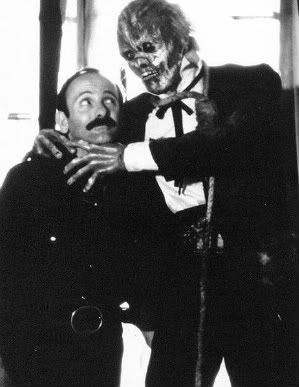
Films become legendary for different reasons. Some are plagued with problems; others manage to transcend the art form and become something else entirely. Then there is the rarest beast indeed, the movie that no one knows anything about. You know it exists, you’ve seen it. You even recognize some of the actors. But somehow little was documented about the actual making of it. A film that fell into that category would certainly be The Prey. A fun, if bewildering, slasher film that despite its low-budget and niche interest has managed to maintain itself in the genre. If you love slashers, you’ve seen The Prey. You may not have loved the film, but I’ll be damned if you weren’t curious about its incarnation.
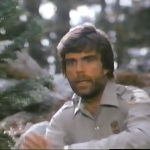
Jackson Bostwick played Ranger Mark O’Brien, the sweet would be hero who tells the infamous ‘wide mouth frog’ joke (he also plays a mean banjo). Jackson was kind enough to sit down and answer a few of the burning questions horror fans have been asking themselves for the last two decades. His answers were quite interesting…
Retro Slashers: How did you get involved with The Prey?
Jackson Bostwick: My acting coach at the time, Lurene Tuttle, recommended me for the part. I went in, read for the director, and got it. They loved a picture I had of me with a two-week beard growth and asked me how long it would take for me to duplicate it. I told them two weeks — duh — and to let me know the start date and it’ll be ready.
RS: I always see varying dates on the release of the movie. When was it actually shot and released?
JB: It was shot in 1978. I’m not sure of the exact release. I know New World picked it up later.
RS: Edwin Brown made a lot of movies for the adult industry. What was he like to work with?
JB: I don’t recall a lot about Ed Brown and his producer wife, Summer, but I do know they were a good team on the set and were very “adult” and professional in their approach to the work at hand.
RS: The Prey was a pretty bare-bones/minimalist movie. Do you remember how long the screenplay was and what it looked like? By that I mean did you know that a good portion of the film would be filler consisting mostly of nature photography?
JB: It seems the script was around 86 pages (or less) in length.
As far as any acting was concerned, I could have phoned in most of my part. But the locations and getting into the outdoors was a hoot.
The Prey was filmed in and around Idlewyld, USC’s summer music camp, in the 9,000 foot mountains above Palm Springs, and Tapia Park over the Santa Monica Mountains opposite Malibu.
I don’t remember seeing a call for a lot of stock footage in the script, but then again, it probably wasn’t listed to a great extent in the Tarzan scripts either — just thrown in whenever nature (or the Ape Man) called for it. (In our case … whenever.)
RS: Debbie Thureson was really good in The Prey and then seemed to disappear. Do you know what became of her or do you have any stories about her?
JB: I didn’t know a lot about Debbie, then or now. I don’t think she became a nun in Austria, or a tour guide in the foothills of Zimbabwe; I guess she just kinda drifted away into oblivion.
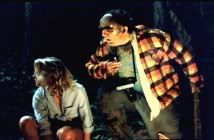
I do recall in the final scene of the movie, however, when I’m supposed to be killed by the mutant love child (who later played Lurch in the “Adams Family” movie); Debbie was having a great deal of difficulty with her emotional CLOSE UP when she sees the forsaken one come up behind me. As I recall, Ed Brown was ready to literally break her neck right after letting the bad boy cinematically break mine. Debbie was rather wanting in any film technique.
RS: Lori Lethin is a very popular actress in horror. What do you remember about her?
JB: Lori was very energetic and bubbly and did a fine job in The Prey. She had a cute figure and was fun to work with and she later worked with my friend, Lurene Tuttle, in the MOW, The Day After (she does quite well with this part, also).
RS: I think the scene fans remember most is the ˜Wide Mouth Frog Joke” scene. Was that written in the script or did you come up with it?
JB: The joke itself wasn’t written in the script. I was verbally told it by Ed before we shot, then I ad-libbed and embellished on it. I did it in my own words for the scene. The fawn did it just for the bananas.
RS: What about the banjo? Did you tell them you could play and they added it?
JB: Correctamundo.
I self-taught myself the Earl Scruggs style, three-finger technique, and then later took instructions from Herb Peterson (who was backing a then up-and-coming singer, Emmy Lou Harris). I told them I could play, and I guess they saw they could save some money on stock footage shots of nature, so they threw it in.
RS: Of course I have to ask about Jackie Coogan. He had an interesting life and was obviously a seasoned performer. What was he like?
JB: Jackie was a very professional actor to work with and as I knew him, a very warm a funny person. He had recently had a stroke before we did the film, but I never really noticed it that much until he signed my script. It took him at least 30 seconds just to write, “The Kid.” Like Red Skelton, Dorothy McQuire, Ann Baxter, Broderick Crawford, and many other greats I have worked with, I’ll never forget him.
RS: What did you think about the final product?
JB: It’s not a Lawrence of Arabia by any stretch of the imagination, but it beats watching a home movie in a closet.
RS: On IMDB, you are listed as the voice of the Jinn in The Outing (aka The Lamp). Is this correct and how did that come about? By the way, I love that movie!
JB: “This is correct, Keeper,” or so the Jinn would say. Not a large part, but a lot of fun.
I was set to do a little film called Break Dancers from Mars with Linda Day George for the Producer of The Lamp (now called, The Outing), Warren Channey. Tobe Hooper of Texas Chainsaw Massacre fame was going to direct Break Dancers. That fell through, but then came The Outing.
RS: The Prey is one of those films that is either loved or hated but it has also endured all these years. Does its popularity in the horror world surprise you?
JB: There aren’t many surprises left for me in the horror world, anymore, but for anything to “still have legs” in that realm is quite refreshing.
RS: You’ve done a lot of work in the genre. Do you yourself like sci-fi and horror? What has been your favorite project so far?
JB: Sci-fi, horror, and fantasy are my favorites with action/adventure close on their heels. These fields are where dreams and imagination can best run their course and allow for that pure escapism that any of the media can provide — especially film.
Escape from DS3 was a fun project. It was one of two films I did for Ann Spielberg (Steven’s sis). The other one was, The Killings at Outpost Zeta. Good luck in finding them anywhere.
RS: When can you tell us about your newest film, Dodge City: A Spaghetto Western, which you also produced? When will we be able to see it?
JB: The new film Dodge City, like the old western town of Dodge City, needs a lot of help. Make no mistake, I didn’t produce it. As to when you will be able to see it … probably, not in this life.
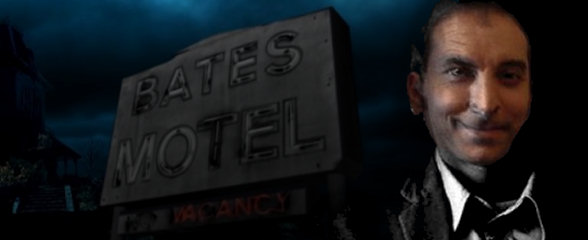
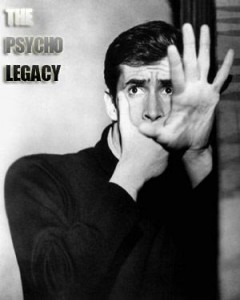
Alfred Hitchcock’s PSYCHO can be considered prime among the progenitors of the slasher genre. Many talk about its impact on the film world, but few pay attention to the second, third and forth chapters which each brought something unique to the compellingly tragic story of Norman Bates. Enter director Robert Galluzzo who has spent the past few years has poured himself into a landmark documentary on the complete saga, aptly titled THE PSYCHO LEGACY. We stole Robert away from his project long enough to discuss all-things PSYCHO!
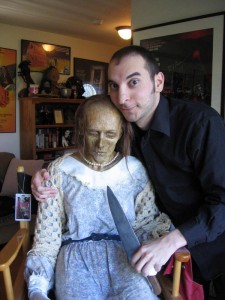
John Klyza: What is the genesis of this project and what is it about PSYCHO that drove you to this?
Robert Galluzzo: Firstly, John. I just wanted to thank you for getting in touch and for your interest & support in the project. It’s much appreciated! I’ve always been a huge horror fanatic and like most fellow fans, I’ve gone through my phases of being absolutely in love with each & every franchise. The one that seemed to be somewhat forgotten these last few years is the PSYCHO series. I mean, if you ask someone to name the most famous of the movie maniacs, they’ll inevitably say Freddy, Jason, Michael Myers, Leatherface. But what ever happened to Norman Bates? He should still be one of the first you think of! NIGHTMARE ON ELM STREET, FRIDAY THE 13TH, they’ve all gotten their boxed sets and special editions, and I couldn’t understand why the sequels to the granddaddy of all “slasher” films weren’t getting the special edition treatment that they deserved! So the genesis of the project is that I selfishly just wanted it to exist so badly so I (as a fan) could buy it! And I got the feeling that if I didn’t do it, no one was ever going to. So I reached out to a few of the filmmakers to see if it were even possible to get people to talk about the sequels and before I knew it, I had accumulated a ton of interview footage. I haven’t stopped working on it since I shot that first interview, which was back in January of 2007. And now we’re finally about to cross the finish line, which is so amazing & exciting.
John: PSYCHO has been covered in many documentaries & retrospectives over the years yet yours seems to be the first to treat the sequels as equals coverage-wise. Why do you think that is?
Robert: It’s interesting because obviously the original is just a landmark movie in terms of film history. Hitchcock was the master and he created a classic. So any sequel to that film is always going to be considered just a “footnote” to a classic. But the truth is, the PSYCHO sequels are all really great, well made films! It’s very rare that a franchise can keep the quality up on each passing film. In my humble opinion, the PSYCHO movies have done exactly that. There’s already tons of great material out there about the original film – dozens of making-of books, an amazing documentary by Laurent Bouzereau on the DVD for the first movie, so I really wanted my focus to primarily be on the sequels. Yes, we do cover the original film, but I took more of the approach to have people involved with the sequels share their first experiences with PSYCHO and explain it’s influence on them. We cover the basics and re-explain why the original is such a great classic film, but we then dive right into all the sequels because most of these people have NEVER talked about the making of them. So we’ve uncovered some truly wonderful stories and I can’t wait to share it all with the fans.
John: I’ve read that it’s been a crew of just two shooting this whole mammoth thing – is that true?
Robert: Absolutely true! The shoot itself was just my dear friend John Torrani, who had a Panasonic DVX-100 camera and myself. He was crazy enough to follow me on this journey and for that, I’m eternally grateful to him! Essentially, I made a ton of phone calls, sent out a ton of emails and did my best to contact as many PSYCHO alumni as possible to arrange interviews. Most of them are based out of California, so I’d work at my dayjob for 3 months straight, then take 2 weeks off to go shoot some interviews. And then come back and do it all over again. That’s the main reason it’s taken so long is because I had to go back to work and save up the money to continue shooting. This was always a labor of love, so I did anything I could to make it work and get just a tiny bit further along. What’s great too is that everyone I’ve contacted from the PSYCHO films see’s my passion and genuine love for this, and have all been incredibly supportive and helpful. The first person I reached out to was PSYCHO 2 director Richard Franklin. (Who sadly is no longer with us.) Richard put me in touch with PSYCHO 2 writer Tom Holland. Tom put me in touch with PSYCHO 4 director Mick Garris. Mick put me in touch with Katt Shea from Part 3 and it all just snowballed from there. It’s just been amazing to find the next person and get to talk to them about their experiences. Now that the bulk of the interviews has been shot, I’ve got 2 more people on my crew, my editor Jon Maus and my post-production co-ordinater & assistant Kat Arroyo. Without those 3 people, I never could’ve done this.
John: What is Anthony Masi’s role in the production?
Robert: Anthony Masi is a dear old friend of mine. I’ve known him for years and he successfully produced the HALLOWEEN documentary 25 YEARS OF TERROR, as well as the recently released HIS NAME WAS JASON: 30 YEARS OF FRIDAY THE 13TH. He also did a HALLOWEEN featurette titled THE SHAPE OF HORROR which I did a bit of music for. He’s also a huge PSYCHO fan and a firm believer in this doc. I’ve been working on it for so long that I wasn’t exactly sure how to get this out there. I just have so much on my plate as it is that I needed a “producer” to help me finish it. Since he has experience with franchise docs, he offered to be a part of it and essentially help me cross the finish line. He’s been a tremendous help. Also, while I love his 2 previous doc’s, mine is definitely very, very different from those 2. The 12 minute promo piece that’s been on-line for the last several months is a good interpretation of what the full length version of THE PSYCHO LEGACY will be like.
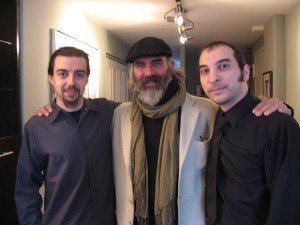
John: Jeff Fahey is one of my favorite-ever actors. Can you share how the interview went down, and what he was like?
Robert: He’s definitely one of my fave actors too and that interview was truly magical! I’m so, so glad it came together the way it did. The short version is… Jeff was doing a rare convention appearance in New Jersey about an hour and a half away from me. Most people don’t know this but at the time, Jeff was living in Afghanistan! Now, it is to my understanding that Jeff would work on a few films in the States and then take the money to better things over there. So, he was very difficult to get to, BUT… once GRINDHOUSE had come out, he was set to do his first ever convention appearance. There was a slight misunderstanding when I got there – the place was packed, I don’t even think the convention “manager” told him I was coming to see him, but less then 5 minutes of me explaining the project to him, he asked me where I was based out of. When I said New York, he said, “Well, my sister’s there. How ’bout we meet up Monday morning when I go to see her?” So, to his word, he called me 2 days later and (with his sister!) met me at my friend’s apartment in Manhattan. What was amazing about his interview is that it came together so fast, so as we’re rolling, he was thinking back & remembering things about PSYCHO 3 for the first time in over 20 years. That’s probably my favorite interview because of that! Also, I missed one great tid-bit before we started rolling. He mentioned that he met with Gus Van Sant on the PSYCHO remake, I believe for the part of Sam Loomis, which eventually went to Viggo Mortensen.
John: Tell us about the wonderful greetings to PSYCHO fans you got many cast and crew to record. That’s a genuinely warm thing you did there, and something not many in your position would bother to undertake.
Robert: Well, thank you so much for saying that. I wanted to make sure from the get-go that everyone knew how much this all meant to me and that I was always keeping the fans in consideration with every decision. I’m a die-hard fan of these movies myself and I tried to think of what I would want to see, as a fan from the doc. Plus, I was trying to think of a way to make this more interactive with the fans. And I thought what better way then to have these people thank us for the continued support? So, once every interview was wrapped, I explained to each person how important it would be for the fans if they sent along a greeting. Everyone complied and I love them for it. AND, I do forward the clips to each person, so they’ve all seen the comments that fans have left below their videos. Another reason I did the greetings was because for me as a fan, I know I would just want to see what a lot of these people looked like nowadays! I mean, isn’t Sharen Camille from Part 4 still absolutely adorable?! Those greetings will make for a nice collection on the eventual DVD release.
John: What is your favorite and least favorite PSYCHO series entry and why?
Robert: That’s a really tough question. I honestly and sincerely love each and every movie for my own reasons. The first is obviously a classic and not only one of the best horror films ever made, but one of the best movies ever made. I love PSYCHO 2 because it’s a beautifully crafted murder-mystery. There’s also never been a sequel like it, nor do I think there ever will be. It takes place 22 years later? With the lead actor reprising his role? That’s unheard of! Nowadays, it’d just be remade. I love 3 because that’s the one I caught on cable a hundred times as a kid, and it always kind of scared me because of the sleaze factor to it. (That and, well… the nuns.) Perkins with his direction gave us an interesting PSYCHO movie straight from the head of Norman Bates. And lastly, and I know I’m in the minority, but I love PSYCHO 4 as well! It’s probably my favorite thing that Mick Garris has ever done. Perkins is fantastic in it, and both Henry Thomas and Olivia Hussey deliver great performances.
John: PSYCHO IV: THE BEGINNING is my hands-down favorite of the sequels. But the ending with the Ghost Mother Bates has always nagged me as tacky and ‘untrue’ to the story preceding it. Do you know if that is something that was scripted, or network-forced?
Robert: Judging from my conversations with Mick Garris, the film was done in a short period of time with a tight budget, but stayed very close to Stefano’s script. In fact, there’s a video introduction with Janet Leigh on YouTube where she mentions that 4 endings were shot to keep the film’s finale a surprise. Mick debunked that and said they never filmed multiple endings, they only filmed one. So as far as I know, that’s what was always scripted, and that’s what they shot. I personally always thought they should’ve ended the moment Norman hangs up the phone!
John: What is this documentary’s relationship with the awesome thepsychomovies.com?
Robert: I really wanted Jay Allentoff, the creator and webmaster of ThePsychoMovies.com to make this movie with me! But he’s extremely busy with his job and couldn’t find the time to do it. Like most fans, I just like visiting the site. As you just said, it’s awesome. So, we’re good friends, and as we gear up to finish the doc, I’ll try to debut some cool stuff over there, as well as on the official MySpace page.
John: You’re well known for the Icons Of Fright website – were you able to use contacts from there as resources?
Robert: Honestly, I couldn’t have made THE PSYCHO LEGACY without accumulating 5 years of experience doing Icons Of Fright. I never realized it, but it essentially was the perfect training for interviewing people and being comfortable with getting the most information in the shortest amount of time from interviews. I also have done a few articles for FANGORIA and it’s interesting, because putting together an article is a lot like editing. You’re pulling out the best quotes from the interview and reworking them into the appropriate order that will tell a story. That’s exactly how you edit interview footage, so both Icons Of Fright and FANGORIA were truly the best preparation I could’ve had for making this doc.
John: In the extended promo on MySpace the doco clearly has slick professional editing. Who’s responsible for that?
Robert: My friend Kat Arroyo early on expressed interest in helping me out with the doc and she introduced me to Jon Maus (pronounced “mouse”), who’s an incredible editor & the editor both on the promo piece and now the full length version. He’s seriously my editing soul-mate. For the most part, we’re totally on the same page and to this day I’m amazed that we put together that 12 minute piece as quickly as we did. We debuted it at the Fangoria Weekend Of Horrors back in April of 2008, and we worked on it for 4 Sunday’s previous to the con. They were long days! But technically, we only worked on it for those 4 days, and it came together great. Now, the full length has been far more challenging! Maus and I don’t always agree on everything, but we’re getting there and happy with the results. We will be licensing footage from the actual PSYCHO movies, so there will be clips in the final version of the film. Plus, Tom Holland provided me with 60 personal Polaroids from the set of PSYCHO 2, none of which have EVER been seen. Juliette Cummins did the same for me with PSYCHO 3. And I inherited a lot of Richard Franklin’s belongings from PSYCHO 2 including every single newspaper article & clipping from the film’s original release, as well as all the original blueprints for the house and diner when they were reconstructed for PART 2. I’m doing my best to incorporate ALL this material in some way to the DVD.
John: Will you be covering the remake and interviewing any of its personnel?
Robert: As of right now, I have very little about the remake. No one really wants to talk about it! Including Gus Van Sant, whom I did reach out to. I figured it’d be interesting for him to revisit the film now 10 years later, but he politely declined. It won’t be mentioned in the full length doc, but I am cutting together a featurette on the remake for the bonus materials on the DVD. That could change though. The one person I’m still trying to talk to is Vince Vaughn. I’d love to hear his thoughts on PSYCHO now in retrospect.
John: Since you’re not directly covering it then, what are your frank opinions of it? I thought it was a good experimental idea, but I had problems with it. They updated some things but not others, so it seems to take place in a strange present day USA that never really progressed much passed the 50’s/60’s.
Robert: I agree completely. I remember a “rumor” when the remake was first announced that it was going to be shot-for-shot up until the “shower scene” and then once we got past that, it would become a radically different movie. THAT would’ve been kind of cool, but alas it turned out not to the case. What do I think of it? Egh, it’s not a very good movie. I agree, interesting idea, but in order for that remake to work, you have to update more then just the amount of money Marion Crane steals! PSYCHO defined a lot of the genre for decades after it came out and was so imitated that you can’t get away with the stuff in PSYCHO anymore. It’s not shocking to kill the lead half way through the movie anymore. Everyone already knows that Norman is “mother” so the ending doesn’t work anymore. There’s also inconsistencies in Norman’s character. If a woman excites him, the “mother” side of him gets jealous and takes over. He wouldn’t stand there and masturbate! And when he’s mother, I’m not sure why he would see goats on the road or left over footage from the Nine Inch Nail’s “Closer” video. It didn’t make sense to add those little elements yet change nothing else, ya know?
John: Ditto for the under-appreciated (some would say for good reason) TV Pilot BATES MOTEL?
Robert: Same deal. not many people talked about the pilot. But I will cut together a bonus featurette about it. Same goes for all the Robert Bloch books. (Which do get mentioned in the actual doc, but the featurettes will delve more into his PSYCHO novel sequels.)
John: Ah yes, I’ve been meaning to catch up with those source novels one of these days. It’s well known Joseph Stefano’s screenplay differed greatly from the original novel, but how did the additional books compare to the flicks – was any material at all borrowed from them?
Robert: Oh, the novels are their own beast. While I like them for what they are, I know they pissed a lot of fans off when they came out, especially for their depiction of Norman Bates who is NOTHING like the sympathetic version that Tony Perkins created. I don’t want to spoil them for you, but they could never make a movie out of PSYCHO 2 – the novel. And Norman’s not exactly in PSYCHO HOUSE, the 3rd novel. They’re worth reading as a die-hard fan, but I definitely prefer the direction the cinematic sequels went instead.
John: I gotta ask… has it been difficult to get folks connected to part one since it’s a pretty old film now?
Robert: Yes. I got Hilton Green, which is great because he’s the one connection between ALL the films, including the remake. So it was important for me to have him there. Not sure where Vera Miles is. And John Gavin I haven’t been able to locate. Again, Laurent’s documentary covers the first one so extensively that I prefer to think of my documentary as a sequel to his. Or at least a compliment to his.
John: If they ever decided to do another PSYCHO, what would you like to see? Sequel or another redo? Who would you cast as Norman?
Robert: I personally have an idea on how to properly continue the franchise, but it’d have to be a reboot. And I’d combine elements of the 1st and 4th PSYCHO’s. Tell Norman’s story in chronological order, or at least open with him murdering his mother and assuming her persona. It’d have to be about him, his story and then the 3rd act could be elements of the first movie. Him going more and more insane and getting closer & closer to being caught. I don’t really see another known actor taking that role. I’d personally cast an unknown so there’s no pre-conceived notion about who Norman Bates is.
John: Lastly Robert, where are you at in the doco’s production right now and when do you see completion and distribution happening?
Robert: I’m literally in the process of ironing out the details for this right now, so I don’t want to jinx it! But, I’m aiming to release it October 2009. Just in time for the 50th anniversary of the original. I’m sure fans will be totally pleased with the full package we’re putting together. I just obtained some never before seen footage of Anthony Perkins at a Fangoria convention moderating a panel for PSYCHO 3, so he WILL actually be in the doc!
A huge thanks to Robert for participating! You can chase up more about the project at thepsycholegacy.com!
“Norman Bates is probably the most famous cinematic lunatic ever put on screen, and the year 2010 marks the 50th anniversary of one of the greatest American films ever made. Very few horror films have the longevity that Psycho has, and it’s the perfect time to take a look back on all of the films in the franchise in feature-length retrospective documentary.” -Anthony Masi
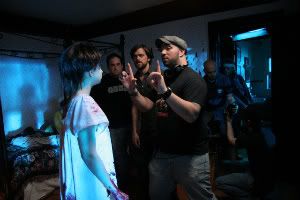
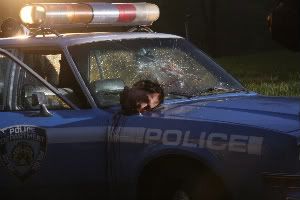
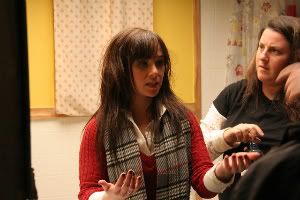
For those tired of the neverending cycle of slasher remakes that fans have been subjected to over the last few years, you may like the sound of Blood Night: The Legend of Mary Hatchet, the gruesome debut from writer/director Frank Sabatella and starring Halloween 4’s Danielle Harris and The Texas Chainsaw Massacre 2’s Bill Moseley. Based on an urban legend and recalling the glory days of the ’80’s drive ins, Blood Night is an old school slasher – made by a fan and for the fans!
How did you first develop a taste for filmmaking and what would you cite as your early influences?
“Like many filmmakers today, I developed a taste for it at an early age. I would use my dad’s video camera and just get my brother and our friends and we’d make dumb little horror movies in our backyards and houses. We would shoot them in order since we had no editing equipment and then when we were done we would sit around and watch them, it was a lot of fun back then and I wish I still had some of the old VHS tapes we shot them on. But they are long gone. I was mostly influenced by the horror movies of the 8’0’s, specifically Friday the 13th and the Elm Street series. Freddy and Jason were obviously the top slashers back then, but really I loved any horror movies at all.”
What kind of films were you a fan of growing up and which writers/directors had the greatest impact on you?
“Growing up I was the biggest fan of slasher movies. I couldn’t get enough of them, everyday I would go to this video store down the block from my house and rent a different horror movie. It’s hard for me to say really which writers/directors had the biggest impact on me. I have been influenced by so many different styles of movies and I tend to find something inspiring in just about everything I watch, however, if I had to name a few directors I really admire, I would say Robert Rodriguez, Tobe Hooper, George Romero, Eli Roth, Rob Zombie. Really anyone who has accomplished achieving a unique vision and style in their work, and I think these guys exemplify that completely. I hope it is something I can achieve.”
Were you always a fan of horror and, in particular, slasher movies and what is it about these type of films that you think is so appealing?
“I have been a fan of horrors and slashers as far back as I can remember. I think what appeals to me most with these films is the excitement you get from watching a good scary movie, or the laughter you get from a good kill. There is nothing better to me than catching a horror movie on opening night and just laughing and yelling along with the audience, it’s such a good time. I recently caught the My Bloody Valentine remake in the theatre and I had a blast. Everyone in the audience was just yelling at the screen, applauding the kills, girls were screaming, I mean it’s just the most fun at the movies in my opinion.”
Where did the concept for Blood Night: The Legend of Mary Hatchet originate? Were there any specific films, stories or urban legends that fueled your script and how long did it take to write?
“The concept for Blood Night stemmed from a few Long Island urban legends. One is the legend of Mary Hatchet, which says that a young girl murdered her parents with a hatchet and now her ghost roams the wooded roadside at night. She is seen in the nearby cemetery, spotted by cars, etc. And she is just a scary ass ghost. The other is the legends that surround the now abandoned Kings Park Psychiatric Center. It is reportedly haunted by the souls of the patients that have died there. There are so many stories about inmate abuse, and mass graves, all sorts of crazy shit. So I combined elements of both legends to come up with an awesome slasher story. There is actually a great documentary called Lost Suburbia about Mary Hatchet and about Kings Park Psych Center, you can check out the videos on our website at www.bloodnightmovie.com in the videos section. Very cool legends.”
What is the premise for the movie and what is it about Blood Night that will make it stand out among all the other horror films released recently?
“The premise of the movies starts with the legend of Mary Hatchet. She murders her parents and is locked away in Kings Park Psych Center. Years later while trying to escape, she is killed by the police. That incident is referred to in the local town as Blood Night. And the local teens celebrate the anniversary of her death by going out partying and what not. But as you may have guessed, they learn the hard way that Mary’s ghost may not be a legend but in fact a reality! And that’s when the heads start to roll. What I think will make it stand out from a lot of the horror movies recently released, is the uniqueness of Mary Hatchets character and her story. Additionally I think it is a very stylized slasher flick that really captures the feeling of the authentic ’80’s slashers while still maintaining a fresh direction. The cinematography is modern, the editing is very modern, the FX are very modern but really pay great respect to classic styled SFX. I think it brings the slasher genre back to where it came from in many respects. All of the greatest slashers were low budget movies made by a very determined group of filmmakers working under tough conditions to make a great flick. Friday the 13th, Elm Street, the two most popular slasher movies ever I would say and they were both done for very little, but they had a lot of heart and dedicated people behind them. That is where Blood Night comes from, our budget was about a million dollars which is really not much at all and everyone just put their heart and souls into it. I think that comes through in the final product. I think it is something you don’t get with many of the higher budgeted slasher movies today, or horror movies in general. Most of the studio horrors are either PG-13, a horrible remake of a classic, or they just miss the feeling of the horror movies everyone loves. So, I think Blood Night brings that back, it has the feeling of those classics because it was made under similar circumstances as the great ones.”
As you were writing the screenplay were you conscious of avoiding the usual horror clichés or do you find that, if used correctly, these can be entertaining for audiences?
“I worked very closely writing the flick with screenwriter Elke Blasi. From day one we were conscious of the fact that we would be exploiting the slasher clichés, I wanted to involve the clichés for entertainment purposes. We wanted to use the “slasher formula” to our advantage and ultimately I think that without these clichés we would not be properly tributing the sub-genre. The film is sort of aware of itself, and I think in that sense it makes it more enjoyable for the audience, without being silly. Everything down to the title of the picture itself is a deliberate homage to the great ’80’s slasher flicks. I wanted it to feel like it fit right in there with Friday the 13th, Slumber Party Massacre, Sorority House Massacre 2, Prom Night, Hell Night, Fright Night, BLOOD NIGHT. Fans of the genre will be refreshed by Blood Night for sure.”
How did you manage to finance and develop the project and how long did it take from writing the script to filming the movie?
“Financing any project is probably one of the hardest things for indie filmmakers. I was fortunate enough to be introduced to the executive producers by someone very close to me at the time and after a series of meetings, we all realized we were on the same page. We developed a great working and creative relationship rather quickly and once we began to write the script, things started to fall into place rapidly. We began writing the screenplay around May 2007, and we began filming in December of the same year. We had final cut the following December. It was just about two years from script to screen, and it was the hardest two years of my life.”
The cast boasts such genre favorites as Bill (The Texas Chainsaw Massacre 2) Moseley and Danielle (Halloween 4 and 5) Harris, how did you manage to involve such talent and were any roles written with any of these specific actors in mind?
“Having Bill and Danielle involved in the project was really amazing for me. Initially the parts were not written for them specifically in mind, but once it became time to start thinking about casting, both of them were at the top of my list. Once the idea entered my head that Bill Moseley could play Graveyard Gus I really couldn’t picture anyone else in that role. Same with Danielle, I realized she would be the only acceptable actress to play the role, and really what slasher flick would feel complete without Danielle in it? Once we involved our casting director I made it pretty clear to him that we wanted Bill and Danielle so he got the script over to their agents and we just sat back and waited for the news. After a week or so I got a call that said Bill really dug the script and Danielle was interested as well, so things got really exciting at that point. We started the negotiation process and after a bit of back and forth, we signed both of them onto the project. I was ecstatic and at that point I felt that something really amazing was going to come out of this project.”
What kind of tone have you aimed for with Blood Night and how violent or gruesome can audiences expect it to be?
“The tone of Blood Night is scary, sexy and fun! It has highs and lows, gets really intense and is gory as hell! Gallons of blood, lots of dismemberment and all sorts of gruesome goodies for the gore hounds out there! Blood Night does not skimp on the red stuff.”
Were you hoping to create a horror villain as iconic as Jason Voorhees or Jigsaw with Mary Hatchet, and will she be the central focus of the movie?
“Well, Mary is def the focus of the movie. It’s her legend that spawns all the events of the flick. I cant say that I was trying to create a villain as iconic as Jason or Jigsaw, though I would certainly love it if Mary Hatchet achieved such status. Blood Night in many ways is a big Friday the 13th tribute, though I think many of those motives and homages will be obvious only after several viewings of the film. I think Mary has the potential to achieve some real big time cult status but only time will tell. It is really more the audiences that will decide if she becomes so iconic than it is my decision. I created the character and I hope the audience loves her.”
When are you hoping to have Blood Night released and will it go straight-to-DVD or be screened at any festivals? Was this film set up for the possibility of sequels or do you have no intention or returning to the story in the future?
“I am hoping that Blood Night sees a release by this summer, but again that is something that is not under my control. We currently have agencies and distributors interested in the project, but I am learning that it is a slow process at this level of filmmaking. It is too early for me to say if it will be a straight to DVD release or theatrical. I know we have entered it into a series of festivals and we are waiting on word back to see where it goes to. I am just eager to get it in front of as many audiences as possible and I am counting on the support of the horror community to really get behind the flick and get it into theaters. I think any good slasher flick is left with a sequel set up, though when we were writing it we didn’t specifically think that we would be doing a sequel, nor did we consider it during filming. However, at the end of the day, Mary Hatchet is a ghost and you can always find a reason to bring a ghost back, right? I would love to do another Mary Hatchet movie, I think the character is awesome and I think there is a lot more that can be explored with her. But that is really up to audiences, the audiences need to love her as much as I do and want to see more of her. I have some ideas for a sequel, but it is not my primary focus right now. But I’m hoping we have not seen the last of Mary Hatchet.”
Were you always a fan of horror movies growing up and how did you first develop an interest in special effects?
“Always. I loved watching the old Universal Monster Movies on television and enjoy all the new hammer films when I was growing up in Oklahoma.”
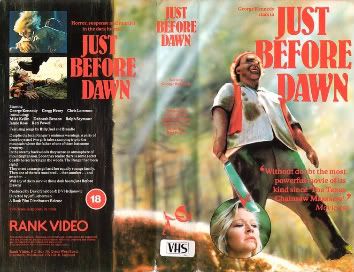
How did you become involved with Just Before Dawn and were you hesitant about working on what could have become just another slasher?
“At that time in my career I was eager to take any work I could get. I was referred by Joe Blasco, went for the interview and got the job. It was 1980 and I had been in Hollywood for only two years. I jumped into the job with both feet and did the best job I could.”
What was your initial thoughts when you first read the script and what kind of directions were you given from the director?
“A Deliverance type, backwoods slasher film. The director wanted to make the arm down the throat scene pretty graphic, gave me the parameters and he let me ride with it.”
The movie seemed more in the vein of Deliverance and The Hills Have Eyes than the likes of Friday the 13th, was this a conscious decision of the filmmakers and how did you approach your FX in a way that made them differ from the standard stalk and slash movies of the era?
“More in the vein of the first two films. They didn’t put as much gore into this film.”
What was your favourite effect in the movie and why?
“The arm down the throat gag. I’d never accomplished anything like that at that time and it was really great working out the logistics of the effect.”
How did you achieve this effect and were you pleased with the result?
“It was achieved in two stages. The first was with an appliance applied to the actor’s face which the actress could fit her fist/arm down into. The second was with a fake arm, attached to the actress, with the hand cut off. This was inserted into the actor’s mouth when the camera was rolling. I remember this well because we didn’t get to shoot it in Oregon during principal photography and production had to fly the actor and myself to New York in September of 1980 to shoot the insert shots. This is when I went to meet Dick Smith at his then Larchmont, New York home on my day off.”
Just Before Dawn differed from many slashers in that the killers are not superhuman and do not come back at the end for one last Carrie-style jump. Do you think that the killers being more human added to the fear, as apposed to an unstoppable killer like JasonVoorhees?
“Absolutely. There’s something about the primal fear of what human beings are capable of doing to each other.”
Looking back almost thirty years later, are you proud of your work and how well do you feel Just Before Dawn has aged?
“Very proud. I think it’s held it’s own in that genre of films.”
How did you first start out in the industry and what kind of projects did you work on before you moved onto horror? What do you remember of your little seen movie Chatterbox?
“It was always my goal, even as a child, to make movies. I started making 8mm films when I was ten and continued on all through high school. Mostly using friends, family and table-top models for my projects. It was always my intention, if I would be so lucky, to go to California and work in films. After getting my Masters in Motion Picture Production at UCLA I worked at various companies making educational films and shorts. Mostly as an editor. My first real mainstream movie was Chatterbox. I had an old story outline for an X-rated comedy called Lips. A producer saw it, liked it and we joined forces and it became Chatterbox. American International did the theatrical releases.”
Were you a fan of horror growing up and which stories or films made the greatest impression on you?
“When I was very young the old Universal Horror films, Frankenstein and Dracula or Wolfman always remained in my memory as fun scares. Then in college the Hammer films from England were campy fun.”
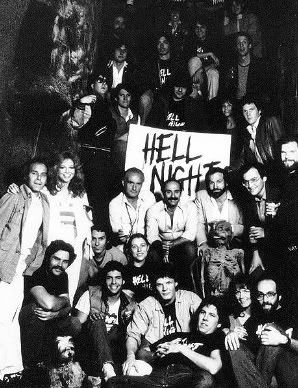
How did Hell Night come about? What was your opinion on the other slasher movies that had been released at that time (Halloween, Friday the 13th) and how would you compare your film to those?
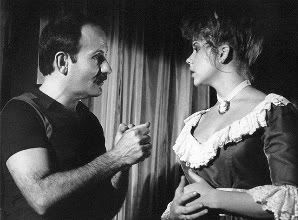
“The same producer who did Chatterbox, Bruce Curtis, was a friend of Linda Blair. They worked together on Born Innocent, a TV movie she did for him about girls in the lock up. He came across the script for Hell Night, talked her into doing it and then contacted me. We always said we wanted to work together again after Chatterbox. We didn’t want to make a carbon copy of all the other slasher films at that time. We hoped to come up with something different. Linda didn’t want to do just blood and gore, and niether did I.”
Was the idea of fancy dress a concept you had in mind from the beginning and was this an attempt to distance Hell Night from the usual stalk and slasher formula by including gothic overtones?
“I wanted them to be dressed in period costumes so that the film would have a more “classic” horror feel, like the old Hammer Horror films. I didn’t want them wandering an old haunted house with candles and cobwebs dressed in jeans and T-shirts.”
Were you intending on creating an iconic villain, such as Halloween’s Michael Myers or The Texas Chainsaw Massacre’s Leatherface, or did you always intend on keeping the monster in the shadows? Most of the popular slashers have become successful due to a recognisable and marketable bogeyman, did you always hope for your antagonist(s) to remain elusive?
“We never thought of creating a re-usable monster. Maybe we should have, but at the time the script was what it was and I shot it.”
As Hell Night was produced by Irwin Yablans, were you ever under pressure to cash in on his previous hit, Halloween, and how much creative freedom were you given?
“I never saw any of the Halloween series, believe it or not. The producer, Irwin Yablans, had produced the original Halloween and he was one of the producers on Hell Night. There was never any pressure to compete or copy any of Halloween’s style. He was very supportive and even worked along side the writer and myself in making some changes to the script.”
Was it a conscious decision to feature mostly bloodless killings or was this due to the strict demands of the MPAA?
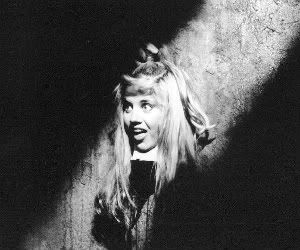
“We talked early on about making the film more of a suspense film rather than a slasher movie. There was one scene, a favorite of mine, which was quite gory but we had to trim it down. The scene where Jenny gets her head chopped off. It was supposed to play as follows: The monster was to grab her hair, pull her up against the wall, swing the blade and cut her head off…but instead of her head falling off, as in most horror films, I wanted the body to drop out of frame and see her head still in his hand, with here eyes open and her mouth screaming. We rigged a special wall where she could put her head through a hole and then we put a fake body up under it. We attached her neck to the dummy using mortician’s wax to look real and to make it easy to cut. She had to lay on her stomach on a long board behind the wall with her head sticking out. But she had to hold her head up, through that hole, for a long time while we rigged the body and made the neck. She was very uncomfortable. Then we had to practice the blade swing to be sure her face wouldn’t get hit. It was a long, slow process and very painful for her. Finally we got it done perfectly and it played just great. I was a shocking scene. Unfortunately, when the censors saw it they said it was just too gruesome and it may have lost us the ratings… so we had to cut it. Now in the film, as soon as the blade hits her neck, the scene cuts away and you never see the body fall and her living head still screaming. It was a big disappointment to me. Today that would be mild compared to what’s happening on screen now.”
At what stage during filming was the script stolen and how did you overcome this major obstacle? Was the script ever recovered and how different was the finished movie to your original intentions due to this incident?
“During the first week of the shoot, some bystander stole my director’s script and all my directing notes, etc. were gone. I had to work each night at the hotel to try to redo all my notes and diagrams and charts and stuff. We put up signs asking for it, offered a reward and other incentives but it was never recovered. I don’t recall any changes from my first notes to my final production. After several months of prep, you pretty much have the film all shot in your head anyway. After that happened we closed the sets to all bystanders. No one was allowed to get near the working area after that. Then the town began to get annoyed with the commotion and the crowds that came each night and we were pretty much asked to get done and get out of there.”
As the movie was set over one night, how difficult was it to keep continuity and were you concerned that shooting only night scenes in an old mansion could have made the film to dark and gloomy?
“We shot in November and December and all the night exteriors around the mansion were done in Redlands, CA. It was a long tedious four weeks of cold, damp nights. Work was slow because of the weather and the actors were wearing fairly skimpy costumes and not well dressed for damp nights. The interiors of the mansion were done somewhere else, in Pasadena in an old home we stripped bare and filled with cobwebs and candles. The tunnels under the house and the rooftop were sets on a soundstage in Hollywood at Raleigh studios. We ended up shooting four weeks in Redlands – all night exteriors. Then two weeks in the house for all the mansion interiors and the final two weeks on the stage doing the tunnels, the roof and one bedroom where the monster comes up through the floor. Mac Ahlberg, the cinematographer, and I discussed the look we wanted and it was deliberate that we had only the look of firelight and candles. We wanted that soft glow and warm light throughout. On screen the film is stunningly gorgeous. Some VHS copies are murky or too dark because of bad transfers. I think the DVD is a lot better….but nothing compares to a good print on a big screen, trust me!”
How come you chose to cast Linda Blair as the lead and was she easy to work with? Much of the supporting cast were inexperienced, were you pleased with their performances and do you feel that you managed to avoid the usual teen horror clichés?
“There was NO audition for Linda. She came with the deal. If she wasn’t in it, there wouldn’t have been a film. We had Linda locked in and agents sent out other players. Bruce, the producer, wanted to work with Vince Van Patten so he called him in. Peter Barton was suggested by his agent and we read him and liked him as well. All the others were auditioned and got their parts based on their ability. I was pretty much please with most of the work done. It’s been years now, so I can’t recall any performances that made me unhappy at the time. Some, not all, were difficult at times but the conditions were testy as well.”
How well was Hell Night received when it was first released and was it considered a financial success? Was there ever talk of a sequel and, if so, would you have returned?
“Hell Night didn’t cause any sensation at first but it grew as a cult film in time. It did out-gross Jaws when it opened in Japan. I believe they were big fans of Linda’s there so it helped. The film made money, of course, but it wasn’t what we now call a blockbuster. It was a small film so making good money then was easier than it would be today.”
With so many slashers being remake these days a new Hell Night is inevitable. Have you been approached regarding this or have you heard any rumours and would you consider returning to the movie almost thirty years later?
“There has been talk for years about a sequel from the same producer, Bruce Cohn Curtis. But niether Linda nor I would probably be involved after all this time.”
Writers & Directors get all the credit and blame for films, but the role of the editor is vastly underappreciated. Especially when it comes to retro slashers and retro horror. Due to the efforts of people like editor Jim Markovic (Dr. Butcher MD) and producer Sam Sherman (Raiders of The Living Dead), many films deemed unmarketable or unreleasable in their existing formats were recreated from the ground up, re-arranging footage, deleting some, looping audio, and sometimes shooting new stuff altogether.
These days the spirit of the era is alive and well in fan Dustin Ferguson. Not content to wait for companies to provide the editions he wants, he edits uncut footage back into some films, and to others completely changes their context by re-editing them, adding new titles and visual effects. These are not replacements for the official releases but merely alternatives for the day-dreamers out there that always wondered “What if?” You can check Dustin’s website Retro Horror Remix (which is hosted on Freewebs ’cause he’s so hardcore retro).
What sort of software and tricks do you use to create your edits?
When I first started I used “Windows Movie Maker”. All of the edits created using that software never were released. The options were limited, and I think the edits turned out too amateur. I then started using Sony’s Vegas. It’s full of cool little things you can use such as color-treatment, film damage, bizarre effects, etc. With some edits, a cut I make may seem awkward so it can sometimes help to apply additional music or a sound effect during the transition to make the film change less noticable. Color-treatment is something I began experiementing with during my “Vintage VHS Edition” series, and is something I now use with every edit.
Can you tell us some of your favorite edits, or ones that turned out really well?
Some of my absolute favorite edits are “Asylum of Satan”, “Friday The 13th X”, “House of 1000 Corpses VINTAGE VHS”, “Carnival of Bloody Horrors” and the upcoming “A Nightmare on Elm Street 4”. All of those have something unique about them, they are all rather experiemental, and I think the flow of each edit is just perfect. These were all also downloaded the most.
What are some of the more controversial choices or edits you’ve made that you might have come under fire for?
Oh god, where to start. Back when I first started releasing these it was in conjunction with the infamous “fanedit.org”. I broke a lot of rules on that site over time and eventually got banned. A few edits that raised HELL there were “A Nightmare On Elm Street 0”, both “Friday The 13th” edits, and I was eventually banned over “The Town That Dreaded Sundown”! “A Nightmare on Elm Street 0” was pretty much hated for it’s quality. The source I used for the edit was a TV rip, which once converted a couple more times got kind of pixeled in parts. That was a big issue. Both “Friday The 13th” edits were trashed to hell for their length. Each cut just barely 20 minutes long. However, I had the most fun making those 2 edits (as they were the biggest challenges), but got the worst feedback for those. Later, I made a “preservation” of a rare widescreen version of “The Town That Dreaded Sundown”. It is believed by most that this is a public domain film. So, after many requests for a physical copy (for those who can’t download) I decided to sell 1 copy of Ebay. It went for 9 dollars. The next day it was posted on fanedit.org that all of my edits were removed from the site for “getting caught selling a fanedit”, which is illegal. Well, it’s not exactly a “fanedit”, and the film is public domain, so I never understood the issue as there are atleast 10 bootleg copies on Ebay at any given time. Regardless, I was banned and I think it was for the best.
Can you explain the concept behind your “Vintage VHS Editions”?
When I came up with this idea, it was after the “Grindhouse” editions had just finished. I needed to do something unique that would bring the spice back to Retro Horror Remix. Usually, I only edit older horror films, but this time I would take NEW horror films and revert them to retro-paced flicks. New movies like “House of 1000 Corpses”, “Abominable” and “Evil Remains” were all made in a retro style. However, they had many modern elemnets which I felt brought them down. I would remove those (such as cell phone use, modern music, flashy cuts etc.) to create a new version that looks like it was ACTUALLY made in 1982. I over-cropped the widescreen images to give a old pan-and-scan look, added grain and brought out the reds and blues in the film. I had a lot of fun making these, and may return with more in the near future.
What’s the deal with your Scalps 2: Return Of DJ?
“Scalps 2” is a fan film I made in 2007. The original film by Fred Olen Ray promised a sequel in the credits which never actually happened. Well, SCALPS is one of my all time favorite films, so I felt a sequel was due. After I announced this online, Fred emailed me himself to make sure I wouldn’t be distributing this for profit. Once I assured him it was being released FOR FREE, he seemed very excited about it and in a way this is the only unofficial, official sequel. It’s only 20 minutes long, and the actors were people from my place of work. We filmed at a real Indian Cave, and it features music from the original film. The story takes place 20 years later, 4 teens head off to do some exploring. Once one finds an Indian Arrow Head buried, it awakens DJ, the final girl from the original. She attacks and kills the friends leaving one girl left to carry on the legacy of Blackclaw. It was a blast to make, and someday if I had a budget, I’d like to make a better, longer version.
What are some of your ultimate “dream cuts” you’d like to put together someday?
The uncut “House of 1000 Corpses”. I have a couple deleted scenes on a DVD, but it’s not all of them, so many scenes would still be missing. To see a full version of that WOULD be a dream! Also, a composite of “Leatherface: The Texas Chainsaw Massacre 3” using workprint footage. I don’t have the time right now to painstakingly edit that all together, but I probably will in the future. The workprint of that film is awesome, but the quality sucks. I’d like to replace the scenes I could with DVD-quality scenes and insert the workprint footage troughout. When I have more free time that’s something I could really get involved with…
 John Klyza: What is the genesis of this project and what is it about PSYCHO that drove you to this?
 John: Jeff Fahey is one of my favorite-ever actors. Can you share how the interview went down, and what he was like?
 John: I gotta ask… has it been difficult to get folks connected to part one since it’s a pretty old film now?